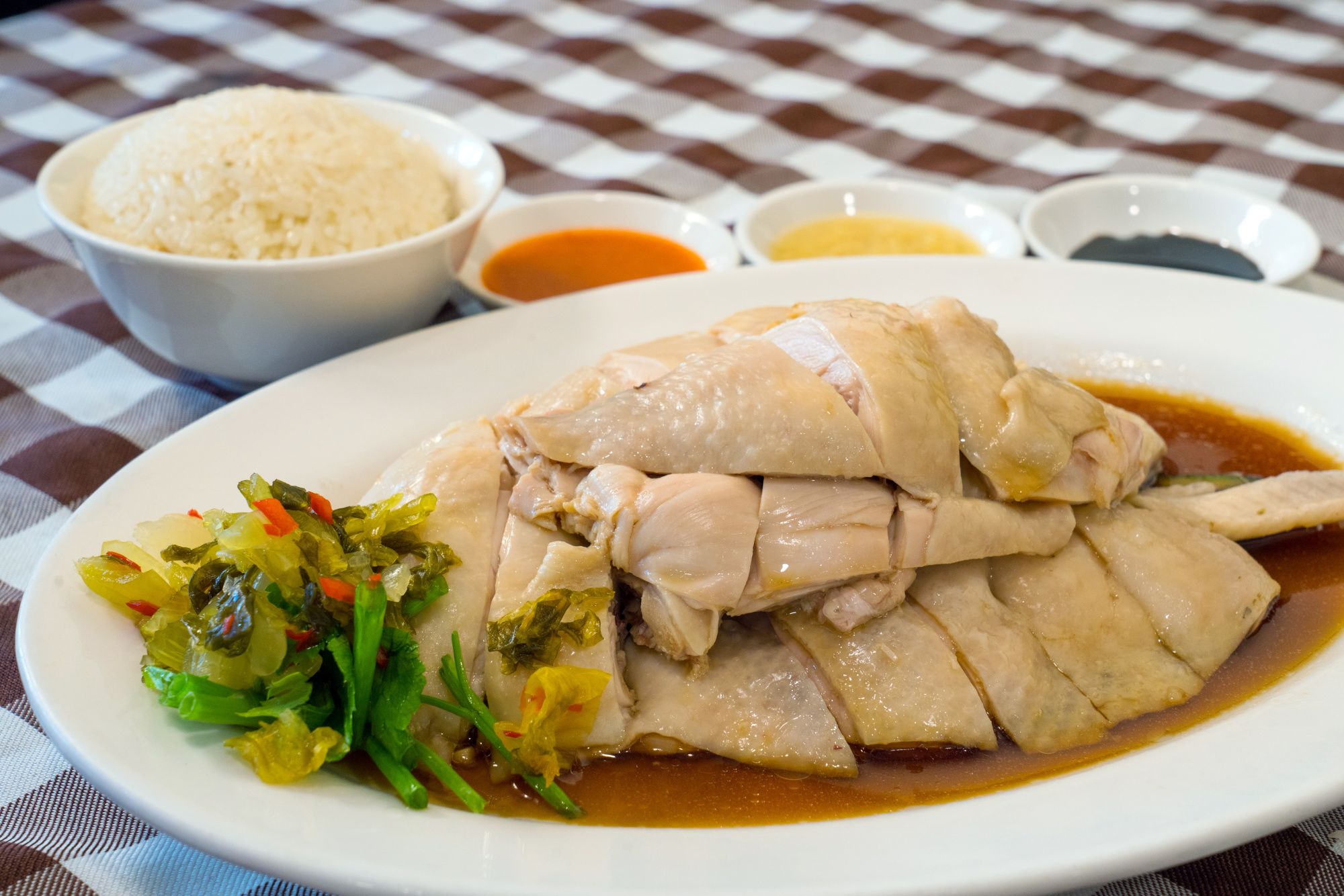
(Bloomberg Opinion) -- It feels like Singapore has only just switched from combating the pandemic, with some of the developed world's strictest curbs, to plunging headlong into a fight against inflation. The central bank tightened policy three times since late last year. Now, the highly urbanized island that imports most of what it eats has a front-row seat to food nationalism. Neighboring Malaysia, from which Singapore gets a third of its poultry, is banning chicken exports starting Wednesday, citing domestic shortages and price spikes. While the imminent embargo is often framed as dour news for fans of hawker-center dishes like chicken rice, more consequential risks lurk in the background. Singapore gets many of its building blocks of modern life from its northern neighbor: power, water, labor and food. While the government has worked hard over the years to reduce dependence on agricultural imports, with kale farms inside former industrial warehouses and fisheries springing up on vacant lots, food security is a long term project. The more protectionist, politically contested world we now inhabit brings real challenges for Singapore. Not only does the city-state need to worry about availability of supplies — as it did during border closures early in the pandemic — but how lower stocks will accelerate rapid price increases that have affected every corner of life, from fuel and electricity bills to rent and groceries. Channel News Asia, a local network, recently profiled a family that cut shower time in half because of climbing utility costs. Core inflation is the highest in a decade. The full impact of the ban isn't yet apparent. On Saturday afternoon, the poultry section at a Cold Storage supermarket on Orchard Road had been cleaned out. By contrast, the shelves at a Fairprice supermarket in the northern suburb of Punggol were full Sunday afternoon — the bulk of chicken from Malaysia. Still, it was hard to miss the sign urging shoppers to purchase no more than required, consider protein substitutes, and be patient and responsible, while the store works on securing more stock. The government also says it has built up critical supplies of food and there is no need to panic. (Other sources of chicken include Brazil, Australia and the US.) It's clear that any potential shortage is a small part of a larger battle. “This time it is chicken, next time it may be something else,” Prime Minister Lee Hsien Loong told reporters Friday. “We have to be prepared for this. It's a very unsettled world and inflation is a problem, cost of living is a problem but in the scheme of things, many more disruptive things can happen than just some price adjustments. And we are seeing some of that now.”
Malaysia, for its part, is facing the toxic mix of rising demand as feed and fertilizer costs soar, thanks to Russia's invasion of Ukraine. Chicken farmers claim they are being squeezed and will have to scale back production. Poultry isn't a big export, but if the government adopted the same tactics for more significant products, like palm oil, the consequences would be much more severe. That doesn't bode well for buyers of the country's fish and vegetables.
Nor is Malaysia the only culprit of protectionism in the region. India plans to restrict sugar exports after barring wheat sales, and Indonesia blocked — then unblocked — foreign exports of palm oil. Thailand's premier says his country should join forces with Vietnam to jointly raise rice prices to buttress their bargaining power.
Preparations for extreme weather could be exacerbating the trend. “The emerging specter of food protectionism may have its roots in agriculture's two-year spate of bad weather, which has caused crop yields to wither and turbocharged food inflation,” wrote Bloomberg Intelligence analyst Alvin Tai, in a recent report. A strong US harvest and the anticipated benign turn in the La Nina climate cycle could turn things around, he noted. In the days after Malaysia's announcement, I went to one of the famous hawker centers in downtown Singapore. At the Tong Fong Fatt Hainanese Boneless Chicken Rice stall at Maxwell Food Center, I asked to speak to the manager. “The boss?” the grumpy, harried stall attendant asked. He then pointed toward two photos in the neon signboard, of Prime Minister Lee and his father, Lee Kuan Yew, the first prime minister of Singapore.
The state is the driving force in economic and social life in Singapore, where chicken is more than just popular fare. It's a protein that all three main communities — ethnic Chinese, Malay and South Asian — can enjoy. That may be why, as politically fraught as the ban may be, government officials and domestic media have been careful to avoid directly criticizing Malaysian Prime Minister Ismail Sabri Yaakob, who goes to the polls in less than a year.If a market solution doesn't present itself soon, a diplomatic one should. In its absence, neighborly good will might quickly become strained, and the chicken ban will be a bitter taste of things to come.More From This Writer and Others at Bloomberg Opinion:
- Heat Waves, Wheat and India's Chapati Crisis: Andy Mukherjee
- Now Even Chicken Is Getting Too Expensive?: David Fickling
- Singapore Can Live With Covid. Inflation? Less So: Daniel Moss
This column does not necessarily reflect the opinion of the editorial board or Bloomberg LP and its owners.
Daniel Moss is a Bloomberg Opinion columnist covering Asian economies. Previously, he was executive editor of Bloomberg News for economics.
More stories like this are available on bloomberg.com/opinion
©2022 Bloomberg L.P.
Essential Business Intelligence, Sharp Market Insights, Practical Personal Finance Advice, Daily Fuel, Gold and Silver Prices and Latest Stories — On NDTV Profit.