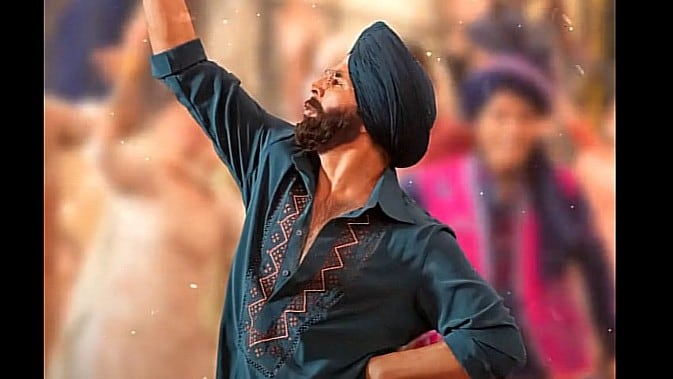
The Delhi High Court has refused to restrain the use of a song called Jalsa 2.0 in Bollywood actor Akshay Kumar's upcoming Mission Raniganj movie.
Saga Music Pvt. had sought an injunction to prevent the use of the song in the film. It claimed that Sony Music released Jalsa in 2014 on a commercial level after singer Satinder Sartaaj assigned its rights. In 2018, Sony Music assigned the rights to Hardip Sidhu.
Sartaaj sang the song in a concert held in Sydney and attributed its rights to Saga Music in August 2022.
The court observed that Sartaaj had signed a copyright assignment agreement on Aug. 16, 2022. This agreement was described as a deal that lasts forever and applies to the entire world. It gave rights to Saga Music, even in the literary works, and declared Saga as the author of those songs.
Saga was supposed to pay Sartaaj Rs 50 lakh, according to the agreement. It acknowledged that it paid him Rs 25 lakh, but the remaining Rs 25 lakh was still unpaid.
Advocates Pravin Anand and Ameet Naik, representing the film producers, informed the court that they had no direct contractual relationship with either Saga Music or Sartaaj himself. They presented a flow chart of agreements, illustrating how the defendants obtained rights to use the Jalsa song in their film.
The court made an oral observation that the legal complexities could be overwhelming, especially for an ordinary singer. Sartaaj, who authored, composed, and sang the original song, had entered into multiple agreements with various parties regarding the same song.
Since Sartaaj has too many contracts for the same song, the court asked him to return Rs 25 lakh to Saga Music, depending on which the song's use in the movie would not be restricted.
Considering the facts and the upcoming release of the movie on Oct. 6, it gave an order on Monday to protect the interests of everyone involved.
The case brought to the fore the difficult situation that artists, film producers, music rights management companies, and others face when dealing with multiple agreements for the same work.
There is a dire need for the use of technology for records of such contracts and for the creation of a repository of such contracts, according to Dhruv Anand, partner at Anand and Anand.
This is particularly true for contracts that implicate copyright since, in such contracts, there are always multiple rights involved, which are overlapping at times, he said.
Essential Business Intelligence, Continuous LIVE TV, Sharp Market Insights, Practical Personal Finance Advice and Latest Stories — On NDTV Profit.