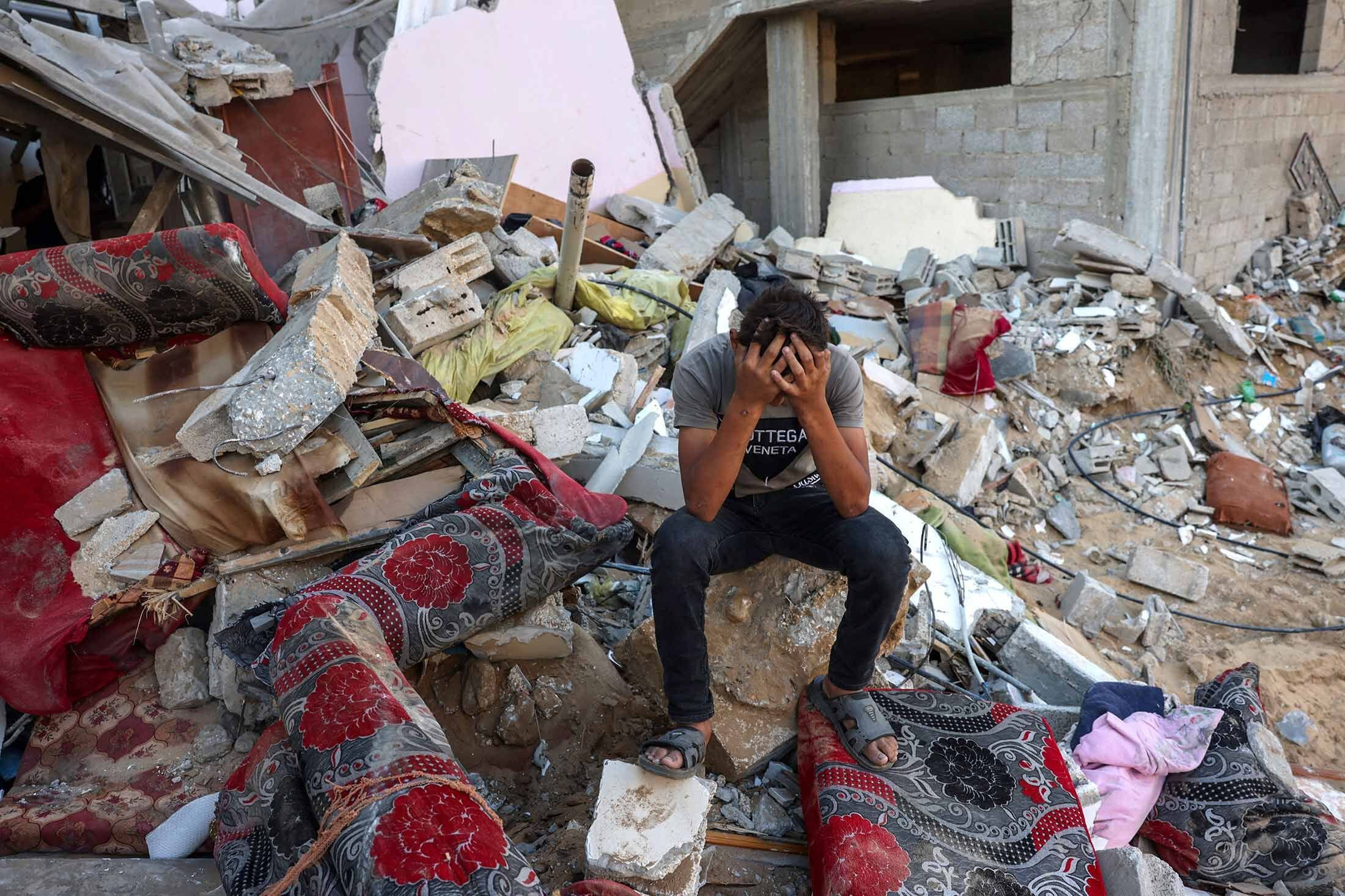
(Bloomberg Businessweek) -- Rockets rain on Israel; Gaza is bombarded. Anger erupts on Middle Eastern streets, and there's squirming in the Gulf Arab capitals.
The Oct. 7 Hamas attack on Israel—which killed more than a thousand Israelis, with some 200 more snatched as hostages—has already upended the region. Israel has responded by pummeling the impoverished Gaza Strip, killing thousands of Palestinians, while Hezbollah has attacked from Lebanon. Meanwhile the promising diplomatic overtures between Israel and Saudi Arabia are as good as frozen. What was supposed to be a “new” Middle East—one that ended old enmities between Israel and the Arab world in the pursuit of stability—is now looking like something else that's horribly familiar. And things may only get worse, perhaps much more so.
“This is just the beginning,” Israeli Prime Minister Benjamin Netanyahu said in a televised speech on Oct. 13 as 300,000 Israeli troops mobilized in preparation for a ground attack on the Gaza Strip. “Our enemies have only begun to pay the price.” In the week following the worst single-day attack in its history, Israel formed a rare emergency government and launched an all-out war on Hamas, an Islamist group the US and European Union have designated a terrorist organization that's never recognized any legitimacy to Israel and never will. While the recent atrocities come after years of neglect to the Palestinian issue, they ultimately spring from an enduring cult of violence and death that, no matter what else is happening, has proven extremely hard to destroy.
The question everyone wanted to ignore—can there ever be peace with the Palestinians?—again dominates Middle Eastern geopolitics. Managing long-standing tensions with the Palestinians had become a “sort of a check box” for normalizing relations with the Saudis, Netanyahu told Bloomberg News in August. The idea that millions of stateless people could just be swept under the carpet is looking more arrogant than ever.
Israelis and Palestinians have entered an ugly phase triggered by Hamas' shock incursion. It also comes as a reminder that such deeply rooted issues never really go away. For the US, long keen to untangle itself from conflicts after years of war in Afghanistan and Iraq, it's yet another foreign policy quagmire ahead of elections. Other geopolitical confrontations, in Ukraine, Syria and elsewhere, have left hundreds of thousands dead, their countries in rubble and diplomacy stalled or ignored. Now Israel must return to the fight again, the consequences of which will be devastating—indeed, they already are.
One of the worst assaults in Israel was on Kibbutz Be'eri, a collective near the Gaza Strip. Vivian Silver, who'd campaigned for peace with the Palestinians, was taken hostage from her home. She'd been hiding in her closet, her son Yonatan Ziegen said. He doesn't know if she's still alive but says she wouldn't want Gaza destroyed in revenge. “She would be mortified, because you can't cure killed babies with more dead babies,” Ziegen told the UK's Channel 4 News in a video interview. “We need peace. That's what she was working for all her life.”

But the rhetorical lines, like the battle lines, have already started to blur. “It is an entire nation out there that is responsible,” Israeli President Isaac Herzog said at an Oct. 13 press conference, referring to the Palestinians in Gaza, a tiny coastal enclave that's been under Hamas rule since 2007. “It is not true, this rhetoric about civilians not being aware, not involved. … They could have fought against that evil regime which took over Gaza in a coup d'état.” Just hours beforehand, Israel had ordered the 1.1 million residents of northern Gaza to evacuate south. Meanwhile, the United Nations warned of a humanitarian disaster.
In support of Israel, the US has sent two battle fleets into the Mediterranean and had Secretary of State Antony Blinken crisscrossing the Middle East; now President Joe Biden is flying in on Oct. 18 to temper Israel's response and try to prevent a wider conflict. Blinken even rang his Chinese counterpart, Wang Yi, to urge Beijing to use its influence in the region to prevent the crisis from escalating, a move widely viewed as an attempt to restrain Iran. Israel has the right to defend itself and ensure this never happens again, Blinken said during his increasingly frantic tour, standing next to Netanyahu on Oct. 12. “How Israel does this matters.”
In Iran, Iraq, Jordan and Lebanon, tens of thousands have taken to the streets to protest Israel's response, with smaller demonstrations in Morocco, Oman, Qatar, Turkey and Yemen. Iran has warned of a new front if the blockade of Gaza continues—an escalation that could easily sweep the region into a conflict of devastating proportions, engulf nearby US military bases and jeopardize some of the world's most important shipping routes.
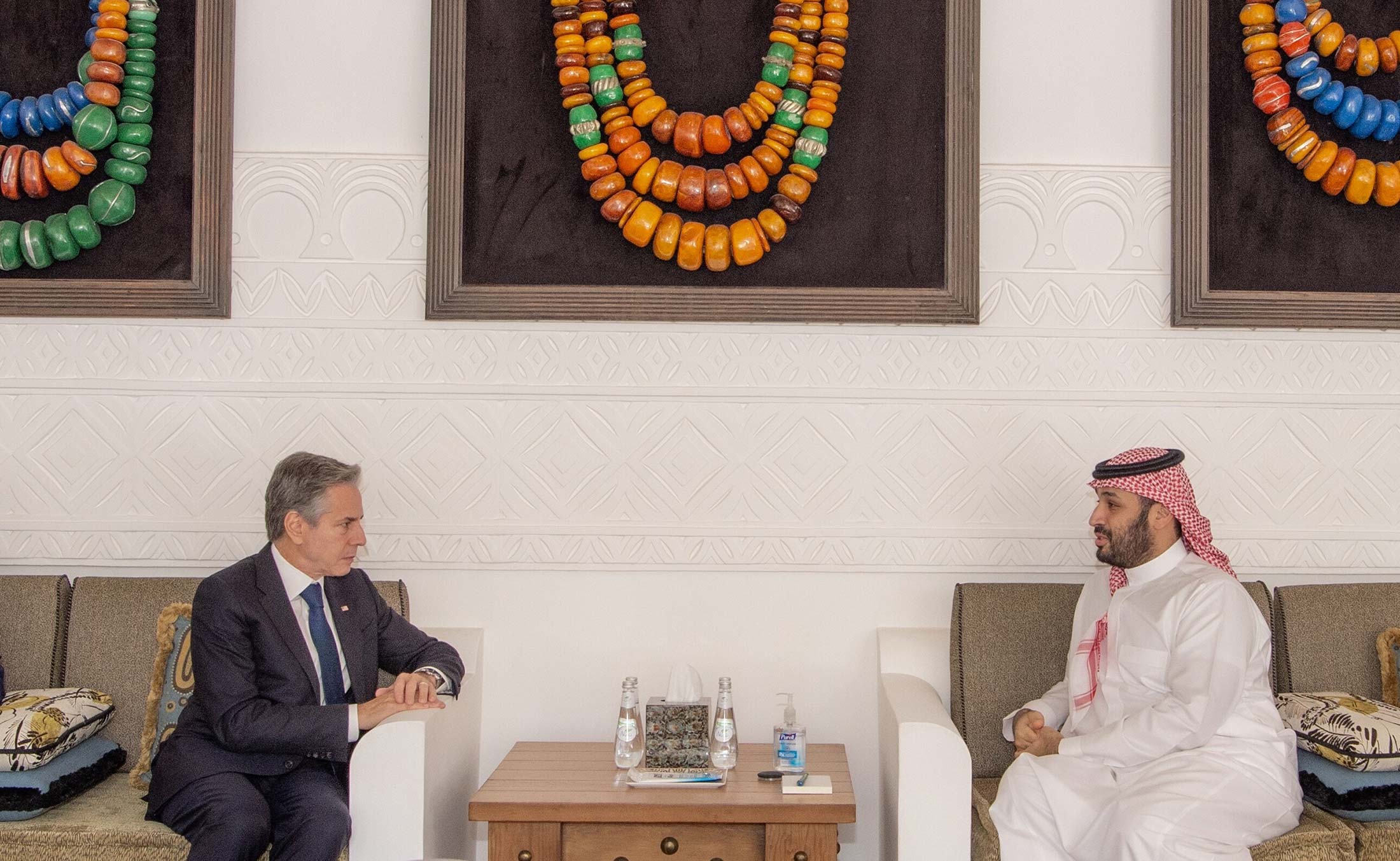
The circumstances have become especially awkward for Saudi Arabia, where Crown Prince Mohammed bin Salman has been trying to modernize a kingdom that's long been sclerotic while cracking down on dissent. He doesn't want his multitrillion-dollar plans derailed by a regional war. But in pursuit of ties with Israel he, like everyone else, appeared to be sidelining the Palestinians. Hence Saudi Arabia's about-face, in which MBS blamed Israel's occupation of Palestinian territories and Israeli provocations for “the exploding situation.” Saudis defending Hamas' actions online shared the statement widely.
“What is certain is that we are witnessing a situation similar to post-September 11 in the United States,” Saudi journalist Tariq Al-Homayed wrote in a column in the pan-Arab daily . “But this time, it's in Israel, where the strategic rule is madness, and where there is no place for the voice of reason,” he wrote, warning against “changing the maps and returning to ground zero.” If only such a conclusion didn't seem inevitable right now.
More stories like this are available on bloomberg.com
©2023 Bloomberg L.P.
Essential Business Intelligence, Sharp Market Insights, Practical Personal Finance Advice, Daily Fuel, Gold and Silver Prices and Latest Stories — On NDTV Profit.