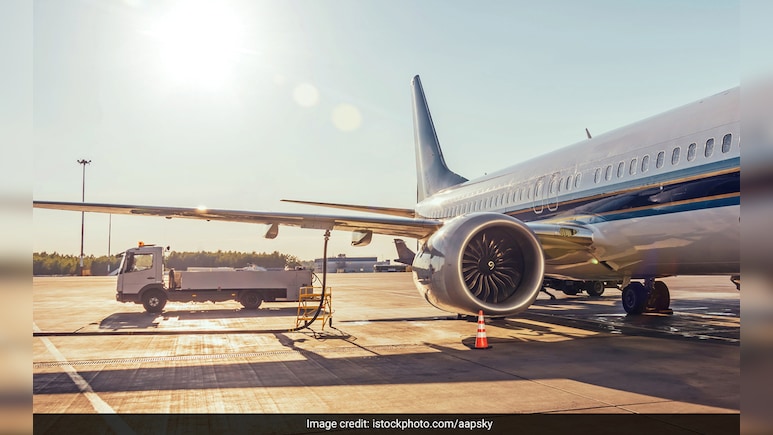
- India's airlines have asked refiners to delay jet fuel price hikes amid Middle East conflict
- Refiners consider a possible 25% jet fuel price increase for domestic flights in June
- Jet fuel prices for domestic flights are regulated; international flight fuel prices are not
India's airlines have asked state-run oil refiners to hold off on hiking jet fuel prices for domestic flights until the conflict in the Middle East ends, people familiar with the matter said, in a bid to alleviate their rising cost pressures and mounting losses.
The proposal floated by airlines including Air India Ltd., IndiGo and SpiceJet Ltd. is being considered by the refiners, said the people, who asked not to be named because the discussions are private. India's oil and gas ministry is also involved in discussions, and may intervene again as it did in April and May.
A decision is expected before June 1.
So-called aviation turbine fuel prices in India are set by the country's oil marketing companies, which usually make any revisions on the first day of the month. The price setting has been deregulated for years, but in April - after global oil prices surged due to the Iran conflict - the government limited the most recent jet fuel price hike to 25% and required the oil majors to keep them constant in May.
Also Read | Layoffs Are Rising In Tech, But These Skills Are Helping People Unlock Better Pay
The state-owned refiners, which include Indian Oil Corp., Hindustan Petroleum Corp. and Bharat Petroleum Corp., are also discussing whether to raise jet fuel prices in June by up to 25% for domestic flights, the people familiar said. They have been selling jet fuel for domestic flights at about 105,000 rupees ($1,090) per kiloliter, incurring a loss of 92,000 rupees per kiloliter, the people added.
Spokespeople for India's oil ministry, the oil refiners and the airlines either didn't comment or didn't respond to emailed requests for comment.
The curbs apply only to fuel for domestic flights. Jet fuel prices for international flights, which are not regulated, doubled in April and climbed further to $1,511.86 per kiloliter in May.
Oil constitutes around 40% of airlines' costs in India. The industry recently warned of flight suspensions and other business disruptions if the government doesn't put a lid on fuel prices. They are also lobbying for tax reductions or deferments, and some have reduced flight schedules due to a falloff in demand that's partly a result of higher fares. Airlines are also grappling with a weaker rupee, which makes it costlier for them to pay in dollars for aircraft leases and overseas airport charges.
Since the Iran war, India has announced a slew of measures that include rebates on plane landing and parking charges, regulating increases in jet fuel prices, and tax reductions on fuel for flights operating out of Delhi and Mumbai, its biggest airports.
International flights have also been impacted from the Middle East conflict, as airlines were using the Iran airspace to fly to Europe and America after Pakistan banned Indian airlines from using its airspace earlier. The carriers have passed on higher costs to fliers in the form of increased fares, which has depressed demand in the world's third-largest domestic aviation market.
State-run refiners on Tuesday raised road transport fuel prices for a second time in less than a week, increasing prices of diesel and gasoline in New Delhi by 1% following a 3% hike last Friday. Those increases are modest in comparison to the 50% surge in Brent crude since the war began.
(This story has not been edited by NDTV staff and is auto-generated from a syndicated feed.)
Essential Business Intelligence, Sharp Market Insights, Practical Personal Finance Advice, Daily Fuel, Gold and Silver Prices and Latest Stories — On NDTV Profit.