UdtaPunjab highlightsmultiple social and ecological crises being unleashed, owing to a non-sustainablemodel of industrial chemical farming misleadingly named the GreenRevolution. There is a sequence in the film where policemen at a checkpoint stop a truck loaded with drugs. They refer to drug menace as the beginningof the “Green Revolution 2.2” and go on to equate Punjab withMexico.
TheGreen Revolution, which began in Punjab, was given a Nobel Peace prize basedon the narrative that new seeds and chemicals would create prosperity and hencepeace. But by 1984, Punjab was a land of violence and war. 30,000 people hadbeen killed.
Itwas this divergence between the Green Revolution myth and the reality ofviolence that compelled me to conduct a research on what was happening inPunjab.
HowChemicals Ruined Farmers' Lives
TheGreen Revolution is based on addiction of soil and farmers to ecologicalnarcotics — the chemical fertilisers and pesticides. The more they are used, themore they are needed. In fact, that is all the Green Revolution was — spreadingseeds bred on pesticides which would put farmers on a chemical treadmill,increasing their costs of production, their debt, and triggering socialcrises.
The drug menace is one aspect of the seeds of discontent of the Green Revolution. And since the roots of the crisis were not addressed, the problems it gave riseto has multiplied manyfold. The drug menace is one aspect of the seeds ofdiscontent of the Green Revolution. Thisis why Udta Punjab is Green Revolution 2.2.
AdverseImpact of Green Revolution
Ecologicallysustainable agriculture has women at its centre. And the youth take on the workof their parents in farming. Because the Green Revolution replaces people withmachines and chemicals, it is at the root of disposability of women and youth. Thedisposability of women has led to a new problem of female foeticide.
Dismissal of the youth has led to the loss of meaning and significance. This sense of being wasted makes them vulnerable to drug addiction. Also as productive economies of the land are destroyed, the drug trade becomes the new economy. But it is an economy in which traffickers make money, and the youth pay with their lives.
Jarnail Singh Bhindranwaleused to address the growing problem of drugs in his talks during the 80s. Thiswas a major reason for his popularity.
Falloutof Punjab's Green Revolution
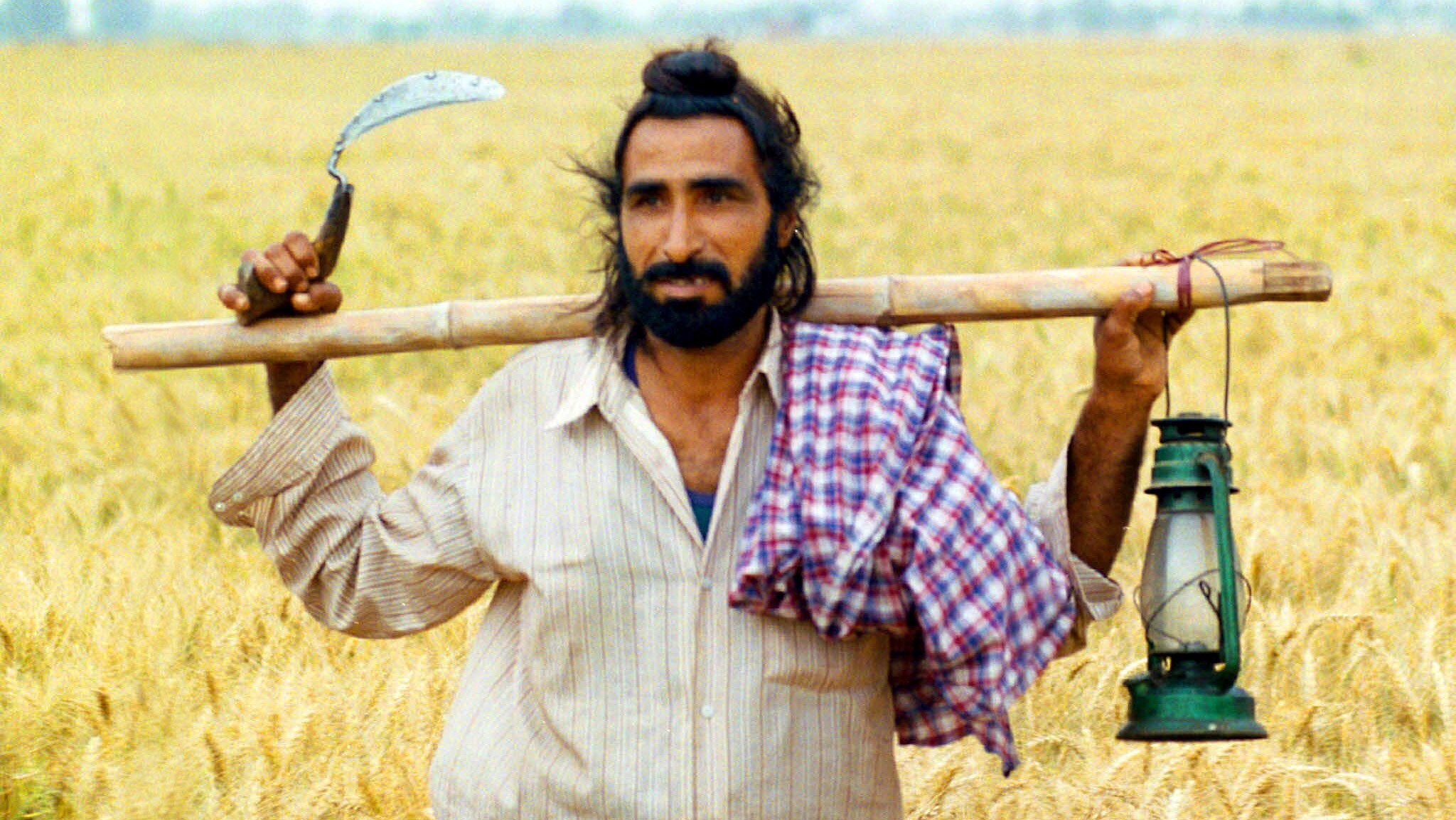
- Heavydependence on pesticides by farmers in Punjab, under the garb of GreenRevolution, has had an adverse impact, leading to rise in debt burden. Highcost of external input in agriculture and low income has turned farming into aloss-making venture for the farmers.
- Withagriculture not yielding profits, the youth across the state are more vulnerableto drug addiction.
- Reducingdependence on seeds bred on chemicals and encouraging organic farming may helpPunjab curb its social malaise.
HighCost of Input in Agriculture
Thehigh cost of external input in agriculture has turned farming into a negativeeconomy. While the cost of production in 2011-12 was Rs 1700 for rice, and Rs1500 for wheat, the Minimum Support Price was lower, at Rs 1285 and Rs 1110 respectively. Between1995-2001 and 2001-2005, net income of Punjab farmers has dropped from Rs 77to Rs 7 for rice and Rs 67 to Rs 34 for wheat.
Asa consequence, the farmers are in deep debt, with an average of Rs 41,576/acre.17 percent of them have debts of Rs 80, 000/acre. And it was this crisis that led tothe uprisings in 1984.
GrowingBurden of Debt
Inthe 1980s farmers were agitating over the high costs of inputs. During April1984, the Bhartiya Kisan Union focussed its campaign on indebtedness which wascalled “Karja Roko“.
From10 to 18 May, Punjab farmers gheraoed the Raj Bhawan (Governor's house).On 23 May, a call was given to not sell grain to the Food Corporation of India.
TheGreen Revolution had made Punjab a colony of the Centre to feed India. As the Gurmata (resolution) passed at a Sarbat Khalsa on 13 April, 1986 declared:
“Ifthe hard-earned income of the people or the natural resources of any nation orregion are forcibly plundered: if the goods produced by them are paidarbitrarily determined prices, while the goods bought by them are sold athigh prices, and in order to carry this process of economic exploitation to itslogical conclusion, the human rights of people or a nation are crushed, thenthese are indices of slavery of that nation, region or people. Today,the Sikhsare shackled by the chains of slavery.”
On4 June 1986 farmers were going to block grain supply to Delhi. The army wassent into the Golden Temple, the most sacred shrine of the Sikhs. And thevicious cycle of violence deepened, with Indira Gandhi's assassination, andwith the brutal killing of around 3,000 Sikhs. The issue of justice for the Sikhs, andthe Punjab farmers is still alive.
To free the youth of Punjab of drugs is part of the larger justice.Young people need to see their future in the land. And only ecologicalagriculture can heal the land and people. Punjab needs a new revolution to free herself from poisons both on their farms and in society. Punjab today needs a JaivikKranti to regain her sovereignty and shed the toxic legacy of theGreen Revolution.
(The writer is an environmental activist. She can be reached at @drvandanashiva)
This article has been written by one of the most accomplished environmental activists in the country, which invests the article with her conviction, which may or may not be fully endorsed by all. In order to encourage a balanced debate, we would be happy to publish all other views in this space.
Also read:
Parkash Singh Badal and the ‘Secret File' on Punjab's Drug Barons
Streisand Effect: How Nihalani Got ‘Udta Punjab' Free Publicity
Essential Business Intelligence, Continuous LIVE TV, Sharp Market Insights, Practical Personal Finance Advice and Latest Stories — On NDTV Profit.