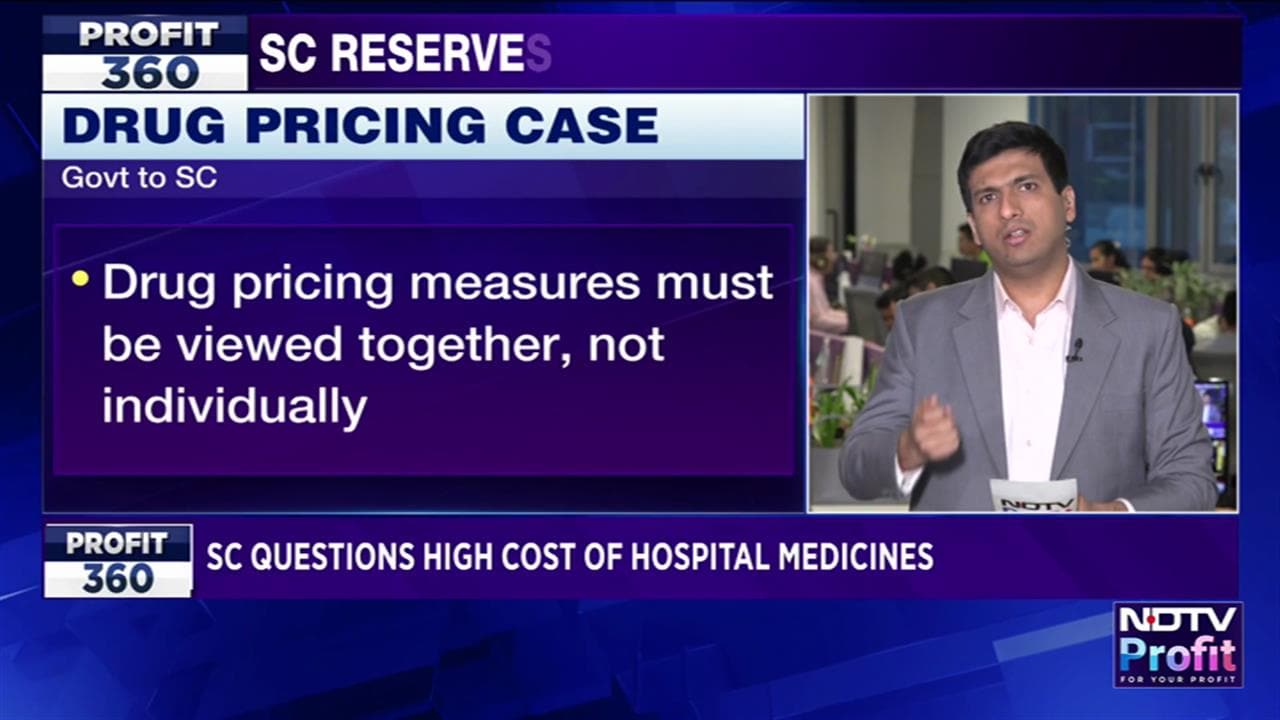
- The Centre proposed a 30% trade margin cap for 138 anti-cancer medicines before the Supreme Court
- The Supreme Court questioned high hospital drug markups despite patients' limited price negotiation power
- Hospitals claimed costs and infrastructure justify medicine margins and warned against too low caps
The Centre has proposed a 30% ceiling on trade margins for 138 anti-cancer medicines, arguing before the Supreme Court that sweeping price controls could jeopardise drug supplies and disrupt the market.
The court, meanwhile, raised concerns over steep hospital markups, questioning why patients were being charged substantially higher prices for medicines despite having little leverage to negotiate.

-
 India's Market Leaders To Decode The New Samvat At NDTV Profit Ignite In Mumbai On Oct 28
-
 NDTV Profit IGNITE Diwali 2026: Top Market Veterans Decode Wealth Creation
-
 The Week Ahead: Earnings Season, Fed Policy Verdict And Crude Oil In Focus
-
 Silver Is Now Down From Rs 4.2 Lakh To Rs 1.9 Lakh: Where It Goes From Here
-
 NDTV Ignite, The Trillion-Dollar Trajectory: India's Road to 2030
ALSO READ : Cancer Drug Trade Margins Run Up To 700%, Government Tells Supreme Court
Also Read | Layoffs Are Rising In Tech, But These Skills Are Helping People Unlock Better Pay
In its submission, the Centre filed an affidavit listing 138 anti-cancer drugs identified for margin regulation, saying price controls would be applied selectively rather than across the entire pharmaceutical market.
It said policy measures must be assessed collectively, with the objectives of ensuring the availability of essential medicines at reasonable prices, promoting competition and supporting the growth of the pharmaceutical industry.
It also maintained that margin capping had been under discussion for a considerable period and was not a decision taken overnight.
The government said market forces should determine prices in certain categories of medicines, while interventions should be limited to areas where required.
The Supreme Court questioned whether the government had sufficient discretion to determine which medicines should be treated as essential and whether the coverage of drugs under the scheduled category should be expanded.
Questioning the wide gap between the maximum retail price and the price charged to retailers, the court asked what justified the substantial differences in medicine prices across the supply chain.
It also questioned why hospitals were charging patients significantly more for drugs available at much lower prices elsewhere.
ALSO READ : Govt Proposes 30% Margin Cap On Anti-Cancer Drugs, SC Says "Not Enough"
The court observed that commissions offered by manufacturers to corporate hospitals could ultimately burden patients.
It questioned whether the existing policy framework was benefiting corporate entities rather than consumers and suggested a 16% margin cap during the hearing.
The Supreme Court stressed that patients were in no position to negotiate medicine prices and said access to life-saving drugs should not be governed solely by commercial considerations.
It questioned the delay in addressing excessive medicine prices and clarified that its concern was with inflated margins charged at the final point of sale, not the drug manufacturers themselves.
Hospitals Flag Cost Pressures
Representatives of the hospital industry argued that private healthcare had expanded because the public health system remained overstretched and unable to meet the country's entire healthcare demand.
They said a substantial portion of hospital revenue came from insurance payments and government health schemes, while private-paying patients accounted for only around 30% of their patient base.
The industry argued that hospitals had to maintain medical equipment, infrastructure, healthcare professionals and support staff around the clock to handle emergencies.
These operational requirements, it said, contributed significantly to costs and justified the margins charged on medicines.
The hospital representatives warned that reducing margins to 10-20% could threaten the viability of hospitals, arguing that profits were not excessive relative to their expenses.
They cited profits of around 10% for listed hospitals to support their position.
The industry also said hospitals could not allow patients to procure medicines from outside, defending their in-house pharmacy arrangements.
It asked the court to consider appointing a committee to examine hospital finances and determine how revenues were being spent.
The Supreme Court questioned why medicines were being sold at prices many times their underlying costs and challenged the industry's justification for such markups.
The court reserved its order in the case and directed all parties to submit their written arguments within two weeks.
Essential Business Intelligence, Sharp Market Insights, Practical Personal Finance Advice, Daily Fuel, Gold and Silver Prices and Latest Stories — On NDTV Profit.