BOJ’s Kuroda Walks Back Remarks On Rising Inflation Tolerance
(Bloomberg) --
Bank of Japan Governor Haruhiko Kuroda walked back some of his comments that consumers are now more willing to accept higher prices after criticism on social media and a grilling in parliament.
“I didn't necessarily say it in an appropriate way,” Kuroda said in a parliamentary hearing Tuesday, referring to his remarks the previous day that Japanese households' tolerance for price rises has been increasing.
Kuroda's remarks on Monday sparked an unusually large number of reactions and tweets for a central bank governor speech, with most of them negative in tone. Many of them argued that households weren't more accepting of higher price tags at all, rather they had no choice but to accept the rising costs of essential daily items.

This highlights how difficult it is for Kuroda to convey positive messages about inflation in a nation known for years of deflation. After more than a decade of falling price trends, households have become extra sensitive about a rise in the cost of living.
The yen breached the 132 mark against the dollar for the first time in more than two decades earlier Tuesday, with the currency's weakness set to further inflate the prices of imported goods and energy over the coming months.
Softness in the yen is likely to continue with the governor also reiterating his pledge to continue with monetary stimulus to achieve sustainable inflation. Investors are focusing on the widening gap in interest rates between the BOJ and the Federal Reserve and others.
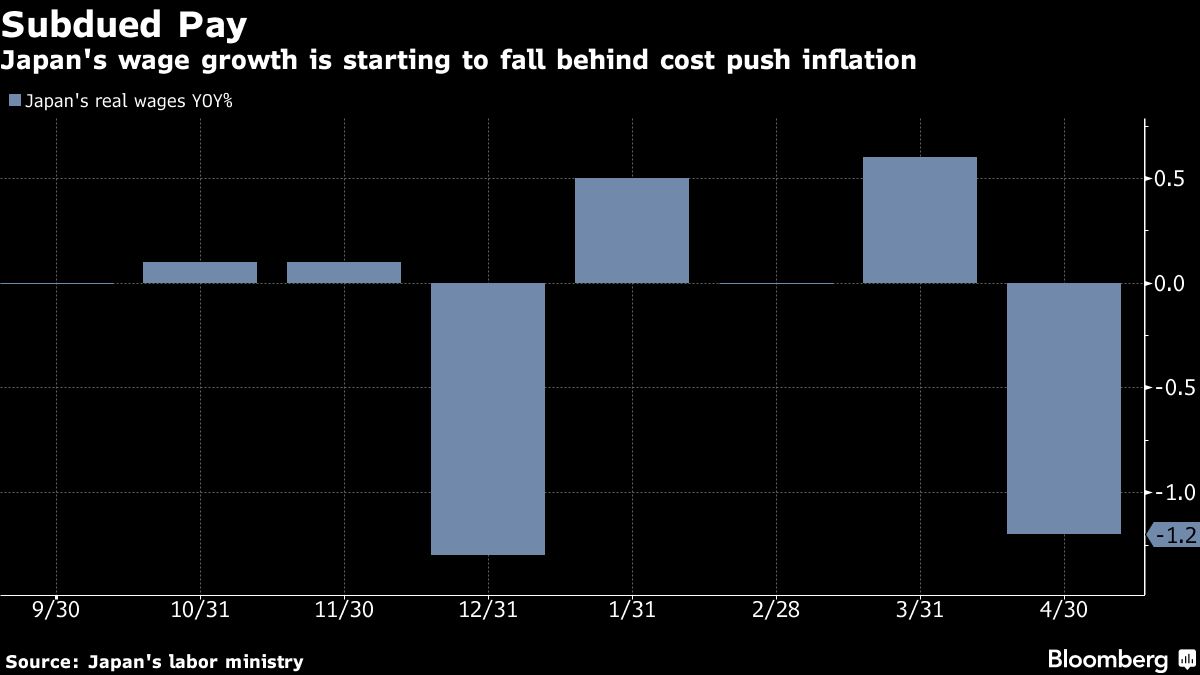
Japan's wages adjusted for inflation dropped in April for the first time in four months, according to a government report earlier Tuesday, in a further indication that cost-push inflation is eating into the purchasing power of consumers.
Real wages are likely to remain under strong downward pressure as inflation is expected to hover around 2% this year mainly due to energy and commodity prices.
Some 82.1% of respondents said price increases were troublesome, while only 2.9% said they were favorable, according to a Bank of Japan survey in April.
More stories like this are available on bloomberg.com
©2022 Bloomberg L.P.

-
Talking Points This Week: Leadership Shock At Nvidia, Earnings Strength, And The Fog Over Hormuz

The Anthropic IPO pricing and first trading day, Nvidia's upcoming earnings, and any fresh signals from Iran will set the tone for the following week.
-
Signature Play: The Classic Cocktail Is Dead. Or Is It?
Classic cocktails are disappearing from India's cocktail menus. But they're still being ordered, taught to bartenders and borrowed from. So, who's really having the last drink?
-
A New Samvat Wishlist: Inclusive Prosperity And Human Development
India has strengthened its economic foundations through infrastructure, digital access and enterprise. Its next growth chapter must deepen productivity, create better livelihoods and widen participation in prosperity.
-
Love, Sex Aur Dhokha: The Audacious Plot To Spy On Jensen Huang
A Taipei dinner, a Singapore chip buyer and a suspected Chinese asset: inside the alleged spy operation that got close to NVIDIA's Jensen Huang.
-
Ten Things I Learnt This Samvat
Patience can be a trap. Cheap stocks can stay cheap. Leverage can wipe you out. What did Samvat 2082 teach us? Niraj Shah writes on 10 lessons from the year gone by.
-
Talking Points This Week: Tech Nerves, FII Buying, And A Faraway Banking Shock
The global markets are not shining this Diwali. The exception in the large markets is, India.
-
Midterm Rally Lasted A Day. The Hard Reality Of A Divided US May Last Two Years | Opinion
Between a contested AI boom, a debt ceiling that arrives in 2027 and a president with every incentive to act alone, the next two years may prove more volatile than the first day's rally suggests.
-
Blue Wave Will Derail the AI Trade but Won't Dismantle the AI Era | Unhedged Position
The Democrats' sweep of the US Congress will see politics collide with economic forces both over the long and short term.
-
It's Time To Take The GST Council's Bet On Trust Global
Payment records can prove India's services exports, and clear, proportionate rules can bring foreign digital sellers into the tax net.
-
Opinion | India at 38: From Innovation Overperformer to Innovation Powerhouse
India now has 453 VC-backed deep science startups, 18 of them late-stage, after 117 percent growth since 2020. Laurus Labs, at USD 9.3 billion, is the most valuable deep science company in any middle-income economy outside China.









