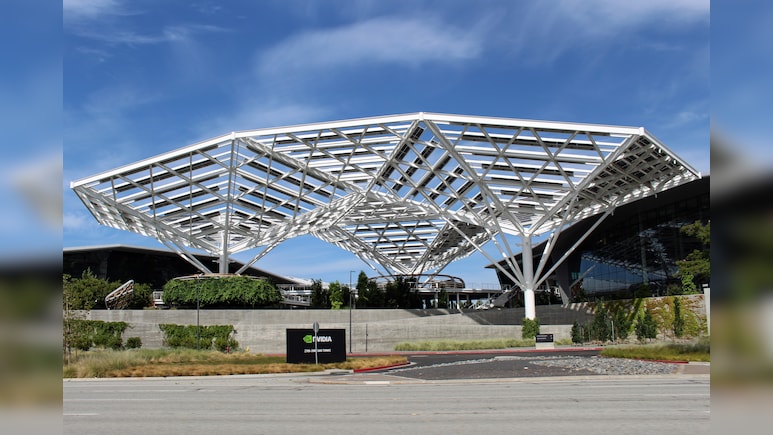
- Jensen Huang resigned as Nvidia CEO amid controversy, with CFO Colette Kress as interim chief
- Huang's close involvement in Nvidia's operations complicates the leadership transition process
- Precedents at Apple, Alphabet, and Uber show founder exits can be managed with clear plans
Nvidia faces a major leadership challenge following Jensen Huang's exit. Investors are now questioning whether the AI chipmaker can maintain its growth without the founder who has led the company for years.
Companies such as Apple, Alphabet and Uber have managed to move on from their founders. Nvidia could find the transition harder, given how closely Huang has been involved in its business strategy, industry relationships and company culture.
Also Read | Layoffs Are Rising In Tech, But These Skills Are Helping People Unlock Better Pay
Nvidia said Huang stepped down as president, CEO and board member with immediate effect on Thursday, appointing CFO Colette Kress as interim chief while it searches for a permanent successor from within or outside the company.
Huang's exit followed reports of alleged extramarital affairs, including one involving a woman reportedly suspected by US intelligence of links to Chinese intelligence, adding to scrutiny of the AI chipmaker.
Michael Withers, a management professor at the University of Notre Dame, told CNBC that Huang's abrupt exit was unusual given his central role at Nvidia, leaving his successor with challenges far beyond a conventional founder-to-CEO transition.
The successor will have to establish an independent leadership identity while managing the reputational and organisational consequences of Huang's departure.
How Apple, Alphabet and Uber managed founder exits
The departures of other tech founders offer useful comparisons. When Steve Jobs stepped down from Apple in 2011, the company had a clear succession plan, with Tim Cook, who had spent years preparing for the role, ready to take over.
Unlike Jobs, who was known for his product vision and innovation, Cook brought strong operational and supply-chain expertise, along with government and business ties. Under his leadership, Apple expanded its services business and strengthened its global market position.
The company's market capitalization rose from around $350 billion when Cook took charge to approximately $4 trillion during his tenure, demonstrating that a founder's departure need not necessarily disrupt a company's growth trajectory.
Alphabet's transition was similarly smooth, with co-founders Larry Page and Sergey Brin stepping down from executive roles in 2019 and handing the reins to Sundar Pichai. Unlike Nvidia, the move was anticipated and described as a natural shift in the company's management structure.
Pichai was already a seasoned executive, ensuring a smooth transition. Alphabet's shares have risen more than 300% since, highlighting its ability to sustain growth under new leadership.
Uber's co-founder Travis Kalanick stepped down in 2017 amid workplace controversies, governance concerns and corporate scandals. His exit unfolded over several months, giving the company time to prepare for the leadership change.
ALSO READ : 1,600 Nvidia Employees Rally Behind Jensen Huang, Demand Boss' Return After Exit Over Affair
Former Expedia chief executive Dara Khosrowshahi subsequently took charge, focusing on rebuilding the organisation, improving corporate governance and steering Uber towards profitability.
Nvidia, however, has not enjoyed the same degree of preparation or an extended transition period.
Why Nvidia's leadership transition is different
One of the biggest challenges for Huang's successor will be filling the gap left by a founder who remained closely involved in the company's day-to-day decisions.
Huang reportedly had around 60 direct reports, an unusually large number that reflected his preference for a flat management structure with fewer layers. This allowed him to stay involved in key decisions across the business but also made him central to how Nvidia operated.
His departure raises questions about how responsibilities will be divided under a new CEO. Withers told CNBC that Nvidia did not appear to have a clear succession plan, adding to the uncertainty around the transition.
The incoming chief will also have to deal with the fallout from the circumstances surrounding Huang's exit and reassure investors that the company can move forward without damage to its reputation.
Maintaining key relationships and staying ahead of rivals
Huang's successor will inherit relationships that the founder spent years building with US policymakers, technology companies and semiconductor suppliers.
Huang had developed close ties with US President Donald Trump and pushed for a more flexible approach to restrictions on advanced chip exports to China. He also maintained strong relationships with suppliers such as South Korea's SK Hynix and Samsung Electronics, both important to Nvidia's semiconductor supply chain.
Storm Uru, co-head of the Global Innovation team at Nvidia investor Liontrust Asset Management, told CNBC that managing the company's culture and supply chain would be among the immediate priorities for the next CEO.
Huang had also persuaded suppliers and industry partners to expand production to meet rising demand for AI infrastructure. Maintaining that support could prove difficult as chipmakers face pressure to keep up with the expansion of AI data centres.
Competition is another concern. Advanced Micro Devices and major cloud computing companies are developing their own AI chips to reduce their reliance on Nvidia. The next CEO will have to keep Nvidia's products ahead of these rivals while steering its next phase of growth.
Can Nvidia operate without Huang?
Some investors believe Nvidia has built a strong enough business to manage the change. The company has thousands of engineers, an established research and development pipeline and a product roadmap that extends several years ahead.
Joanne Feeney, partner and portfolio manager at Advisors Capital Management, told CNBC that investors should look beyond Huang and consider the thousands of engineers working across the company.
The real test will be whether Nvidia can maintain its product pipeline, supplier relationships and growth without relying on its founder to drive every major decision.
Apple, Alphabet and Uber have all continued to grow after their founders stepped away. Nvidia now faces a similar test, but Huang's influence over its business makes the transition a particularly difficult one.
Essential Business Intelligence, Sharp Market Insights, Practical Personal Finance Advice, Daily Fuel, Gold and Silver Prices and Latest Stories — On NDTV Profit.