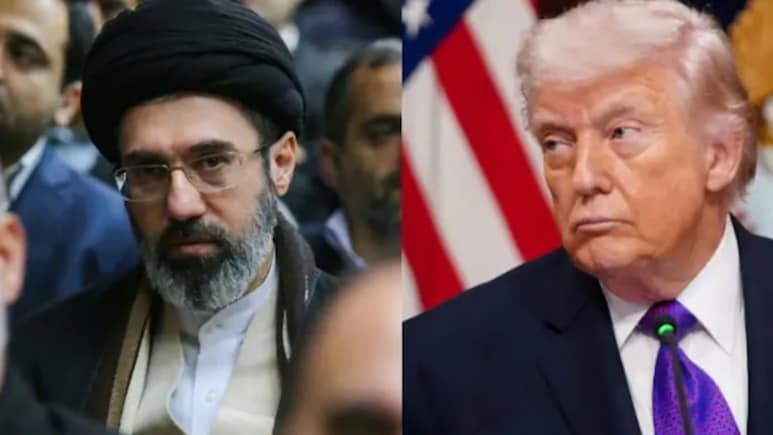
The US said it was waiting for a response from Iran before the warring sides can restart peace talks, with the impasse and worsening tension over the Strait of Hormuz causing energy prices to rise again.
US President Donald Trump extended a ceasefire on Tuesday evening and there's no deadline for its expiry, White House Press Secretary Karoline Leavitt told reporters late Wednesday, dismissing speculation it would only last three to five days. Trump will dictate the timeline, she said.
For its part, Iran has said it will not resume negotiations while a US naval blockade on its ports is in place. In a response to Trump's ceasefire extension this week, state TV cited the foreign ministry as saying the armed forces are ready for any further threat.
Also Read | Layoffs Are Rising In Tech, But These Skills Are Helping People Unlock Better Pay
Leavitt said Trump wants Iran to agree to hand over its stocks of highly-enriched uranium, which the Islamic Republic has so far refused to do. The US and Israel started the conflict by bombing Iran in late February, arguing that Tehran could enrich that material further and try to build an atomic bomb.
“He's not in a rush,” Leavitt separately told Fox News. “It's important to the president that they hand that enriched uranium over. He's made that quite clear to them. And now we're waiting to hear back from the Iranian regime.”
The standoff over the vital Hormuz strait, which remains effectively shut, is worsening. Iran fired on ships on Wednesday and seizing two vessels. Iranian media named them as the MSC Francesca and Epaminondas. Neither of them were American or Israeli and that meant Iran's action didn't violate the ceasefire, Leavitt said.
Washington's blockade of Iranian ports has led to the US navy seizing or intercepting a few vessels traveling to or from the country. The American military said it had intercepted at least two tankers carrying Iranian oil this week, forcing them back to the port of Chabahar on the Gulf of Oman coast.
Trump says that blockade will only end once Iran agrees a deal that ends the war, which has killed thousands of people, wreaked havoc across much of the Middle East and led to a surge in fuel prices.
Brent crude closed above $100 a barrel for the first time since the shaky truce began on April 7, and rose further on Thursday. It climbed 1% to $102.80 as of 8:30 a.m. in London. Global stocks fell, amid concern a prolonged closure of a strait will push up inflation and slow economic growth.
The White House says the blockade is choking off Iran's oil exports. It claims Iran is losing out on $500 million each day, a figure it hasn't provided evidence for.
“The point of this is the economic leverage that we maintain over Iran now,” Leavitt said. “And the crux of that is this naval blockade. We are strangling their main source of revenue.”
She echoed Trump's claim that the wait is down to divisions among Iran's leaders and called for them to give a “unified response.”
US Senator Lindsey Graham, a Trump ally, said the blockade “could become global soon,” suggesting Washington will start trying to seize more ships laden with oil across the world. Almost all Iran's petroleum is sent to China.
Iran's President Masoud Pezeshkian said on Wednesday that Iran welcomes talks, but that the “blockade and threats are main obstacles to genuine negotiations.”
Some Iran-linked vessels appear have passed the US line of warships in the Gulf of Oman, outside the Strait of Hormuz. At least two fully laden Iranian tankers have sailed out of the Persian Gulf this week, according to data intelligence firm Vortexa.
The US military, however, refuted the report, saying the tankers Hero II and Hedy were intercepted earlier this week and are now anchored in Chabahar. The vessel Dorena has been under the escort of a US Navy destroyer in the Indian Ocean, according to a post on X.
Figures from Vortexa suggest at least 34 Iran-linked tankers have made their way through the strait and the US blockade line.
“Tensions are remaining high, and with the US and Iran currently at a stalemate on agreements, until somebody flinches, the path of least resistance for prices still looks higher,” said Dennis Kissler, senior vice president for trading at BOK Financial Securities Inc. “The longer no oil flows through the strait, the higher we will go with prices.”
About a fifth of the world's oil and liquefied natural gas supplies are shipped through the waterway in normal times, as well as aluminum, fertilizers and other agricultural products.
Trump's ceasefire extension was a climb down from threats to resume the bombing of Iran in the event a deal couldn't be reached by a Wednesday deadline.
That ensured no immediate return to fighting in a war that's seen Iran strike Israel and Gulf Arab states with thousands of drones and missiles. But Washington and Tehran still seem far apart on long-term issues related to the latter's nuclear program and support for Middle Eastern militant groups.
Trump on Wednesday suggested some easing of tension when he thanked Iran for heeding his request to cancel the execution of eight women. Yet Iran's Mizan news agency, which is close to the judiciary, said none of them were facing the death penalty.
Israel and Lebanon, meanwhile, are set to resume talks in Washington on Thursday. US Ambassador Mike Huckabee is expected to attend, according to a State Department official.
Israel and Hezbollah began a parallel war in March. A ceasefire announced last week runs through April 26 and has largely held despite mutual accusations of attacks. Trump is seeking a broader accord.
Any return to full-scale fighting in Lebanon would likely worsen the prospects for talks with Iran, which is the main sponsor of Hezbollah and sees the Islamist militant group as a key ally.
(This story has not been edited by NDTV staff and is auto-generated from a syndicated feed.)
Essential Business Intelligence, Sharp Market Insights, Practical Personal Finance Advice, Daily Fuel, Gold and Silver Prices and Latest Stories — On NDTV Profit.