- The US sanctioned 35 entities linked to Iran's shadow banking network to cut revenue channels
- Designations target networks aiding Iran's military and IRGC access to global finance
- Shadow banking helps move illicit oil proceeds and fund missile parts and proxy groups
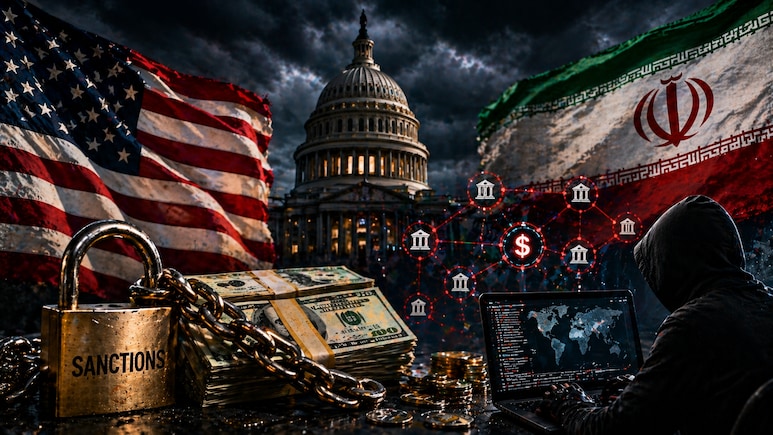
The United States has sanctioned 35 entities and individuals linked to Iran's alleged shadow banking network, widening pressure on Tehran as Washington seeks to cut off key revenue channels.
The move sharpens the US maximum pressure campaign and signals that financial routes used outside regular banking systems remain a central target.
The US State Department said the designations focus on operators of shadow banking networks that allegedly help Iran's military forces, including the Islamic Revolutionary Guard Corps, access the international financial system outside normal regulatory channels.
Also Read | Layoffs Are Rising In Tech, But These Skills Are Helping People Unlock Better Pay
It said those networks help move proceeds from illicit oil sales, support procurement of missile components and weapons systems, and fund Iran-backed proxy groups across the Middle East.
ALSO READ: JD Vance Fears Pentagon 'Misleading' Donald Trump On Iran War, Stockpile Depletion: Report
Iran Under Strain
"Shadow banking networks enable the transfer of tens of billions of dollars to evade sanctions," the State Department said in a statement. "They enable Iran's military forces to illicitly access the international financial system."
The Treasury Department, through Economic Fury, has targeted Iran's international shadow banking infrastructure, access to crypto, shadow fleet, weapons procurement networks, funding for terrorist proxies in the region, and independent Chinese “teapot” refineries that support…
— Treasury Secretary Scott Bessent (@SecScottBessent) April 29, 2026
Treasury Secretary Scott Bessent said the department's "Economic Fury" initiative had already disrupted tens of billions of dollars in potential terrorism funding by targeting Iran's shadow banking infrastructure, cryptocurrency access, weapons procurement networks and Chinese independent "teapot" refineries tied to Iran's oil trade.
Bessent said the campaign had also targeted Iran's shadow fleet and regional proxy funding channels.
What Comes Now
Bessent said economic pressure was showing inside Iran.
"Under the maximum pressure campaign, Tehran's inflation has doubled and its currency has rapidly depreciated," he wrote on social media Wednesday.
He added that Kharg Island, Iran's main oil export terminal, was nearing storage capacity, which he said could force production cuts and lead to about "$170 million per day in lost revenue".
The State Department said the campaign would continue.
"We will not relent in our efforts to deny Iran and its proxies the resources they use to threaten U.S. interests and regional stability," it said.
ALSO READ: Beyond Barrels: UAE's OPEC Exit Lifts The Veil On Saudi-Emirati Rift
Essential Business Intelligence, Sharp Market Insights, Practical Personal Finance Advice, Daily Fuel, Gold and Silver Prices and Latest Stories — On NDTV Profit.