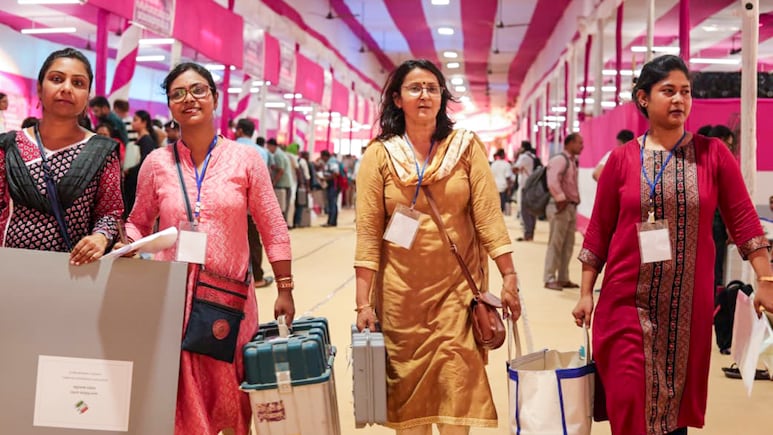
West Bengal goes to the polls on Wednesday in the second and final phase of the assembly elections, with voters choosing 142 MLAs across the state's political heartland. Voting began at 7:00 a.m. of which the outcome will determine whether the Trinamool Congress (TMC) can retain its grip over south Bengal or whether the BJP has finally made decisive inroads into the region.
In a post on X (formerly Twitter), PM Narendra Modi wrote, "Today is Phase-2 of the West Bengal Assembly Elections 2026. Urging all those voting today to do so in record numbers and make our democracy more vibrant as well as participative. It is important that the women and youth of West Bengal, in particular, turnout in large numbers and exercise their franchise."
Today is Phase-2 of the West Bengal Assembly Elections 2026.
— Narendra Modi (@narendramodi) April 29, 2026
Urging all those voting today to do so in record numbers and make our democracy more vibrant as well as participative. It is important that the women and youth of West Bengal, in particular, turnout in large numbers…
At the symbolic core of this phase is Bhabanipur which is Chief Minister Mamata Banerjee's political sanctuary and the BJP's chosen psychological battleground. In Bhabanipur, Mamata will take on take on Leader of Opposition Suvendu Adhikari in what many here describe as the "mother of all electoral contests."
The geography underlines the stakes. North 24 Parganas accounts for 33 seats, South 24 Parganas 31, Howrah 16, Nadia 17, Hooghly 18 and Purba Bardhaman 16, while Kolkata's 11 constituencies carry the greatest symbolic prestige.
North and South 24 Parganas lie at the heart of the contest where these districts can make or break power at Nabanna.
ALSO READ: West Bengal Elections Phase 2: Voting Timings, Voter List Check, Documents Needed
SIR effect
The Special Intensive Revision (SIR) of electoral rolls has turned deletions into perhaps the most politically sensitive issue of phase two. North 24 Parganas lost over 12.6 lakh names, South 24 Parganas over 10.91 lakh, Kolkata nearly 6.97 lakh, Howrah around six lakh, Hooghly 4.68 lakh and Nadia about 4.85 lakh.
In at least 25 constituencies, deleted names exceed the previous victory margin. At the same time, around 1,468 people whose names were restored following SIR-linked tribunal orders will be able to vote on April 29.
However, Bhabanipur remains the prestige seat within that larger battle. It is effectively a rematch of Nandigram, where Adhikari defeated Banerjee in 2021. Five years later, the duel has shifted to the TMC supremo's own bastion. For the TMC, retaining Bhabanipur is about protecting Banerjee's authority in her backyard. For the BJP, breaching it would puncture the aura of invincibility around Bengal's most powerful leader. Adding to the pressure, around 51,000 names, nearly 25% of the electorate, were deleted after the SIR.
Spread across eight Kolkata Municipal Corporation wards, Bhabanipur is often called "mini India" - Bengalis, Gujaratis, Marwaris, Jains, Sikhs, Muslims, and migrants from Bihar and Jharkhand packed into the prestigious seat.
The West Bengal Election results will be declared on May 4.
ALSO READ: West Bengal Exit Polls: How Accurate Were They In Predicting Mamata Vs BJP 2021 Contest
Essential Business Intelligence, Sharp Market Insights, Practical Personal Finance Advice, Daily Fuel, Gold and Silver Prices and Latest Stories — On NDTV Profit.