(Bloomberg) -- Pakistan and Iran said they're aiming to defuse tensions, amid calls for restraint from the US and China after the neighboring nations exchanged missile strikes.
Pakistan Foreign Minister Jalil Abbas Jilani and his Iranian counterpart Hossein Amir-Abdollahian spoke Friday, according to separate statements. Pakistan said the two agreed to de-escalate the situation and discussed the return of ambassadors to their respective capitals. Iran stressed the “sovereignty and territorial integrity” of its neighbor and said the two must cooperate to neutralize and destroy “terrorist camps” in Pakistan.
After the strikes this week, diplomats from Washington to Beijing urged the countries to show restraint and avoid the situation spiraling out of control at a time of rising turmoil in the Middle East over the Israel-Hamas war. The Biden administration spoke out after Pakistan's army responded to an attack by Iran on militant hideouts with its own missile strikes.
“We don't want to see this conflict escalated in any way, shape, or form,” Matthew Miller, the State Department spokesperson, said at a briefing Thursday. “There's no need for escalation, and we would urge restraint on all sides in this case.”
Miller's comments came after China's Foreign Ministry spokeswoman Mao Ning said Beijing was tracking the developments and urged the two countries to avoid making matters worse. China, an economic and military ally of Pakistan and Iran, has been seeking to expand its geopolitical reach.
“We have repeatedly said Iran is a friend,” Pakistan Foreign Ministry spokeswoman Mumtaz Zahra Baloch said by phone earlier on Friday. “We do not want an escalation and we also got similar kind of sentiments from their side. So we are taking it further.”
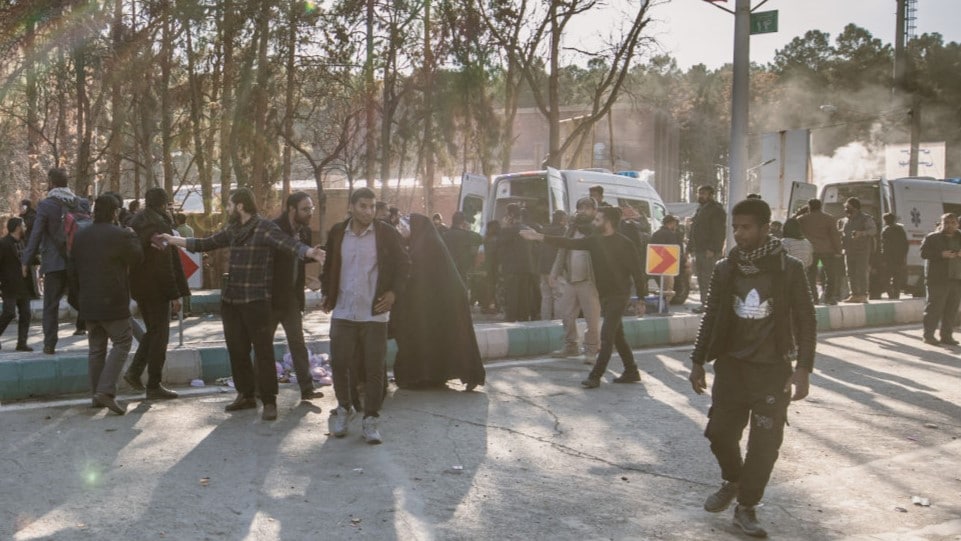
The attacks began earlier this week when Tehran launched air strikes against Jaish al-Adl, a separatist group that it says is based in Pakistan's Balochistan province. Iran's foreign minister said in his Friday statement that the missile strikes were necessary to thwart a planned attack on Iran involving more than 50 militants. Beyond its own retaliatory strikes, Pakistan also downgraded its diplomatic ties with Iran.
Pakistan also on Friday called a meeting of its National Security Committee, which said in a statement that the two nations would mutually overcome “minor irritants through dialogue and diplomacy and pave the way to further deepen their historic relations.”
United Nations Secretary-General Antonio Guterres urged both countries to address their security issues peacefully. Pakistan and Iran share a porous frontier dominated by militant groups including Jaish al-Adl. It has launched multiple attacks on Iranian security forces, most recently a December assault on a police station that killed 11 people.
After this week's flare-up, Turkey offered to help defuse tensions, with Foreign Minister Hakan Fidan shuttling through calls with his Pakistani and Iranian counterparts. Taliban-ruled Afghanistan also asked Pakistan and Iran, both of which it borders, to resolve their differences through diplomatic channels.
The strikes hit less than a month before Pakistan heads into national elections on Feb. 8. Interim Prime Minister Anwaar-ul-Haq Kakar cut short his visit to Davos as the crisis unfolded.
Pakistan's major rival, India, was silent on the retaliatory strikes Thursday, although Randhir Jaiswal, a spokesman with India's External Affairs Ministry, said after Iran's action that “we understand the actions that countries take in their self defense.”
--With assistance from Sudhi Ranjan Sen, Eltaf Najafizada and Kamran Haider.
(Recasts story to incorporate statements from Pakistan and Iran after talks.)
More stories like this are available on bloomberg.com
©2024 Bloomberg L.P.
Essential Business Intelligence, Sharp Market Insights, Practical Personal Finance Advice, Daily Fuel, Gold and Silver Prices and Latest Stories — On NDTV Profit.