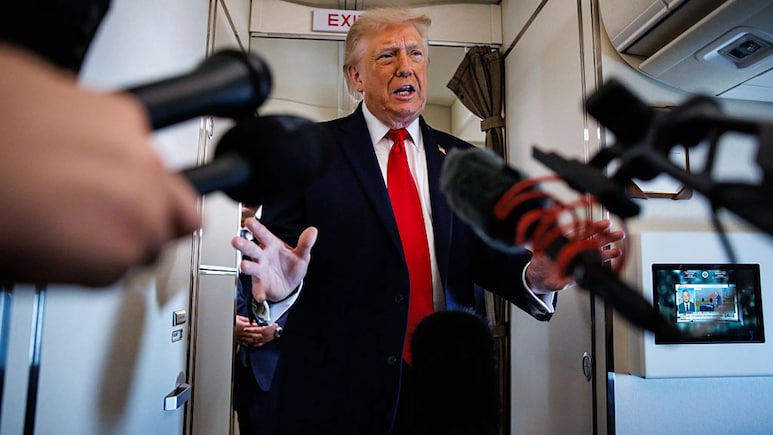
US President Donald Trump could face a difficult final two years in office after Democrats made significant gains in the midterm elections, taking control of both chambers of Congress. With the opposition set to gain greater influence over legislation and congressional oversight, Trump has signalled that he is prepared to use his presidential veto power to defend his administration's agenda.
Trump has repeatedly warned that he could reject legislation passed by Democrats if lawmakers refuse to negotiate with the White House. In a pre-election interview with CBS News, he described the veto as "the ultimate power", adding: "Otherwise I'd just veto everything and they're not gonna want that."

-
 Indian Markets Turning Corner After Two Tough Years, Says Sandeep Tandon
-
 NDTV Profit Ignite 2026: Experts See Opportunity In Equities, Stay Bullish For Long-Term
-
 Buy Right, Sit Tight Does Not Work for Individual Stocks, Says Dinshaw Irani
-
 'Worst Is Behind': Quant MF Sees Market Bottom, Flags 'Extreme Euphoria' In Midcaps
-
 India's Mutual Fund Industry Could Become A $1 Trillion Opportunity, Say Fund Managers
-
 'Foreign Investors Are Baraatis': Raamdeo Agrawal's Take On LTCG Tax
-
 Stay Invested Through Market Cycles: Raamdeo Agrawal at NDTV Profit Ignite
-
 Ramesh Damani Remains Bullish On India For Next 20-30 Years, Sees Bargains Amid Market Weakness
-
 CAS Came After A Long Consultation Process: SEBI Chairman Tuhin Kanta Pandey AT NDTV PROFIT IGNITE
-
 Aim To Cut FPI Onboarding Time From Mth To Five Days: SEBI Chairman Tuhin Kanta Pandey AT NDTV PROFI
The president also welcomed the nickname 'Mr Veto', suggesting that the power could become a key part of his strategy in dealing with a Democratic-led Congress.
Also Read | Layoffs Are Rising In Tech, But These Skills Are Helping People Unlock Better Pay
ALSO READ: 'Reason We Lost Is The War': JD Vance Lists Four Factors Behind Republican Rout In Midterm Polls
But can Trump really block every bill passed by Democrats? And does Congress have any way to overcome his objections?
What Is The Presidential Veto Power?
The US Constitution grants the president veto powers under Article I, Section 7. It allows the president to reject legislation passed by both the House of Representatives and the Senate before it becomes law.
Once a bill reaches the White House, the president can either sign it into law or return it to the chamber where it originated, along with written objections.
The president generally has 10 days, excluding Sundays, to act. If no action is taken within that period and Congress remains in session, the bill automatically becomes law. However, if Congress adjourns before the deadline and the president cannot return the legislation, it fails to become law. This is known as a pocket veto.
Importantly, the president cannot rewrite a bill or remove specific provisions through a veto. The choice is between approving or rejecting the legislation in its entirety.
Can Congress Overturn Trump's Veto?
Yes. A presidential veto is not necessarily the final word. Congress can override it by securing a two-thirds majority in both chambers. With all seats voting, that translates into 290 votes in the 435-member House of Representatives and 67 votes in the 100-member Senate.
This means Democrats would need support from Republican lawmakers if they fall short of the required numbers. While overcoming a veto is difficult, the constitutional provision ensures that the president does not have unchecked authority over the legislative process.
How Can Trump Use The Veto To Pressure Democrats?
Beyond blocking legislation, the threat of a veto can give the president considerable leverage during negotiations.
ALSO READ: Trump Says He'll Become 'Mr Veto' If Democrats Win US Midterm Elections
If Democrats pass bills that conflict with Trump's priorities, he can refuse to sign them, potentially forcing lawmakers to reconsider provisions or seek a compromise with the administration.
Trump has indicated that this is precisely how he intends to use the power.
"Historically, you veto for a couple of months and then they come and say, 'We've got to make a deal,'" he told CBS News.
For Trump, therefore, the veto could become an important negotiating tool. However, his ability to block legislation is not absolute, as Congress retains the constitutional power to override his decision.
Essential Business Intelligence, Sharp Market Insights, Practical Personal Finance Advice, Daily Fuel, Gold and Silver Prices and Latest Stories — On NDTV Profit.