As the dust settles on the landmark US-Iran memorandum of understanding, Vice President JD Vance launched an extensive media blitz on Tuesday to defend and explain the agreement, while Democrats demanded transparency and US intelligence agencies privately raised doubts about Tehran's sincerity.
Here's all you need to know about the MoU and what's going on around it:
1. Vance's Media Blitz
Vance blanketed US television on Tuesday, appearing on ABC, CBS, CNBC, CNN, Fox News and NBC in quick succession.
Also Read | Layoffs Are Rising In Tech, But These Skills Are Helping People Unlock Better Pay
On ABC's Good Morning America, he confirmed the agreement had been digitally signed but remained vague on key elements. On CBS, he denied Iran would receive "billions of dollars of assets." On CNBC, he acknowledged "a lot" of details remained unresolved but insisted the US held "all the cards."
On CNN, he defended the deal against Republican criticism, while on Fox's Hannity he was blunt: Iran doesn't get "a dime" from anyone if they don't change their behaviour. On NBC, he confirmed nuclear inspectors would "absolutely" return to Iran.
In his own video posted to social media, Vance framed the agreement as a binary choice for Tehran.
"This deal really has two pathways. If the Iranians make the long-term commitments never to rebuild, they're going to be welcomed into the world economy. If they try to rebuild that nuclear program, they're never going to have the resources in order to," he said. "It's a win-win for the American people. We ensure Iran doesn't have a nuclear weapon either way."
The President has been clear from day one: Iran will never have a nuclear weapon.
— JD Vance (@JDVance) June 15, 2026
Once again, President Trump's efforts to establish peace have paid off for the American people, despite countless attempts to thwart it by people who hate America and President Trump. pic.twitter.com/w9SWDRCOsZ
2. Deal Already Signed
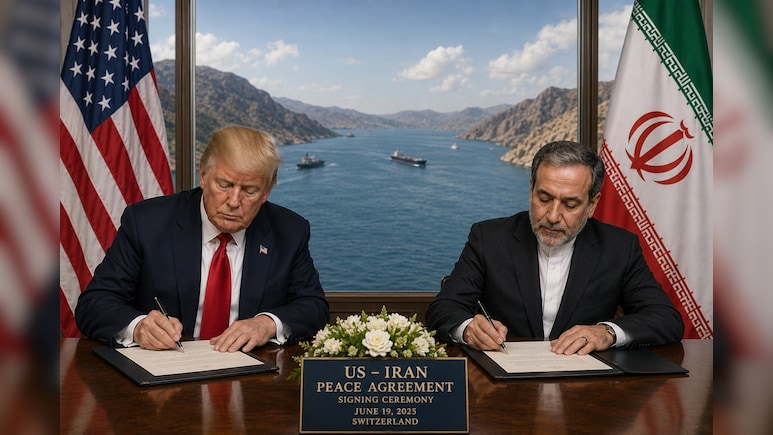
US President Trump confirmed at the G7 summit in Evian, France, that the MoU has been signed electronically by himself, Vance, and Iranian Parliamentary Speaker Mohammad Bagher Ghalibaf. "I am very happy to say it's signed, the deal is all signed," Trump told French President Emmanuel Macron during their bilateral meeting.
3. MoU Text Coming Soon
Trump said the full text of the 14-point agreement would be released publicly. "It's a very powerful document, and I want it to be released. So probably pretty soon," he said, with US officials indicating more details could emerge by Wednesday ahead of Friday's formal signing ceremony in Geneva.
4. Hormuz Already Opening
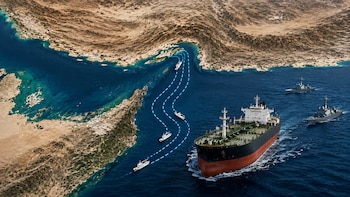
Trump said ships were already moving through the Strait of Hormuz, which will be fully reopened on Friday. Vance confirmed the immediate impact: "You're already seeing oil and gas prices come down just over the past 24 hours."
5. No Taxpayer Money For Iran
Addressing widespread concerns, Vance was categorical across multiple appearances.
"They never get a dime of American taxpayer money ever," he told Fox News' Hannity, framing sanctions relief and reintegration into the world economy as the economic benefit — not direct payments.
6. Trump Denies $300 Million Claim
Trump took to Truth Social to dismiss reports of a direct payment to Iran. "The story that the U.S. is paying Iran 300 million Dollars is Fake News, put out by the Dumocrats!!!" he wrote. The figure had been conflated with a proposed $300 billion post-deal international reconstruction fund contingent on a final agreement.
ALSO READ: Trump Confirms Deal With Iran Already Signed, Hormuz Partially Opened; To Release MoU Text Soon
7. CIA Raises Doubts
Behind the scenes, CIA Director John Ratcliffe briefed Trump that US intelligence suggested Iranian officials were discussing the deal among themselves in terms inconsistent with what they were telling mediators, Axios reported.
Secretary of State Marco Rubio and Defence Secretary Pete Hegseth also privately raised concerns, while Vance, Steve Witkoff and Jared Kushner advocated for the agreement.
8. Democrats Demand Answers
Democratic legislators pushed back sharply. Senator Andy Kim said the American public "deserves to know the contents of the agreement," warning that a durable Iran deal "requires time, thoughtfulness, and careful diplomacy — we have not seen that from this administration."
Representative Diana DeGette called the war with Iran a "spectacular failure" and said "skepticism is warranted." Representative Betty McCollum warned that without addressing deeper issues, "long-term peace will remain out of reach."
9. Iran's Warning
Meanwhile, Iranian President Masoud Pezeshkian struck a cautious and defiant tone, distancing Tehran from claims that a final agreement had been reached. "There has been progress towards stopping the war and initiating negotiations, but a final agreement has not yet been achieved," Pezeshkian wrote on X.
"Iran is prepared for every possibility. Our people have learned from our martyred leaders never to succumb to humiliation." His remarks reflected both the risk of follow-up negotiations breaking down and mounting opposition among hardliners within Iran.
تفاهمنامه تدوین شده، حاصل ماهها گفتوگو و پیگیریهای مستمر در این زمینه است و اگر همه مفاد آن بهدرستی عملیاتی شود، میتواند سندی افتخارآمیز برای کشور تلقی شود.
— Masoud Pezeshkian (@drpezeshkian) June 15, 2026
لازم میدانم از برادرانم آقایان دکتر قالیباف، عراقچی، اعضای شعام و همه کسانی که در این راه نقش داشتند تشکر کنم.
The country's foreign ministry separately said Tehran retained "deep mistrust" of the United States, describing the MoU as "merely a step towards reducing tensions."
Iran's top military command declared that Tehran and its allies had shown the US and Israel they had "no option but to accept defeat and surrender" — framing the deal domestically as a victory, according to Iranian state media, which should be read with that editorial context in mind.
ALSO READ: No, US Not Paying Iran $300 Million, Trump Clarifies As Iran Peace Deal Details Surface
10. Netanyahu's Position
Speaking at a press conference, Netanyahu describing US-Iran deal as a decision taken by US President Donald Trump. While some Israeli politicians and commentators have voiced concerns about the agreement, Netanyahu emphasised that the alliance between Israel and the United States remains strong and that both countries worked closely to counter the Iranian threat.
The Israeli leader argued that the joint military campaign significantly weakened Iran's military infrastructure and leadership capabilities. Rejecting claims that the operation had fallen short because Iran's ruling regime remains in power, Netanyahu said regime change was never an official objective of the war. Instead, he maintained that the campaign focused on eliminating what Israel viewed as immediate existential threats.
Emphasising a growing diplomatic rift, Prime Minister Benjamin Netanyahu pointedly reminded reporters that Israel is not a signatory to the pending U.S.-Iran accord, openly distancing himself from President Donald Trump's decision to finalise the deal.
Essential Business Intelligence, Sharp Market Insights, Practical Personal Finance Advice, Daily Fuel, Gold and Silver Prices and Latest Stories — On NDTV Profit.