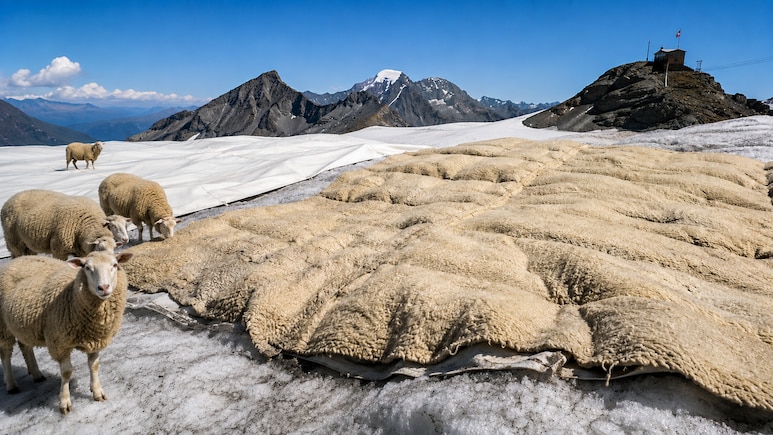
Sheep's wool blankets are being tested as a sustainable, biodegradable substitute for synthetic plastic tarps used to limit summer melting on the Tsanfleuron Glacier at Glacier 3000 as part of the "Keep It Wool" initiative in Switzerland, according to a report.
Researchers are carrying out a unique experiment in the Alps to explore whether sheep's wool, one of Switzerland's less prized natural resources, can aid as the country fights to control the melting of its glaciers.
As global warming melts the ice sheets that have shaped the high Alpine environment for millennia, artificial tarpaulins have been placed over regions of snow and ice in the summer for years to reflect sunlight and lessen heat absorption, according to a report by Reuters.
Also Read | Layoffs Are Rising In Tech, But These Skills Are Helping People Unlock Better Pay
However, those tarpaulins might release harmful microfibers and are usually composed of plastic. Instead, the University of Lausanne and the environmental organisation Summit Foundation are spearheading the "Keep It Wool" initiative, which uses wool to slow the melting of the Tsanfleuron Glacier in western Switzerland.
ALSO READ | Why September Rain Holds The Key To India's Monsoon And Kharif Crops
The unprecedented heat this summer has melted snow on the glaciers weeks ahead of schedule, which will almost certainly result in additional ice loss and is blamed for aggravating rockslides like the one that destroyed the village of Blatten in 2025 and caused the devastating flash flood in the Himalayas last week.
The team's goal, according to project manager Timothee Steiner, was to develop a biodegradable substitute for the 40–70% of Swiss wool that is thrown away annually.
Four students pursuing master's degrees at universities came up with the idea and worked to test it.
Two prototype wool blankets from the Swiss company Fisolan were placed on 200 square meters (2,100 square feet) of the Tsanfleuron Glacier in June. Researchers contrasted their performance with a traditional geotextile cover over the course of the summer. Early findings have surpassed projections.
According to Steiner, measurements conducted every two weeks revealed that both the synthetic and wool covers had restricted melting.
Reducing greenhouse gas emissions, which are primarily caused by fossil fuels, is still the only practical long-term solution to prevent the loss of ice, according to scientists. Only around 0.02% of Switzerland's glacier surface is covered by protective sheets.
Essential Business Intelligence, Sharp Market Insights, Practical Personal Finance Advice, Daily Fuel, Gold and Silver Prices and Latest Stories — On NDTV Profit.


















.jpeg?im=FeatureCrop,algorithm=dnn,width=350,height=197)