- India's 2026 southwest monsoon rainfall is 13% below normal as of August 27
- North-west and central India have rainfall deficits of 10% and 2% respectively
- Punjab, Andhra Pradesh, and Bihar report deficits of 34%, 40%, and 42% in rainfall
India's 2026 southwest monsoon remains stuck in deficit territory even as farmers press ahead with kharif sowing, leaving the crop season's outcome hostage to how much rain falls in September.
Rainfall was 13% below normal as on August 27, against a 5% surplus at the same time last year. The India Meteorological Department (IMD) had already forecast a weak monsoon this year, at 90% of the long-period average, as El Nino conditions built up, and the season has largely followed that script. Rain did pick up in July, cutting the deficit sharply from around 40% in June. But that recovery has since stalled, and the shortfall has stayed stuck through August.
A Deeply Uneven Monsoon Season
The all-India number understates how patchy the season has been. As UBI's research team put it, "spatial asymmetry matters more than the all-India rainfall number," since crop output depends on rain reaching the right regions at the right time and not just on the national total. The north-western and central regions, the two most important for crop output, are running deficits of 10% and 2% respectively. The southern and eastern regions have fared worse, at 22% and 27% below normal.
Also Read | Layoffs Are Rising In Tech, But These Skills Are Helping People Unlock Better Pay
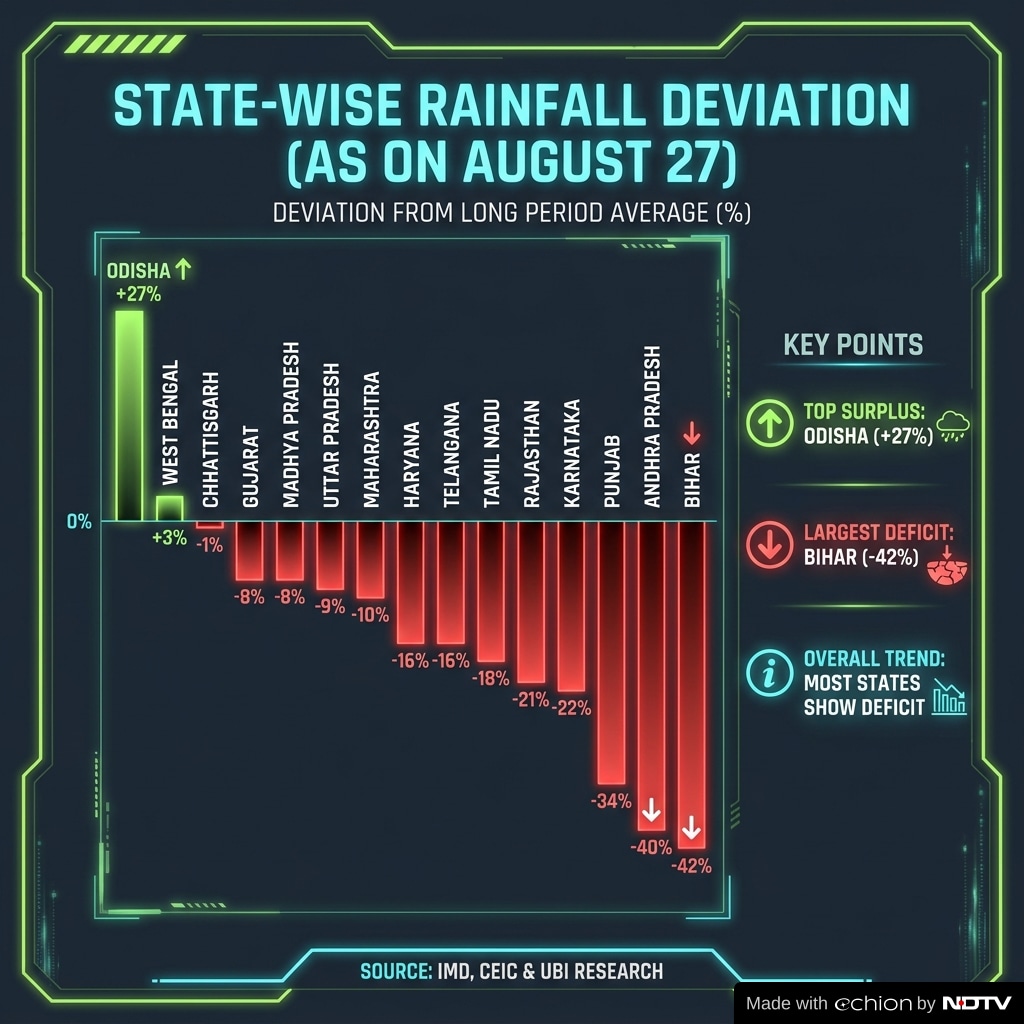
State-wise monsoon shorfall by August-end 2026 mapped
Photo Credit: NDTV Profit
State-level data widens the gap further. Odisha is sitting on a 27% rainfall surplus and West Bengal a modest 3% one, but the picture darkens quickly elsewhere: Punjab is down 34%, Andhra Pradesh 40% and Bihar 42%, three states where rice and wheat are staple kharif and rabi crops. UBI's data shows this is not a one-off; Bihar has posted a rainfall deficit in each of the last five years, a pattern that has kept the state's farm output vulnerable regardless of how the national number reads.
ALSO READ: July IIP Growth Softens To 6.7% As Manufacturing, Electricity Output Cools
Sowing has held up better than the rainfall numbers suggest. Kharif acreage covered 105.7 million hectares as of August 21, just 1.5% behind last year, a sharp recovery from a 23% shortfall in early July. But the crop mix has shifted: pulses, cotton and oilseeds are gaining ground while rice, coarse cereals and sugar acreage is shrinking.
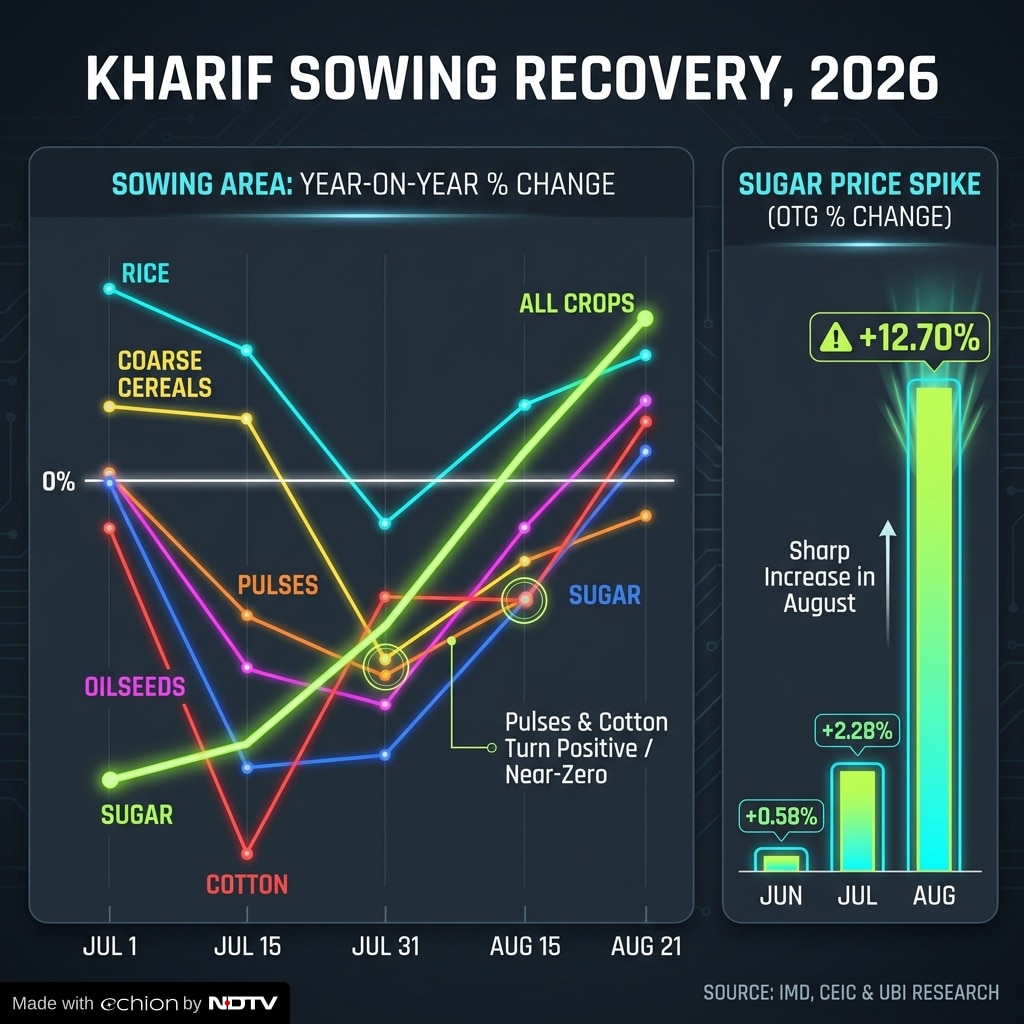
Kharif crop sowing has been almost at par with 2025, despite the challenges
Photo Credit: NDTV Profit
Reservoirs Buy Some Time, Unevenly
Reservoir storage offers a partial cushion. The 176 reservoirs tracked by the Central Water Commission held 64% of live capacity as on August 20, up sharply from 44% at July-end, though still below last year's 78%. The improvement has not been uniform: eastern and western regions have actually topped last year's storage levels, while the north is lagging badly at 57% of capacity, just 68% of what it held a year ago, a worry heading into the rabi season.
UBI maintains its FY27 CPI forecast at 5%, but warns that a confirmed El Nino could push food inflation high enough to lift that projection to 5.5% or higher. The bank's economists note that rainfall deficits tend to feed into food prices with a lag, showing up more clearly after the harvest than immediately after sowing, which means the full price impact of this season's shortfall may not be visible for months. Beyond the monsoon itself, UBI expects the timing of a US Federal Reserve rate move and the path of crude oil prices to weigh on the central bank's decision, with a rate hike back in play for the December or February policy review should El Nino conditions firm up.
With September the last month of the southwest monsoon, the coming weeks will determine not just this year's kharif output but soil moisture and reservoir levels for the rabi season that follows. Come September, farmers, reservoir managers and the RBI will all be asking the same question CCR once did: have they seen the rain they needed?
ALSO READ: Why India's Biggest Stocks Stopped Working: Three Top Investors, One Verdict
Essential Business Intelligence, Sharp Market Insights, Practical Personal Finance Advice, Daily Fuel, Gold and Silver Prices and Latest Stories — On NDTV Profit.