The United States has ramped up its military presence around the Strait of Hormuz, deploying warships and attack helicopters as tensions with Iran escalate and maritime restrictions intensify.
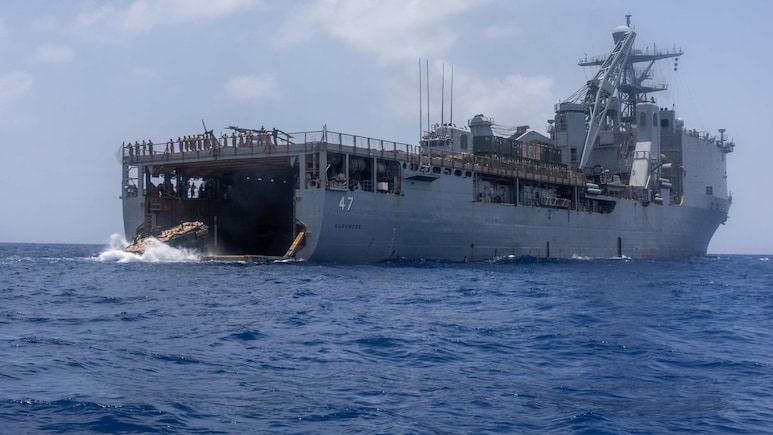
In a series of updates, United States Central Command (CENTCOM) said sailors and Marines aboard the USS Rushmore are actively engaged in blockade operations in the Arabian Sea.
ALSO READ | Iran War Causes $50 Billion Oil Loss In 50 Days
Also Read | Layoffs Are Rising In Tech, But These Skills Are Helping People Unlock Better Pay
CENTCOM added that the USS Pinckney is patrolling regional waters in support of the mission, claiming that “the blockade has completely halted economic trade going into and out of Iran by sea.”
The USS New Orleans has also been deployed, with personnel seen monitoring shipping activity as part of enforcement measures.
In a separate update, CENTCOM said AH-64 Apache helicopters were flying over the Strait on April 17, noting that US Army soldiers are “providing a visible presence in support of freedom of navigation.”
Sailors and Marines aboard dock landing ship USS Rushmore (LSD 47) conduct blockade operations in the Arabian Sea. pic.twitter.com/xF6n9ZFkvt
— U.S. Central Command (@CENTCOM) April 19, 2026
Another vessel, the USS Canberra, is also patrolling the Arabian Sea.
CENTCOM said that since the start of operations, 23 ships have complied with US directions to turn around, underscoring tighter controls on vessels attempting to access Iranian ports and coastal areas.
The military build-up comes after Iran reversed its brief decision to reopen the Strait, warning it would continue to restrict transit as long as the US blockade remains in place.
Tehran's move followed remarks by Donald Trump, who said the blockade “will remain in full force” until Iran agrees to a deal with Washington, including on its nuclear programme.
ALSO READ | Iran-Aligned Yemen's Houthis Threaten To Shut Bab Al-Mandeb Strait
Iran had briefly allowed commercial shipping through the Strait after a 10-day truce between Israel and the Iran-backed Hezbollah appeared to hold.
The Strait of Hormuz handles nearly a fifth of global oil flows, and any prolonged disruption could tighten supplies and push up crude prices worldwide.
Despite the escalation, Pakistani officials indicate that Washington and Tehran may be edging closer to an agreement ahead of an April 22 ceasefire deadline.
Essential Business Intelligence, Sharp Market Insights, Practical Personal Finance Advice, Daily Fuel, Gold and Silver Prices and Latest Stories — On NDTV Profit.