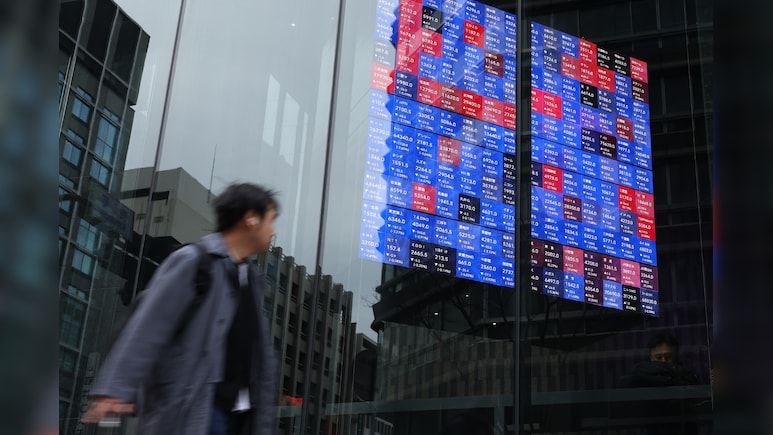
US equity futures and Asian stocks declined on Thursday, extending a volatile week, as another rally in oil prices and mounting strain in the private credit market weighed on investor sentiment.
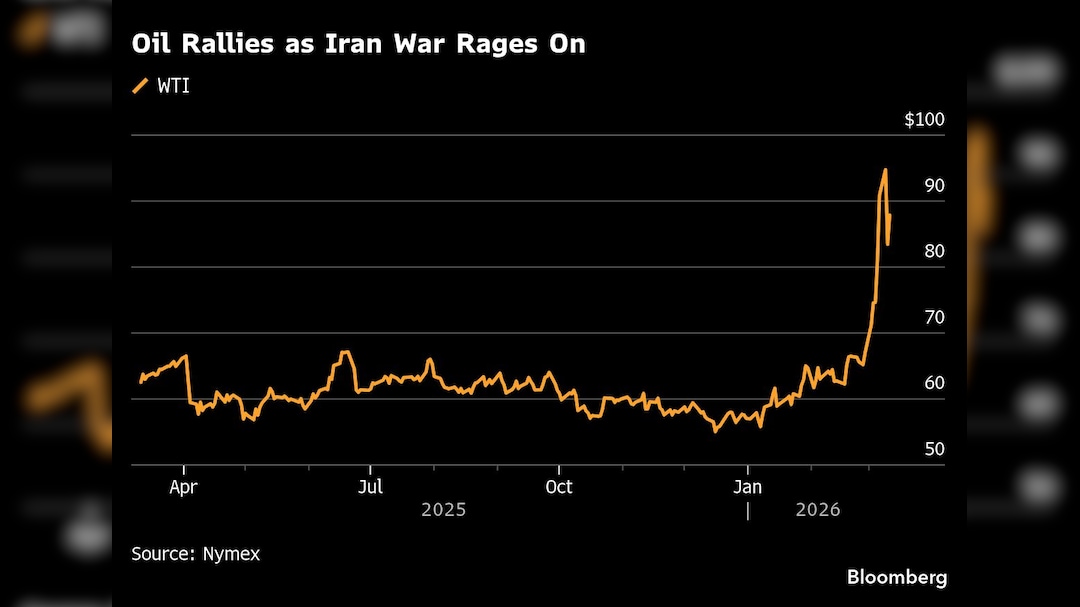
Contracts for the S&P 500 Index were down 0.8% while a gauge of Asian shares dropped as much as 1.1% in early trading. Treasury yields rose. Oil gained for a second day as escalating rhetoric over the Iran war raised concerns over a prolonged conflict, outweighing an emergency release of crude reserves by wealthy nations.
Energy markets remained the biggest focus for investors as volatility in oil and gas prices continues to feed into inflation expectations. US equities ended little changed Wednesday while Treasuries fell across the curve even as data showed inflation slowed in February from a month earlier. That reflected concern that the Iran war, which has boosted energy costs, is complicating the Federal Reserve's path on interest rates. Traders now anticipate the Fed will cut rates only once this year.
“Despite the prospect of releasing oil reserves, continued uncertainty translates into continued upside risk for oil prices, and that translates into a Fed that will remain cautious about cutting interest rates,” said Ellen Zentner at Morgan Stanley Wealth Management.
There has been no break in the conflict overnight in the Middle East, with strikes hitting energy infrastructure. Iraq's oil ports have completely stopped operations, according to the state-run Iraqi News agency, as two tankers were attacked.
The US plans to release 172 million barrels from its emergency oil reserve as nations around the world work to ease surging crude and fuel prices. That's part of the plan by member countries of the International Energy Agency to discharge 400 million barrels from reserves globally, its largest-ever release.
President Donald Trump said the massive release of emergency oil reserves approved by the IEA would ease energy price pressures while the US seeks to “finish the job” in its campaign against Iran. Iran has told regional intermediaries that for a ceasefire, the US must guarantee neither it nor Israel will strike the country in the future, according to officials familiar with the matter.
Separately, Trump is preparing to invoke powers that would permit renewed oil production off the southern California coast. Trump said he didn't believe Iran was laying mines in the Strait of Hormuz and repeated his suggestion the war would end soon.
Meanwhile, Morgan Stanley capped redemptions from one of its private credit funds, returning less than half of the capital that investors sought to cash out. That added to a wave of redemption requests in the industry amid growing concerns over the quality of loans.
Changing Path
In Asia, the yen touched its weakest level against the greenback since January. After holding policy settings steady next week, the Bank of Japan will likely raise its benchmark interest rate in April, according to more than a third of surveyed economists.
The S&P 500 declined 0.1% on Wednesday, while the Nasdaq 100 was flat.
Data out Friday will likely paint a picture of more stubborn inflation. Economists see the Fed's favored core personal consumption expenditures price index up 0.4% again in January. Compared with the same month last year, the median forecast calls for a 3.1% increase.
“February's inflation numbers were heading in the right direction, but then along came the conflict in the Middle East, and now the path is changing,” said Brian Jacobsen at Annex Wealth Management.
While investors are far more focused on how the conflict in Iran feeds into inflation over the months ahead, the latest data offers some reassurance that price pressures were not moving in the wrong direction before the recent energy shock, said Seema Shah at Principal Asset Management.
“The Fed has historically looked through energy‑driven price spikes,” she noted. “But with inflation having sat above target for almost five years, it may be harder to do so this time.”
ALSO READ: Stock Market Today: All You Need To Know Before Going Into Trade On March 12
Some of the main moves in markets:
Stocks
- S&P 500 futures fell 0.8% as of 9:28 a.m. Tokyo time
- Hang Seng futures fell 0.2%
- Japan's Topix fell 1.3%
- Australia's S&P/ASX 200 fell 1.5%
- Euro Stoxx 50 futures fell 0.6%
Currencies
- The Bloomberg Dollar Spot Index rose 0.2%
- The euro fell 0.2% to $1.1539
- The Japanese yen fell 0.2% to 159.19 per dollar
- The offshore yuan was little changed at 6.8833 per dollar
- The Australian dollar fell 0.3% to $0.7132
Cryptocurrencies
- Bitcoin fell 0.5% to $70,308.56
- Ether fell 0.7% to $2,055.12
Bonds
- The yield on 10-year Treasuries advanced one basis point to 4.24%
- Japan's 10-year yield declined one basis point to 2.170%
- Australia's 10-year yield advanced 13 basis points to 4.98%
Commodities
- West Texas Intermediate crude rose 7.6% to $93.86 a barrel
- Spot gold fell 0.4% to $5,157.42 an ounce
Essential Business Intelligence, Sharp Market Insights, Practical Personal Finance Advice, Daily Fuel, Gold and Silver Prices and Latest Stories — On NDTV Profit.