(Bloomberg) -- It seemed like the 2024 equivalent of a Sputnik moment: In a cryptic statement this week, a US lawmaker privy to US intelligence warned of a grave but unspecified security threat from Russia.
After days of uncertainty, President Joe Biden offered the most detailed account yet Friday of what the danger was. Russia has been developing an anti-satellite space weapon, but it doesn't pose a “nuclear threat” to those on Earth. In fact, Biden said, it may never go ahead.
“What we found out was there was a capacity to launch a system into space that could theoretically do something that was damaging. Hadn't happened yet,” Biden said. “And my expectation — my hope — was it will not.”
While the threat wasn't as immediate as the initial panic suggested, the Russian ambition highlights what security experts and the US government say is growing competition among the US, Russia and China to develop attack and counter-attack capabilities in space. That's fueled growing concern that the once dormant space race between Cold War rivals is kicking back into high gear with a volatile new dimension: potential space wars.
And while the revelation may have been a shock to most Americans, researchers have spent years tracking and testing for the possible effects of a nuclear blast in space, based on the understanding that Russia or another adversary might try to develop one.
Greg Falco, an aerospace engineering assistant professor at Cornell University who runs a lab focused on weapons in space, said researchers have known for years that China or Russia might attempt to put nuclear weapons in space that could deliberately cause satellite blackouts in specific regions.
“It's like a solar storm on steroids,” he said of the potential impact.
Experts say the damage from a nuclear weapon exploding in low-earth orbit could fry any satellites for hundreds of miles and that the resulting radiation could cause cumulative harm to satellites passing through the affected region for months. The electronics on spacecraft also risk failure as a result of nuclear blast irradiation.
Whether or not Russia deploys a nuke, what's clear is that the US and its two main adversaries, Russia and China, have developed increasingly advanced programs to wage conflict against each other's assets in orbit, enhancing their capabilities take out satellites and disrupt communications networks.
Powerful Pulses
Falco said the Defense Department and others have been looking in recent years at whether China or Russia might be developing capabilities or testing of high-altitude nuclear explosions, which can then create powerful high-altitude electromagnetic pulses.
Moscow and Beijing also have made the assessment that the US depends too much on its communications and spying satellites to give it a tactical advantage.
Earlier: China, Russia Disguise Threats Posed by Satellites, US Says
“China and Russia view the U.S. as overly reliant upon space for military and information superiority,” the US Space Force said in “Competing in Space,” a January report. “Seeking asymmetric advantages in future conflict, both countries are designing, testing, and demonstrating counterspace weapons to deny, disrupt or destroy satellites and space services.”
The US is determined not to be left behind. Although there's no indication the US is putting nuclear weapons in space — which would be a violation of the 1967 Outer Space Treaty — it's widely seen as the most advanced in the world when it comes to space.
In September, the US conducted the first launch in a new constellation of satellites known as “Silent Barker” designed to track Chinese or Russian spacecraft that could potentially disable or damage orbiting American systems.
Silent Barker is a response to efforts by China and Russia to develop systems capable of launching into orbit and taking out other satellites. In its annual threat assessment this year, the US Office of the Director of National Intelligence said China has weapons intended to target US and allied satellites, and “counterspace operations will be integral” to operations by its People's Liberation Army.
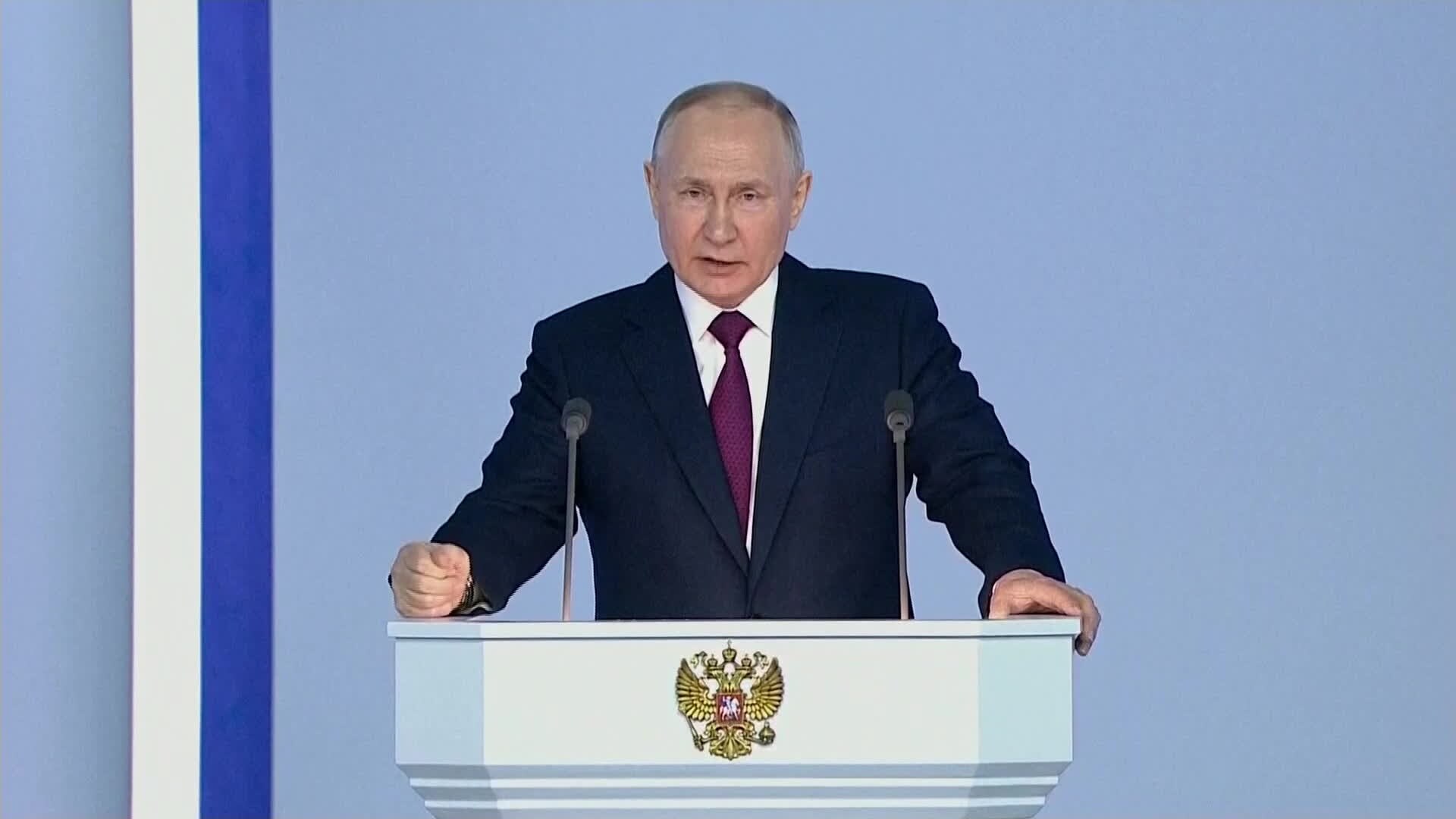
And while much of it is in the future, some is happening already. Russian President Vladimir Putin's government has floated the prospect of attacking commercial satellite systems that assist its enemies. The US and allies have already accused Russia of being behind a sweeping cyber attack on Viasat satellite modems across Europe that affected the Ukrainian military's ability to communicate on the eve of Russia's invasion of Ukraine in February 2022.
Experts say that neither Russia nor China could detonate a nuclear burst in space without affecting their own systems. But they may judge the US has more to lose.
“If conflict were close to China or Russia and we were operating at longer range, space might be more important to us than it might be to them,” said Eli Niewood, an aerospace engineer with the government-funded research group MITRE. “There's lots up there that is not hardened.”
--With assistance from Tony Capaccio.
More stories like this are available on bloomberg.com
©2024 Bloomberg L.P.
Essential Business Intelligence, Sharp Market Insights, Practical Personal Finance Advice, Daily Fuel, Gold and Silver Prices and Latest Stories — On NDTV Profit.