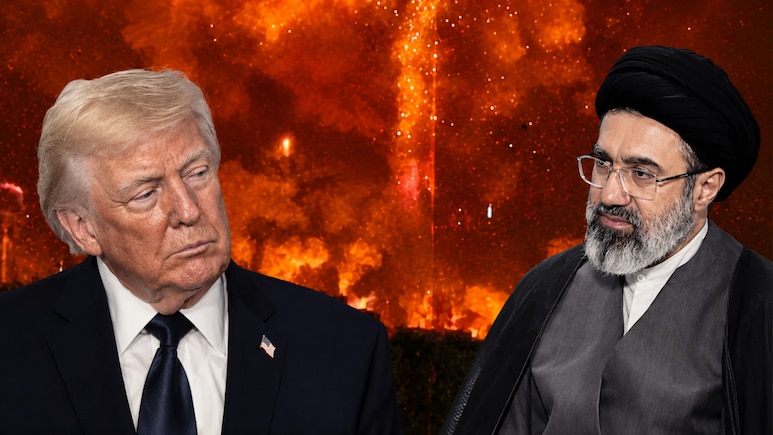
US President Donald Trump said negotiations with Iran will resume on Monday, a day after announcing he had called off a planned military strike that was contingent on both sides "rapidly" reaching a deal.
Speaking to reporters aboard Air Force One, Trump said Saudi Arabia, the United Arab Emirates, Qatar and Iran had all asked him to hold off on strikes that he described as being on a massive scale.
"They asked us not to do it. They said, 'Please don't do it.' Their neighbours said that too. We are just going to see whether or not we can make a deal," he said.
Also Read | Layoffs Are Rising In Tech, But These Skills Are Helping People Unlock Better Pay
Trump said he had personally asked Saudi Arabia's Crown Prince for his preference, quoting him as saying, "We would prefer a deal rather than an attack." He added that allies believed an agreement had already been reached on the Strait of Hormuz, with a nuclear deal expected to follow.
On the substance of the talks, Trump said, "We are talking to them [the Iranians] in the form of a negotiation; it begins tomorrow afternoon, and we'll see how it goes. I'd love to do that. It'll save a lot of lives; a lot of unnecessary power, to be honest with you. We are ready to go whenever we want."
Asked whether Iran faced a deadline to reach an agreement, Trump said, "We will see. I am not looking to kill people," reiterating that he did not wish to see further loss of life.
ALSO READ: From Nukes To Hormuz: Inside Trump's Proposed Truce Deal With Iran
He touted progress in the talks, including on reopening the Strait of Hormuz, a critical route for global oil shipments that has been at the centre of regional tensions in recent weeks.
However, Iranian state media gave no indication that Tehran had requested the attacks be called off or that its stance on the waterway had changed, pointing to a possible gap between Washington's characterisation of the talks and Tehran's public position.
Trump did not specify what concessions, if any, Iran had offered in exchange for the reprieve, nor did he detail the scope of Monday's planned negotiations.
The reprieve comes after weeks of heightened military tension in the region, with the Strait of Hormuz emerging as a key flashpoint given its importance to global oil flows.
Monday's talks will be closely watched for any sign of a formal breakthrough, particularly on the nuclear issue that has remained the central sticking point between Washington and Tehran.
ALSO READ: US-Iran Truce? Trump Cancels Fresh Attacks Against Tehran As 'Perimeters Of Deal Agreed'
Essential Business Intelligence, Sharp Market Insights, Practical Personal Finance Advice, Daily Fuel, Gold and Silver Prices and Latest Stories — On NDTV Profit.