NDTV's Datafy has used open-source intelligence (OSINT) tools and satellite mapping to decode what could be a potentially new maritime movement pattern emerging in the strategically vital Strait of Hormuz, amid heightened geopolitical tensions in the region.
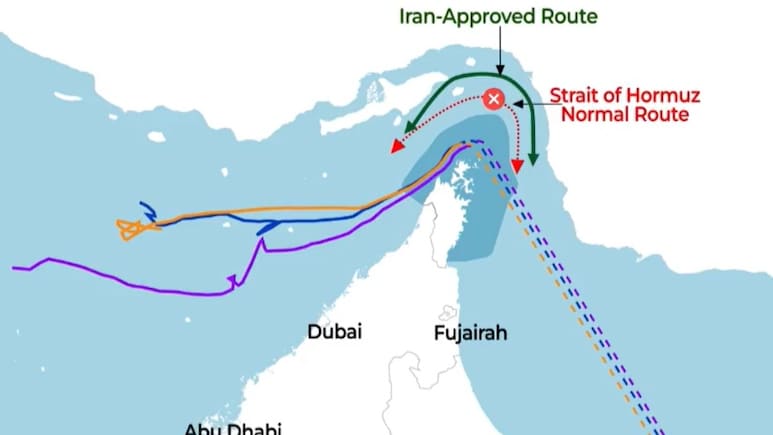
The analysis, shared by NDTV's Editor-In-Chief Rahul Kanwal in a post on X, combined publicly available satellite imagery with vessel-tracking data to map changing shipping behaviours in and around one of the world's most important chokepoints for global energy supplies.
NDTV's #Datafy team uses OSINT + satellite mapping to decode a potential new route emerging in the Strait of Hormuz.#Datafy #OSINT #StraitOfHormuz@ndtv pic.twitter.com/meq4k3lvle
Also Read | Layoffs Are Rising In Tech, But These Skills Are Helping People Unlock Better Pay
— Rahul Kanwal (@rahulkanwal) April 4, 2026
The Strait of Hormuz, which connects the Persian Gulf to the Arabian Sea, handles a significant share of the world's oil and liquefied natural gas shipments. Any disruption, or perceived risk, along this route has immediate implications for global energy markets, insurance costs, and regional security.
Iran blocked it for ships after the war with the US and Israel started on Feb. 28, 2026. In March, Tehran set up a new route to regulate traffic in the strait. This is in-between Iran's land border and the island of Larak. Iran reportedly charges up to $2 million per ship, but does not allow passage to all.
This equation changed on April 2 when three ships attempted a new route. Instead of using Iran's corridor, they stayed within Oman's territorial waters. They reportedly went dark while crossing the strait.
An Indian cargo ship also took the same route and crossed the strait on April 3. The video showed the Marshall Islands-flagged Habrut and Dhalkut oil tankers; and Japan's Sohar LNG reportedly passed the strait. NDTV's Datafy analysis matched Dhalkut's features, confirming its identity.
If this alternate route holds, it could reduce the dependence on Iran-controlled passage through Hormuz. It could reshape how ships navigate one of the world's most-sensitive chokepoints.
OSINT-based analysis has become an increasingly important tool for media organisations and analysts worldwide, particularly during conflicts where access to on-ground information is limited. By relying on verifiable, publicly available data, such methods allow independent assessment of developments with global consequences.
While NDTV Datafy has not characterised the findings as definitive proof of a permanent rerouting, the analysis underscores how real-time satellite monitoring and OSINT can reveal subtle but significant changes in global maritime behaviour-especially in flashpoints like the Strait of Hormuz, where even marginal shifts can have outsized economic and geopolitical impact.
Essential Business Intelligence, Sharp Market Insights, Practical Personal Finance Advice, Daily Fuel, Gold and Silver Prices and Latest Stories — On NDTV Profit.