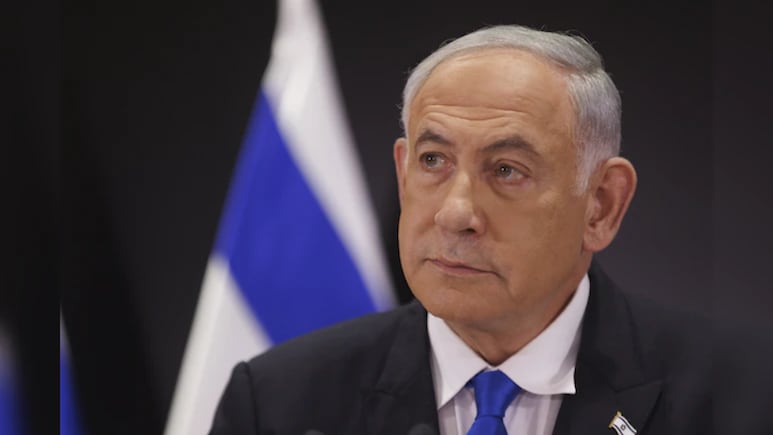
The Israeli military destroyed underground infrastructure belonging to Hezbollah in the village of Majdal Zoun in southern Lebanon as part of "Operation Closing Verse," Prime Minister Benjamin Netanyahu and Defense Minister Israel Katz said in a joint statement.
"The tunnel, which ran more than 200 meters and reached a depth of over 25 meters, contained hundreds of weapons and several launch shafts aimed at Israeli territory," according to the statement.
The Israel Defense Forces said the underground complex was built using "technology and expertise provided by Iran", and that troops located four launch shafts directed toward Israel inside it.
Also Read | Layoffs Are Rising In Tech, But These Skills Are Helping People Unlock Better Pay
????DISMANTLED: An underground Hezbollah terror complex in the area of Majdal Zoun, within the Security Zone in southern Lebanon.
— Israel Defense Forces (@IDF) June 28, 2026
The underground complex was constructed using technology and expertise provided by the Iranian terror regime. The tunnel route was 200+ meters long and…
Israel informed the United States and the American representative in Lebanon in advance of the operation, the statement further said.
"IDF commanders and soldiers will remain in the security zone in southern Lebanon and will continue destroying terrorist infrastructure, removing threats to northern communities and safeguarding Israeli citizens", the statement said.
Prime Minister Benjamin Netanyahu and Defense Minister Israel Katz:
— Prime Minister of Israel (@IsraeliPM) June 28, 2026
As part of Operation Closing Verse, the IDF has just destroyed the underground terrorist infrastructure of the Hezbollah terrorist organization in the area of the village of Majdal Zoun in southern Lebanon.
The…
The strike came hours after the Israeli military said it had hit Hezbollah militants armed with rocket-propelled grenades and struck a rocket launcher in the Nabatieh area of southern Lebanon.
ALSO READ: Explained: Israel-Lebanon Agreement And Why Hezbollah Is Warning Of A 'Civil War'
Hezbollah said early Monday that the Israeli strikes were a "flagrant" violation of the ceasefire it has adhered to so far. "What the enemy has done is a blatant violation of the ceasefire to which it has adhered until now," the group said in a statement, Reuters reported, adding that it is "monitoring and tracking these violations" and "reserves its right to defend its homeland and its people."
Hezbollah leader Naim Qassem has separately rejected a US-brokered security agreement between Israel and Lebanon, calling it a surrender to Israel and saying the group would continue its armed resistance.
Meanwhile, Lebanese Parliament Speaker Nabih Berri, who also heads the Amal Movement Party and is a key Hezbollah ally, rejected the framework agreement between Israel and Lebanon, calling it "contradictory and impossible to implement," Al Jazeera reported.
"This agreement will not pass, and it will not be implemented in its current form," Berri said in a statement shared by his party, describing it as "an agreement of 'dictates,' not an agreement that preserves Lebanon's rights."
He added: "This agreement was designed to sow discord between the Lebanese, which I categorically reject."
The strike came two days after Lebanon and Israel agreed to the US-brokered arrangement, which envisions a phased Israeli withdrawal from parts of southern Lebanon alongside deployment of the Lebanese army, while allowing Israeli forces to remain in an expanded security zone for now.
The operation adds to mounting strain on the fragile ceasefire between Israel and Hezbollah, which has faced repeated violations from both sides since being brokered earlier this year with US, Qatari and Iranian mediation.
ALSO READ: Saudi Aramco Helicopter Crash In Ras Tanura Kills All 14 On Board
Essential Business Intelligence, Sharp Market Insights, Practical Personal Finance Advice, Daily Fuel, Gold and Silver Prices and Latest Stories — On NDTV Profit.