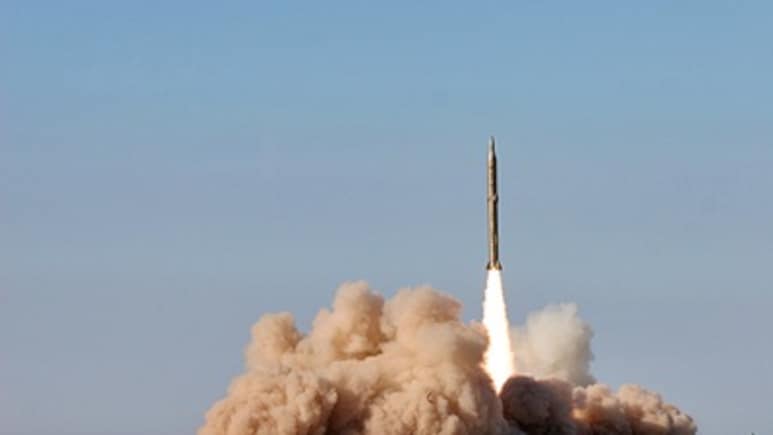
As the conflict in the Middle East enters its third week, Iran has, for the first time in the current war, deployed its long-range Sejjil ballistic missile against Israel and targets across the Gulf, according to official statements and media reports.
Iranian authorities said the missile was launched as part of “Operation True Promise 4”, with Sunday's barrage marking the 54th wave of strikes aimed at Israeli military and administrative infrastructure. International media reported that the Sejjil's operational use in this phase of the war signals a significant escalation in Tehran's missile campaign.
ALSO READ | Fresh Benjamin Netanyahu Video Fuels Deepfake Claims As Internet Spots 'Missing Ring'
Also Read | Layoffs Are Rising In Tech, But These Skills Are Helping People Unlock Better Pay
What is the Sejjil missile?
Also known as Ashoura or Ashura, the Sejjil is a two-stage, solid-fuel ballistic missile developed domestically by Iran's Aerospace Industries Organisation. It was designed to replace older Shahab-class missiles and is considered one of Iran's most advanced strategic weapons.
With a reported range of around 2,000 km, the missile is capable of reaching targets like Tel Aviv within minutes. It can carry a warhead of up to 700 kg and is believed to be capable of delivering both conventional and nuclear payloads.
Its solid-fuel design allows for quicker launch times compared to liquid-fuel missiles, making it harder to detect and intercept.
Iran launched 'Sejjil' missile for the first time since the war began.
— error69 (@sixtoninee) March 15, 2026
This missile is solid-fuel, making it significantly harder to detect and intercept. pic.twitter.com/i0cpCbIYsx
Why is it called the ‘Dancing Missile'?
The Sejjil's ability to manoeuvre during different phases of flight has earned it the nickname “Dancing Missile”. Analysts say this feature makes it difficult for air defence systems — including Israel's Iron Dome, to intercept. Some reports also suggest that advanced variants, such as the Sejjil-2, may include anti-radar coatings, further complicating detection.
???????????????? Israel intenta interceptar el lanzamiento del misil Sejjil superpesado, de momento el misil sigue su curso. https://t.co/hMFWCBuIE5 pic.twitter.com/ATYBwLXC9l
— ???????????????????????? ???????????????? ???????? (@EurekaNews10) June 18, 2025
Deployment and impact
Iran's Revolutionary Guards said the Sejjil was launched alongside other missiles, including Khorramshahr, Kheibar Shekan, Qadr and Emad, targeting military bases such as Al-Harir Air Base and Camp Arifjan in Kuwait. In Israel, missile strikes reportedly caused damage in and around Tel Aviv, with emergency services citing injuries. A US consular residence was also said to have been hit.
Also Read | UAE Gas Field Set Ablaze As Iran Strikes Squeeze Energy Supplies
No signs of de-escalation
Despite mounting casualties, with reports suggesting over 2,000 deaths, there appears to be no immediate path to ceasefire. US President Donald Trump said Washington was “not ready” to strike a deal, adding, “Iran wants to make a deal, and I don't want to make it because the terms aren't good enough yet.”
Iran, however, has ruled out negotiations. Foreign Minister Abbas Araghchi said, “This war was started by President Trump and the United States by their own choice… Iran will continue defending its peole no matter how long it takes.”
Essential Business Intelligence, Sharp Market Insights, Practical Personal Finance Advice, Daily Fuel, Gold and Silver Prices and Latest Stories — On NDTV Profit.