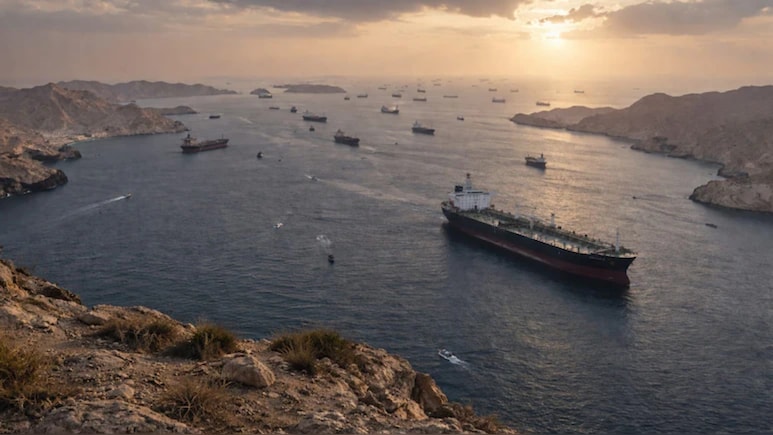
Iran has rejected an Omani proposal for an equal split of shipping lanes through the Strait of Hormuz, instead pushing for greater control over both inbound and outbound traffic through the strategic waterway.
Iran's Deputy Foreign Minister Kazem Gharibabadi told Iranian state television on Tuesday that Oman had proposed a 50-50 arrangement, with the inbound route running through one country's waters and the outbound route through the other's.
Tehran rejected the formula, he said, arguing it failed to address Iran's security concerns.
Instead, Iran proposed that one shipping lane run entirely within its territorial waters, with part of the second lane also passing through Iranian waters.
"Our proposal is for one route to lie entirely within the territorial waters of the Islamic Republic of Iran... so that Iran can effectively exercise oversight over both inbound and outbound traffic," he said.
Oman had put forward a joint regional mechanism to manage traffic through the strait and collect voluntary fees, an arrangement it said had regional backing and would stop Iran gaining sole control.
Gharibabadi also said Tehran no longer recognised the Traffic Separation Scheme, the internationally adopted mid-channel route that has been unusable since February owing to mines, telling reporters, "This is for national security and not bullying," and warning that Iran would not permit any third country to de-mine the strait, even at Oman's invitation.
ALSO READ: 'Voluntary Fees': Oman Offers Iran A Gulf-Backed Plan To Manage Hormuz
Iranian Foreign Minister Abbas Araghchi separately held calls with his Omani and Saudi counterparts on Monday evening to discuss regional stability, according to Reuters.
The talks unfolded alongside separate US-Iran contacts. Gharibabadi said Washington, not Tehran, had sought negotiations over the past fortnight and had conveyed through Oman that it would not take military action.
Trump told reporters Tuesday that talks with Iran were going well and that he preferred to avoid strikes on Iranian power plants and bridges.
ALSO READ: Iran Vows No Hormuz Passage For Those 'Who Take Iranian Frozen Funds'
Trump later hosted Israeli Prime Minister Benjamin Netanyahu at the White House, where the two agreed Iran must not acquire a nuclear weapon, an Israeli source told Iran International, describing it as a "major moment of coordination."
CENTCOM said Tuesday that it had redirected 18 commercial vessels and disabled or boarded four others since 28 July while enforcing what it called a "steel wall blockade" against Iran.
Essential Business Intelligence, Sharp Market Insights, Practical Personal Finance Advice, Daily Fuel, Gold and Silver Prices and Latest Stories — On NDTV Profit.