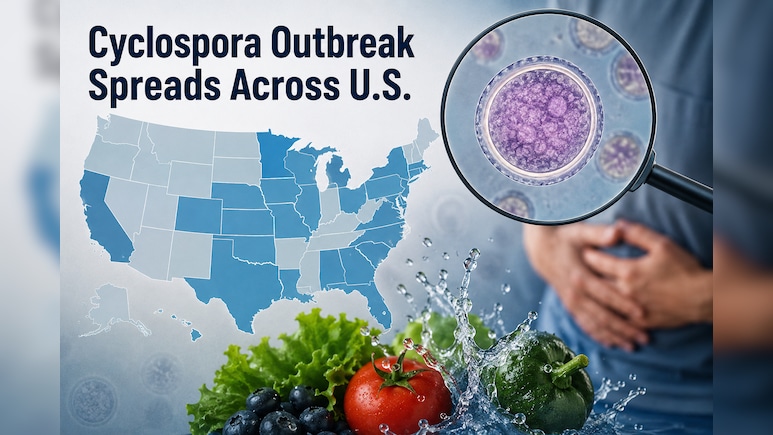
A growing outbreak of cyclosporiasis, an intestinal illness caused by a microscopic parasite, has spread across the United States, with the Centers for Disease Control and Prevention confirming cases in 31 states as of this week, according to NPR.
Michigan and Ohio have emerged as the hardest-hit states, and health officials say the true scale of the outbreak is likely larger than current data show, as case counts continue to be confirmed.
Michigan has reported more than 1,500 cases so far this year, against a typical annual caseload of around 50, NPR's Allison Aubrey reported, citing state health data.
Also Read | Layoffs Are Rising In Tech, But These Skills Are Helping People Unlock Better Pay
Nationally, at least 86 people have been hospitalised, though no deaths have been reported, making this an unpleasant but rarely fatal illness.
What Is Cyclospora And How Does It Spread
Cyclospora is a microscopic parasite that infects the intestinal tract and causes diarrhoea, according to the New York State Department of Health.
People become infected by consuming food or water contaminated with the parasite; person-to-person spread is considered unlikely.
In the US, outbreaks have historically been traced to imported and domestic fresh produce, including cilantro, salad mixes, basil, snow peas and raspberries. Martin Bucknavage, a food safety expert formerly with Penn State University, told NPR that contamination often originates in the water used to irrigate these crops, many of which — such as basil and raspberries — require gentle handling that makes thorough rinsing difficult.
Symptoms And How Long They Last
The hallmark symptom is watery diarrhoea, which can persist anywhere from a few days to a month or longer, and may subside before recurring during the course of infection, per the health department.
Other symptoms include loss of appetite, stomach cramps, unintended weight loss, muscle aches, nausea and fatigue. Symptoms usually surface around a week after exposure, though the incubation period can range from as little as two days to as long as two weeks.
Some infected individuals experience no symptoms at all. Diagnosis is confirmed through a laboratory stool test identifying the parasite.
ALSO READ: Pricing Policy Delay Triggers Shortage Of Life-Saving Medicines In Pakistan
Why Tracing The Source Is So Difficult
Investigators typically begin by interviewing infected patients about what they have eaten, then attempt to trace back to common food sources.
Aubrey explained that this process is complicated by the wide window between exposure and the onset of symptoms — up to two weeks in some cases — meaning patients often struggle to recall exactly what they consumed, making it harder to pinpoint a single contaminated product.
Treatment Options
The standard treatment is a combination antibiotic known as trimethoprim-sulfamethoxazole, sold under brand names including Bactrim, Septra and Cotrim.
Rebecca Schein, an infectious disease physician at Michigan State University, told NPR that treatment is generally recommended for everyone diagnosed with the infection, though those with healthy immune systems may recover without medication once symptoms improve.
She noted that people who are immunocompromised or on immune-suppressing medication should prioritise antibiotic treatment. Hospitalised patients with severe dehydration may also require intravenous fluids.
Notably, past infection does not confer immunity, meaning individuals can be reinfected if exposed again.
Precautions To Prevent Infection
Food safety experts recommend heating food to 158 degrees Fahrenheit as the most effective way to kill the parasite.'
The health department also advises washing hands before and after handling raw produce, thoroughly rinsing fruits, herbs and vegetables under running water, scrubbing firm produce such as melons and cucumbers with a clean brush, cutting away bruised or damaged sections before eating, and refrigerating cut or peeled produce within two hours.
Travellers to regions with poor sanitation are advised to drink only sealed bottled water, boiled tap water, or canned carbonated water, and to avoid food or water that may be contaminated with faecal matter.
Essential Business Intelligence, Sharp Market Insights, Practical Personal Finance Advice, Daily Fuel, Gold and Silver Prices and Latest Stories — On NDTV Profit.