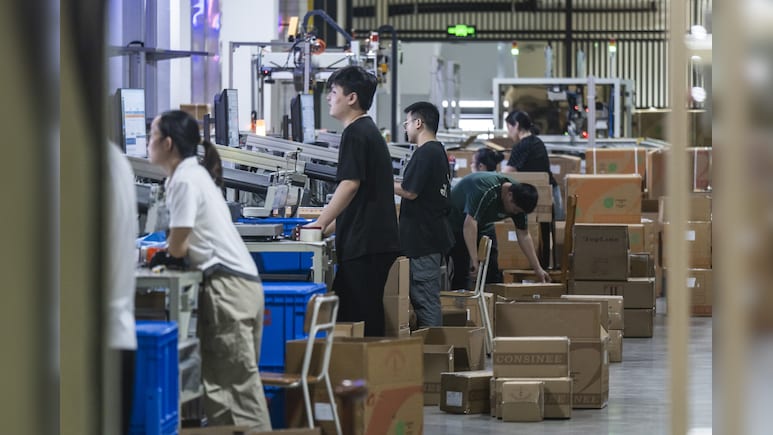
China's manufacturing sector capped its strongest quarter in almost six years, a private gauge suggests, even as growth eased slightly in June and the underlying economy remains fragile.
The RatingDog China manufacturing purchasing managers index slipped last month to 51.7 from 51.8 in May. While short of the median forecast, it brought the average for the last three months to 51.9, the highest since the fourth quarter of 2020.
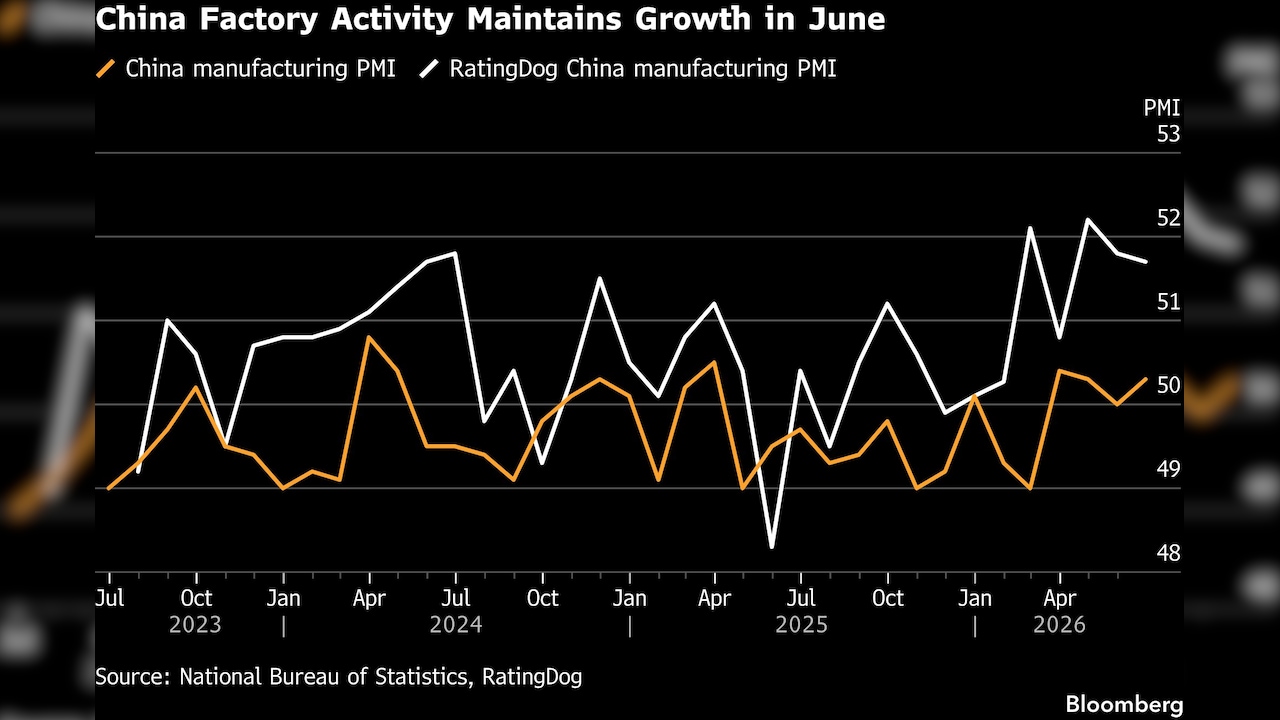
"The manufacturing sector maintained a steady expansion in June, supported by sustained new order growth, easing cost pressures and improved labour market conditions," Yao Yu, founder of RatingDog, said in a statement.
Also Read | Layoffs Are Rising In Tech, But These Skills Are Helping People Unlock Better Pay
ALSO READ: China's Meituan Trains 'Country's Largest' 1.6-Trillion-Parameter AI Model Without Nvidia Chips
New orders increased for 13 straight months, matching a record set in 2021 that was the best since 2018. Input-cost inflation slowed to a five-month low, easing pressure on factory margins.
But this strength may not be enough to offset fragility in the economy, which appears headed for a sharp slowdown in the second quarter. Retail sales and investment both fell in May at rates unseen since the pandemic.
| "Taken together with the best set of official PMIs this year, it is consistent with a pick-up in economic momentum," Julian Evans-Pritchard, head of China economics at Capital Economics, said of the private gauge. However, he warned the pick-up in momentum "has been heavily dependent on exports and AI-related tech." This reliance is facing headwinds as trade partners mull new measures to counter growing trade imbalances. The US has hiked tariffs on Chinese goods that previously sank exports to the world's largest consumer market. While ties have stabilized following a cordial summit in May between President Donald Trump and Chinese leader Xi Jinping, the levies remain elevated and continue to hurt the appeal of imports from the Asian power. Tensions with the European Union are also simmering. On Monday, the bloc and China agreed to set an October deadline to make progress on their trade disputes, the EU trade chief Maros Sefcovic said after talks in Brussels with Chinese Commerce Minister Wang Wentao. The private poll tends to reflect activity in smaller and more export-oriented firms. The RatingDog survey results have been largely stronger than those from the official poll over the previous year as exports stayed strong. Elsewhere in Asia, the region's big technology hubs continued to enjoy robust global demand for AI and semiconductors, although higher material costs and shipping delays tied to the Middle East war weighed on factory activity. Taiwan continued to lead the region with a PMI reading of 55.2, despite easing marginally from May, while South Korea softened to 52.1 from 54.8. Japan edged up slightly to 54.8 from 54.5. ALSO READ: Zero Foreign Chips: China's Food Delivery Giant Meituan Serves Massive Open-Source AI Model Any reading above 50 indicates improving conditions from the previous month. Much of Southeast Asia was also in expansion territory in June, save for Indonesia whose PMI slipped to a one-year low of 46.9 as inflation pushed up costs for manufacturers and dampened consumer demand. |
(This story has not been edited by NDTV staff and is auto-generated from a syndicated feed.)
Essential Business Intelligence, Sharp Market Insights, Practical Personal Finance Advice, Daily Fuel, Gold and Silver Prices and Latest Stories — On NDTV Profit.