The United States has warned Iran that any further attack on American forces would bring a swift and potentially costly response, as tensions between Washington and Tehran deepen and the region's oil infrastructure becomes increasingly entangled in the confrontation.
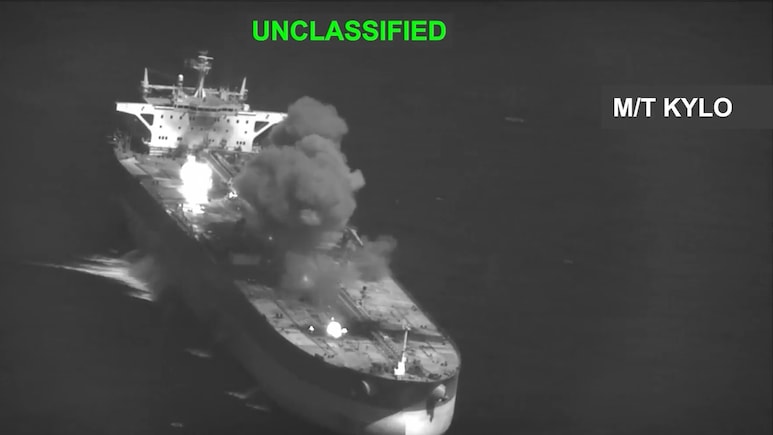
The warning comes after the United States struck three Iranian crude oil tankers after the Islamic Revolutionary Guard Corps (IRGC) launched ballistic missiles at two US Navy warships in regional waters, escalating tensions around one of the world's most critical oil-shipping routes.
ALSO READ | Pentagon Staff Face Polygraph Tests Over Leaks On US Weapons Stocks: Report
Also Read | Layoffs Are Rising In Tech, But These Skills Are Helping People Unlock Better Pay
US Central Command (CENTCOM) said an aircraft carrier and a guided-missile destroyer successfully evaded multiple Iranian attacks, with no American personnel injured. In retaliation, US forces disabled two Iranian oil carriers and destroyed a third, according to CENTCOM.
The strikes were accompanied by a stark warning from CENTCOM commander Adm. Brad Cooper, who said Washington would respond to attacks on US forces by imposing an even greater economic cost on Iran.
“Let the message to the IRGC be clear: If you shoot at two of our ships, we will impose an even higher economic cost —taking out three of yours. We will not hesitate to defend American forces, and if necessary, destroy Iran's limited and exposed oil fleet.” — Adm. Brad Cooper,… pic.twitter.com/UGGcSGsUtd
— U.S. Central Command (@CENTCOM) September 5, 2026
“Let the message to the IRGC be clear,” Cooper said. “If you shoot at two of our ships, we will impose an even higher economic cost — taking out three of yours.”
Cooper added that the US would not hesitate to defend American forces and, if necessary, destroy Iran's “limited and exposed oil fleet.”
CENTCOM said the targeted vessels were part of what it described as a multibillion-dollar shadow network allegedly used to finance the IRGC and its regional proxies.
ALSO READ | US Gas Prices Could Top $4 A Gallon On Labor Day, Setting Record
The latest strikes add another layer of risk to global energy markets, with the confrontation centred on the Strait of Hormuz, a crucial corridor for international oil shipments. Brent crude has already climbed amid uncertainty over shipping through the waterway.
The escalation comes as attacks on commercial shipping in and around the Gulf have increased, raising concerns over supply disruptions, higher freight costs and further volatility in global crude prices.
Essential Business Intelligence, Sharp Market Insights, Practical Personal Finance Advice, Daily Fuel, Gold and Silver Prices and Latest Stories — On NDTV Profit.