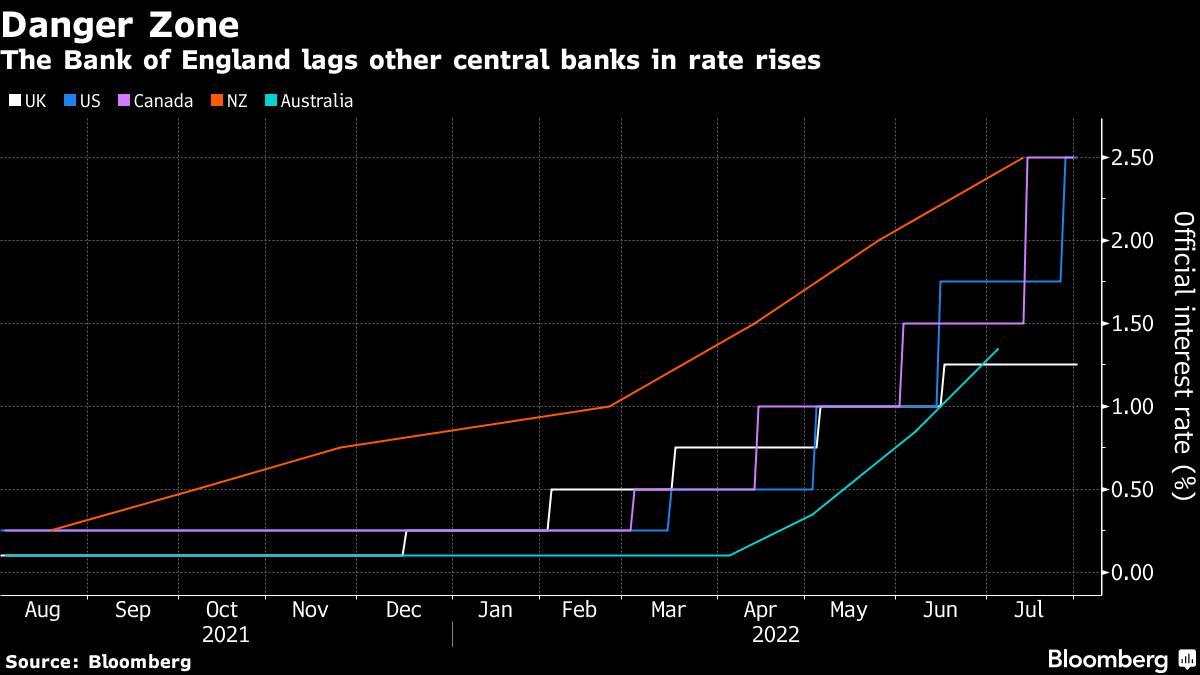
(Bloomberg) -- The Bank of England on Thursday is expected to push through the biggest interest rate increase in 27 years despite growing risks of a recession.
The UK central bank also plans to give details on how it will reverse some of the $1 trillion of the stimulus it pumped into the economy over more than a decade. A decision is expected at noon in London, with Governor Andrew Bailey due to speak to the press at 12:30 p.m.
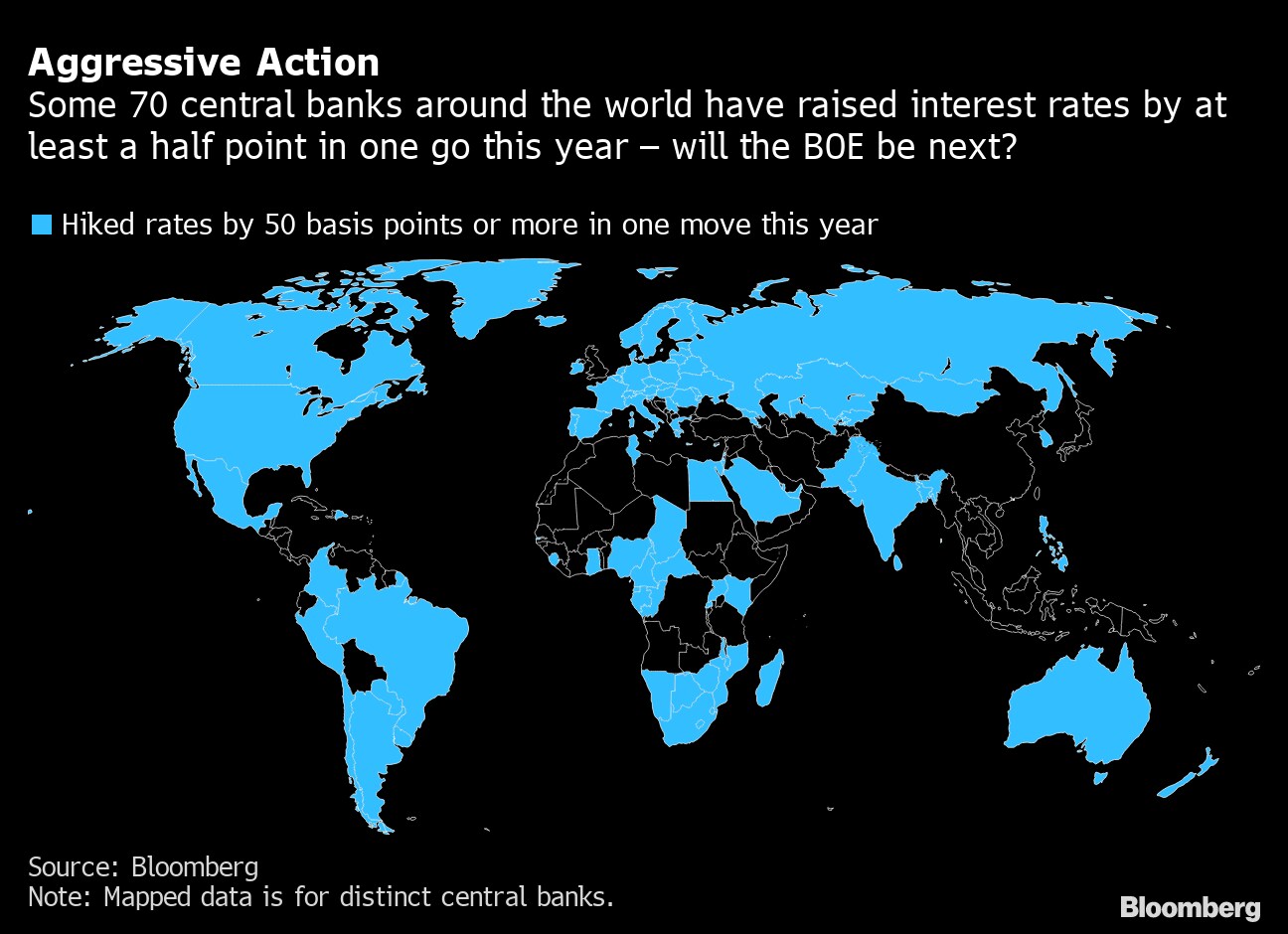
The measures are part of a historic shift away from an easy-money used to tamp down borrowing costs through the pandemic and the global financial crisis that started in 2008. The BOE is responding to the strongest inflation in 40 years and political criticism that it let prices run out of control following the end of Covid lockdowns.
“The clear risk is a 50 basis-point hike,” Bruna Skarica, an economist at Morgan Stanley, wrote in a note to clients. “It is almost fully priced in, and with imported inflation, a weak currency is a factor that could tip the scales in favor of more forceful action.”
Investors are betting on an 80% chance of a half-point increase in the benchmark lending rate to 1.75%. Thirty of the 43 banks surveyed by Bloomberg, anticipate action on that scale, including Barclays, Deutsche Bank, Goldman Sachs and HSBC. Citigroup, Lloyds, Natwest, Morgan Stanley and UBS are among the minority seeing a smaller move.
The BOE will also deliver its quarterly outlook. That will show the economy is headed for a slump and perhaps outright recession while inflation may rise faster than the more than 11% the BOE currently predicts.
The decision feeds into an increasingly acrimonious debate about who is to blame for growing cost-of-living crisis. Liz Truss, who is favored to win the race to replace Boris Johnson as UK prime minister, has vowed to sharpen the BOE's mandate if she takes power.
What Bloomberg Economics Says ...
“Pressures have failed to recede after five consecutive 25-bp rate increases, which is why we think the MPC will agree on a larger hike at its August meeting. The BOE's guidance also linked bigger rate moves to “indications of more persistent inflationary pressures.” The fact that services inflation, which tends to be stickier, continued to soar will add weight to a larger hike.”
--Ana Luis Andrade and Dan Hanson, Bloomberg Economics. Click for the INSIGHT.
Following is a list of the issues feeding into Thursday's decision:
Vote Split
Most economists expect the nine-member Monetary Policy Committee to vote 7-2 for a 50-basis-point hike, with Bailey and Chief Economist Huw Pill among those joining the push for a larger move.
That would represent success for Michael Saunders, who has helped lead the charge for such a move, and is due to leave the BOE later this month.
Growth Forecast
The BOE in May stopped short of forecasting a technical recession, defined by two consecutive quarters of contraction. But there's increasing concerns among economists that such a slump is looming.
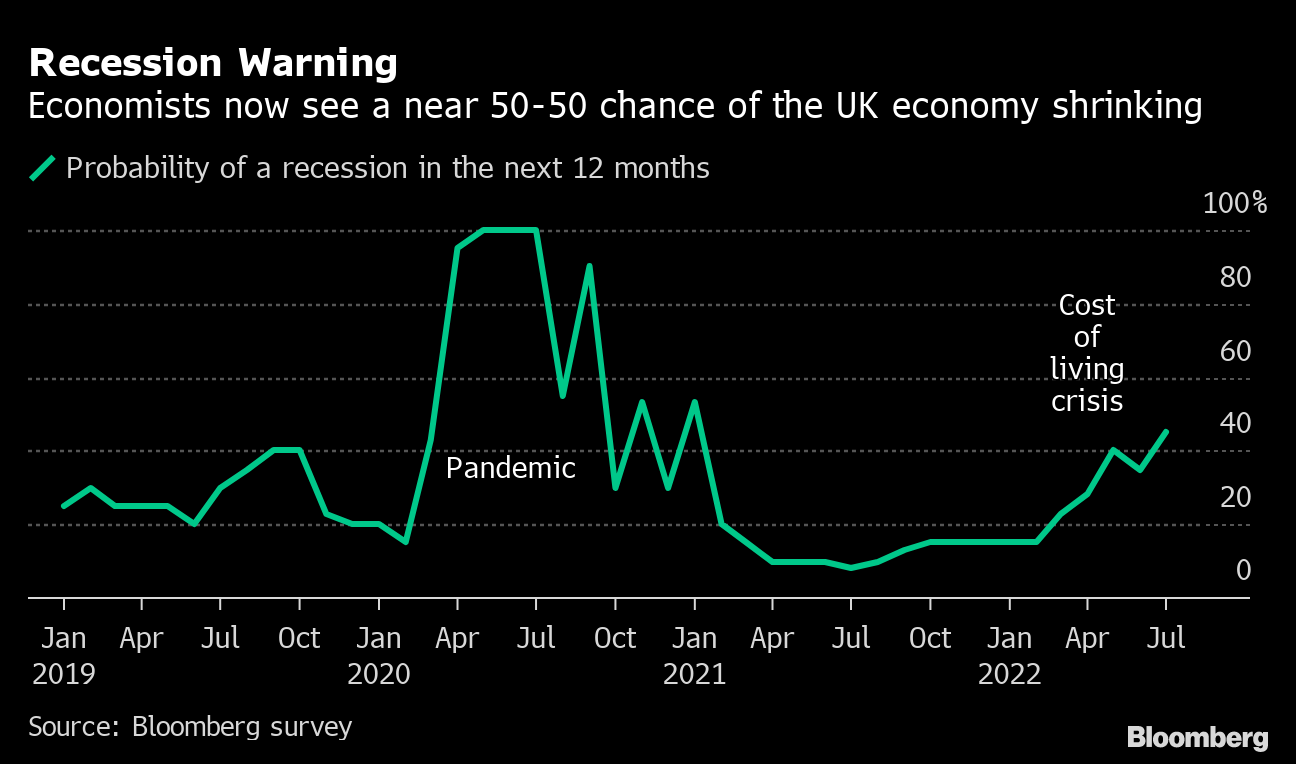
The outlook due Thursday may crystallize that risk and also shed light on the severity of the squeeze consumers are facing from rising prices.
The influential National Institute of Economic and Social Research warned this week that the UK is already in recession, with households suffering from a dramatic drop in their spending power.
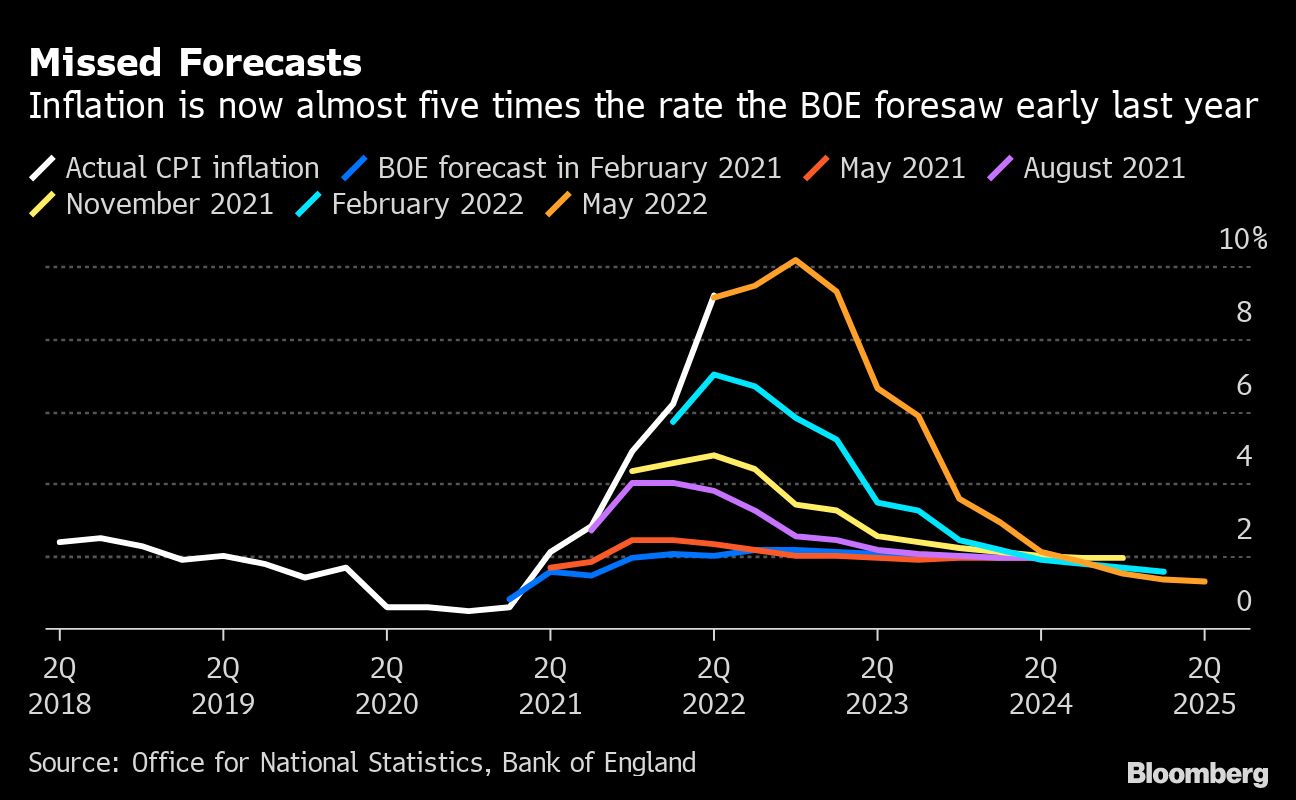
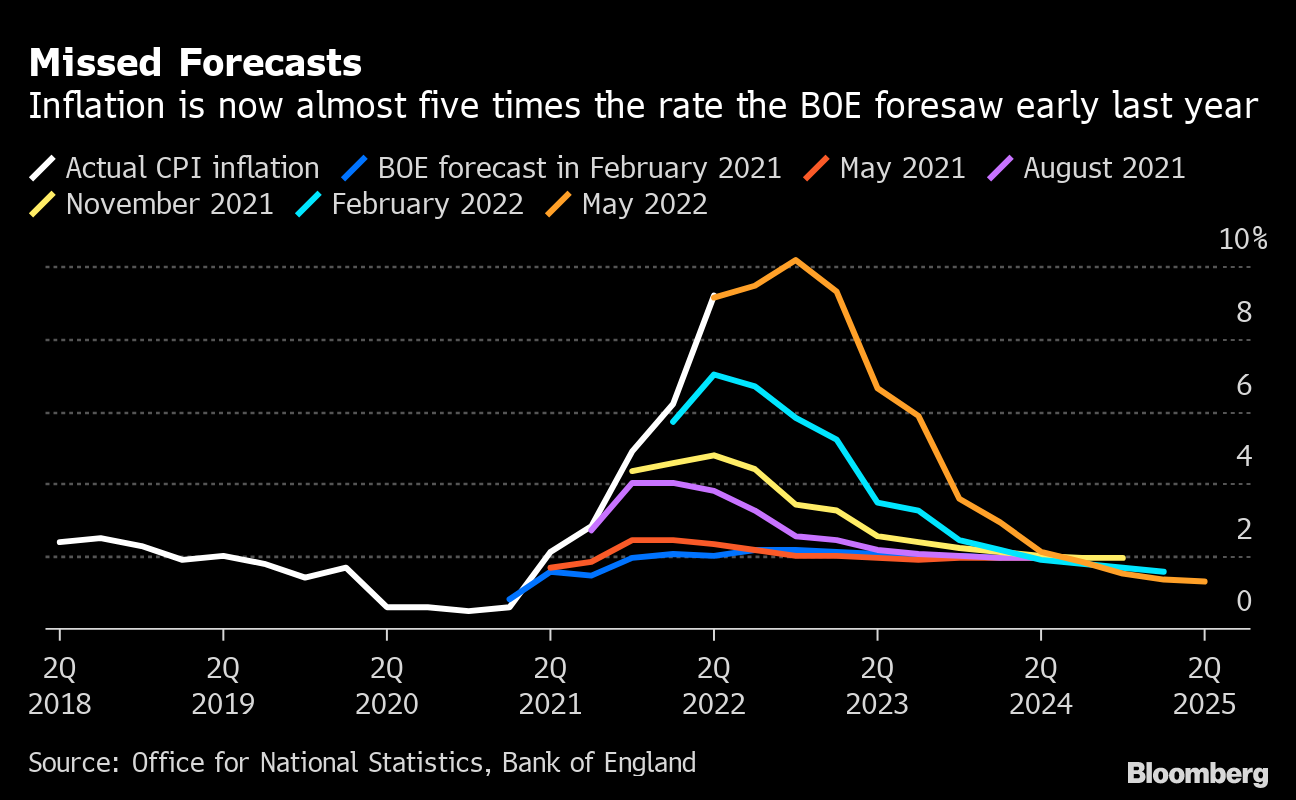
The BOE to date has consistently underestimated the strength of inflation that's now buffeting the economy.
Inflation Outlook
Policy makers will also update their forecasts for inflation. A surge in natural gas prices since May could well feed through into estimates that price growth will peak further past what officials are expecting.
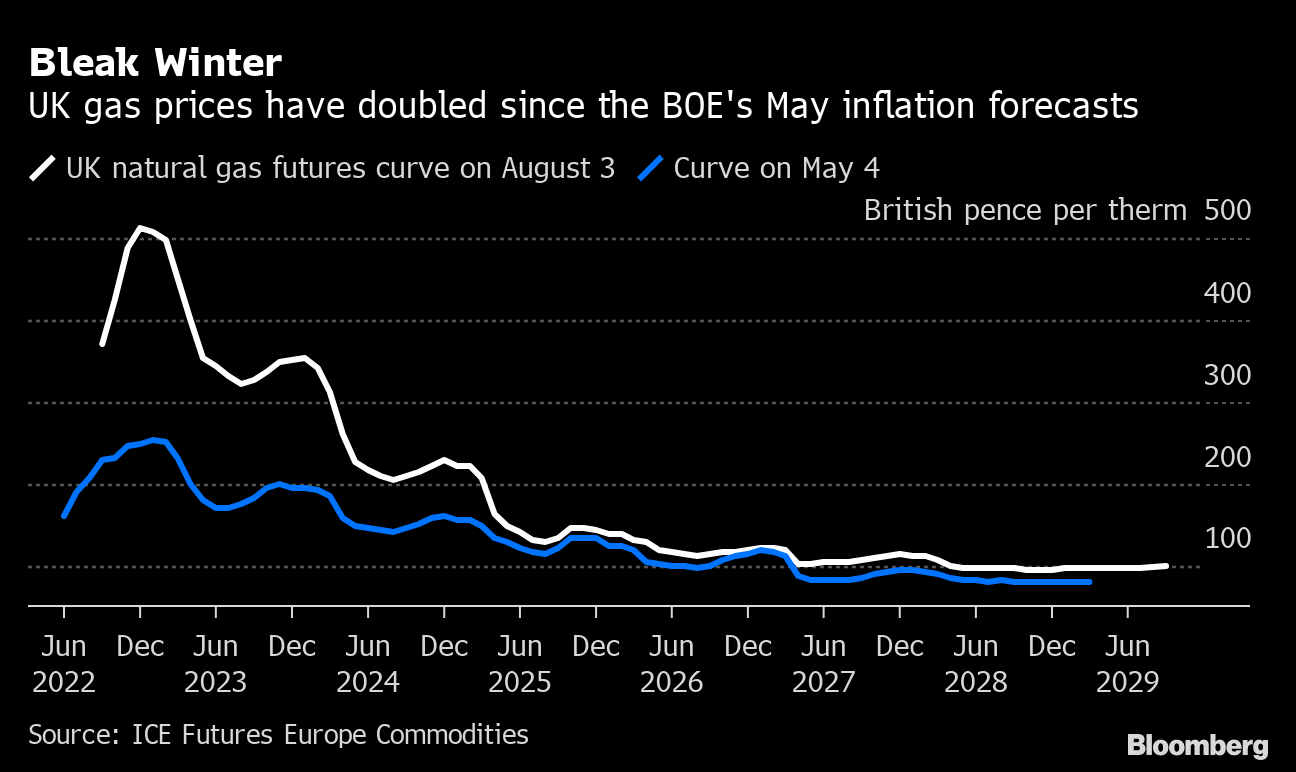
Economists surveyed by Bloomberg were unanimous that another increase in the forecast was coming.
Political Debate
The task of forecasting the economy has been made harder by the contest for the leadership of the ruling Conservative Party. The final two candidates are offering widely differing views on tax cuts and borrowing levels, which might require different policy responses.
By convention, the BOE will retain many of the assumptions about fiscal policy it embedded in May's forecasts, opting to wait until the next government delivers a formal policy.
The race also casts a shade over the BOE's own future. Truss, the foreign secretary, has promised a shakeup of the central bank's remit if she becomes prime minister. She could shift the BOE's target to keep inflation to 2% or demand greater oversight by members of Parliament.
“Monetary policy is far too loose, interest rates are far lower than inflation so there is currently the case to tighten,” Gerard Lyons, chief economic strategist at Netwealth. “If they move 0.5%, it would lead to expectations that they move 0.5% at the next meeting.”
Quantitative Tightening
The BOE is also poised to outline plans to shrink its trillion-dollar balance sheet by actively selling gilts, a milestone for monetary policy that takes the UK bond market into unchartered waters.
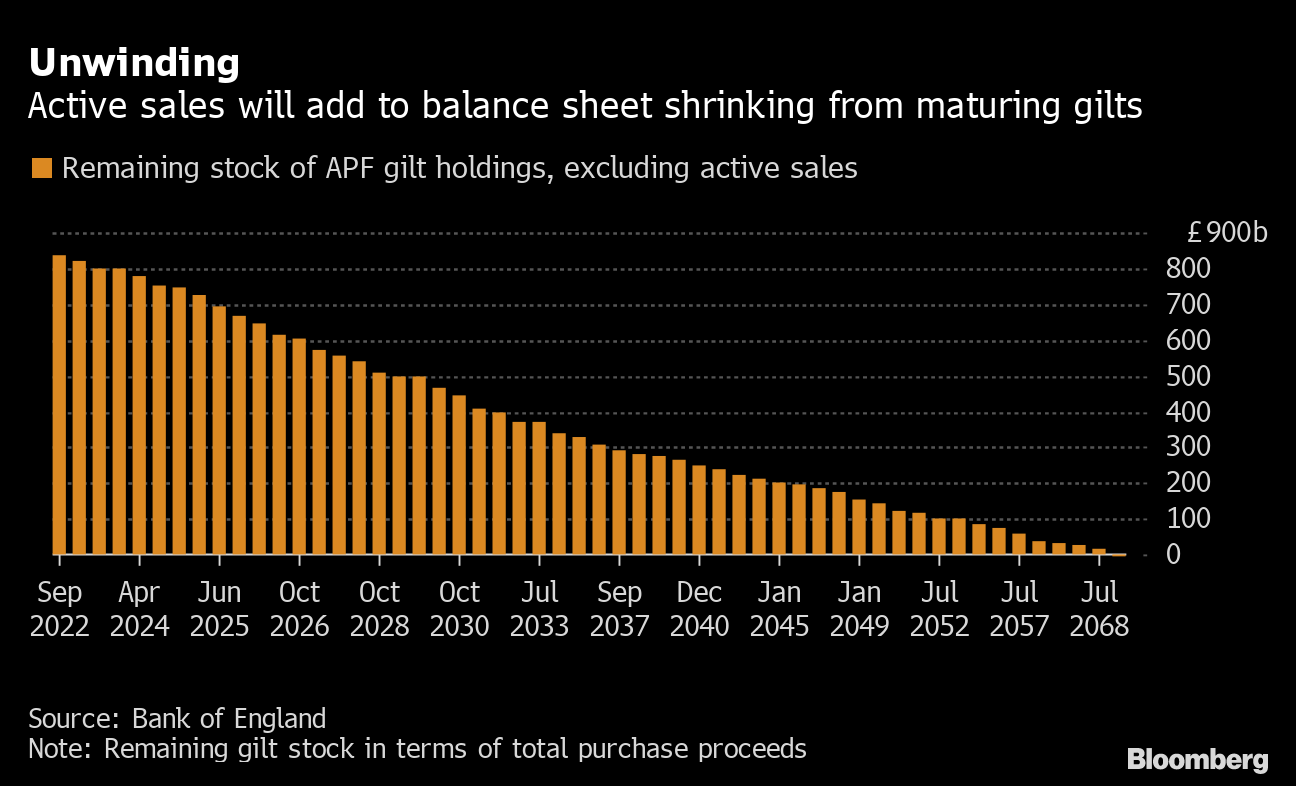
Bailey has signaled the central bank will reduce its stock of gilts by £50 billion to £100 billion in the first year of the sales. That includes both active divestments and the ongoing roll-off of bonds that mature.
Strategists expect further details on the pace, timing and maturity of sales on Thursday. Bailey has promised a mechanism to halt sales in times of market turmoil.
The measures will lay the groundwork for a vote among policy makers on whether to start the process, which could come as early as September. It would make the BOE the first major central bank to actively sell some of the billions in bond holdings built up since the financial crisis.
More stories like this are available on bloomberg.com
©2022 Bloomberg L.P.
Essential Business Intelligence, Sharp Market Insights, Practical Personal Finance Advice, Daily Fuel, Gold and Silver Prices and Latest Stories — On NDTV Profit.