Nobel Peace Prize Jointly Awarded To Belarus Rights Activist, Russian And Ukrainian Groups
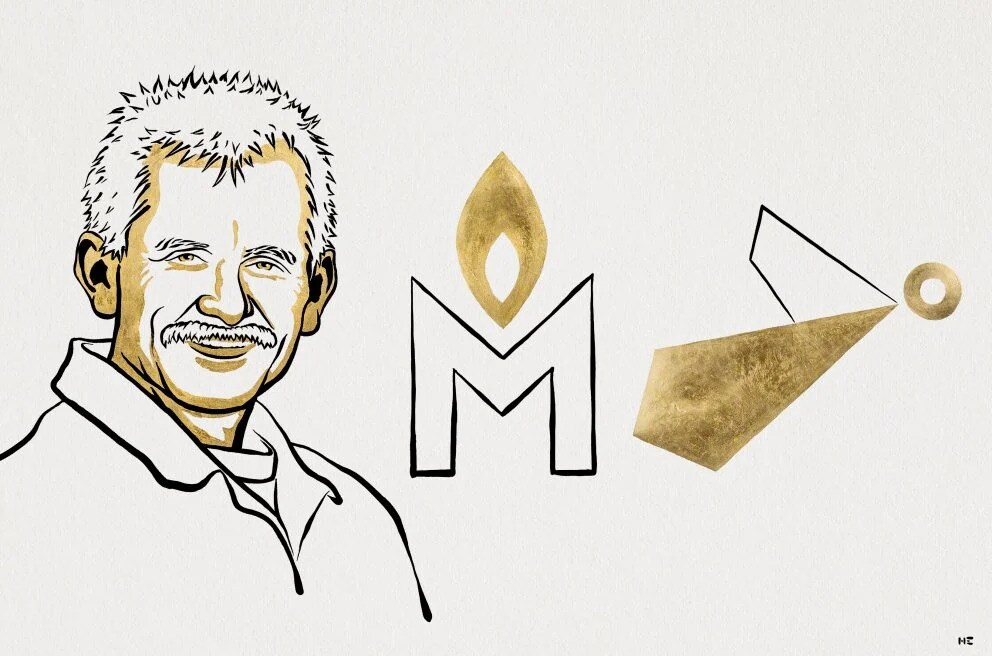
(Bloomberg) -- A jailed Belarusian human rights advocate won the Nobel Peace Prize for 2022 along with two organizations that protect civil society in Russia and Ukraine.
Ales Bialiatski from Belarus, Memorial of Russia and Ukraine's Center for Civil Liberties were awarded the 10-million Swedish kronor ($900,000) prize by the Oslo-based Norwegian Nobel Committee on Friday.
“The Peace Prize laureates represent civil society in their home countries,” the committee said in a statement. “They have for many years promoted the right to criticize power and protect the fundamental rights of citizens.”
Bialiatski is the second citizen in Belarus's independent history to receive a Nobel Prize after Svetlana Alexievich won the award in literature seven years ago.
“Government authorities have repeatedly sought to silence Ales Bialiatski,” the committee said. “Since 2020, he is still detained without trial. Despite tremendous personal hardship, Mr Bialiatski has not yielded an inch in his fight for human rights and democracy in Belarus.”
The announcement was unexpected, with opposition leaders in Belarus and Russia, Sviatlana Tsikhanouskaya and Alexey Navalny, long tipped as potential winners. And it comes on the day Russian President Vladimir Putin celebrates his 70th birthday.
“This prize is not addressing President Putin, not for his birthday or in any other sense, except that his government and the government in Belarus is representing an authoritarian government that is suppressing human rights activists,” Berit Reiss-Andersen, chair of the committee, told reporters in Oslo. “We always give a prize for something and to somebody, and not against anybody.”
Last year's winners were journalists Maria Ressa and Dmitry Muratov, with previous laureates including Mother Teresa, Nelson Mandela, Barack Obama, Martin Luther King and the European Union.
Annual prizes for achievements in physics, chemistry, medicine, peace and literature were established in the will of Alfred Nobel, the Swedish inventor of dynamite, who died in 1896. The prize in economic sciences was added by Sweden's central bank in 1968.
More stories like this are available on bloomberg.com
©2022 Bloomberg L.P.

-
Love, Sex Aur Dhokha: The Audacious Plot To Spy On Jensen Huang

A Taipei dinner, a Singapore chip buyer and a suspected Chinese asset: inside the alleged spy operation that got close to NVIDIA's Jensen Huang.
-
Ten Things I Learnt This Samvat
Patience can be a trap. Cheap stocks can stay cheap. Leverage can wipe you out. What did Samvat 2082 teach us? Niraj Shah writes on 10 lessons from the year gone by.
-
Talking Points This Week: Tech Nerves, FII Buying, And A Faraway Banking Shock
The global markets are not shining this Diwali. The exception in the large markets is, India.
-
Midterm Rally Lasted A Day. The Hard Reality Of A Divided US May Last Two Years | Opinion
Between a contested AI boom, a debt ceiling that arrives in 2027 and a president with every incentive to act alone, the next two years may prove more volatile than the first day's rally suggests.
-
Blue Wave Will Derail the AI Trade but Won't Dismantle the AI Era | Unhedged Position
The Democrats' sweep of the US Congress will see politics collide with economic forces both over the long and short term.
-
It's Time To Take The GST Council's Bet On Trust Global
Payment records can prove India's services exports, and clear, proportionate rules can bring foreign digital sellers into the tax net.
-
Opinion | India at 38: From Innovation Overperformer to Innovation Powerhouse
India now has 453 VC-backed deep science startups, 18 of them late-stage, after 117 percent growth since 2020. Laurus Labs, at USD 9.3 billion, is the most valuable deep science company in any middle-income economy outside China.
-
Navigating Energy Crossroads: S Jaishankar's Call For Diversified Supply Chains At G20 Ministerial Meeting
As geopolitical fault lines continue to test maritime trade routes and commodity flows, Jaishankar's message remains pertinent: true economic resilience requires open markets, protected transit lines, and a genuine commitment to multilateral cooperation rather than coercion.
-
Indians Are Travelling, But Not Every Journey Is A Holiday | The Week In Whys
Pilgrims, patients and working women are the real travellers, and the system hasn't quite caught up with them.









