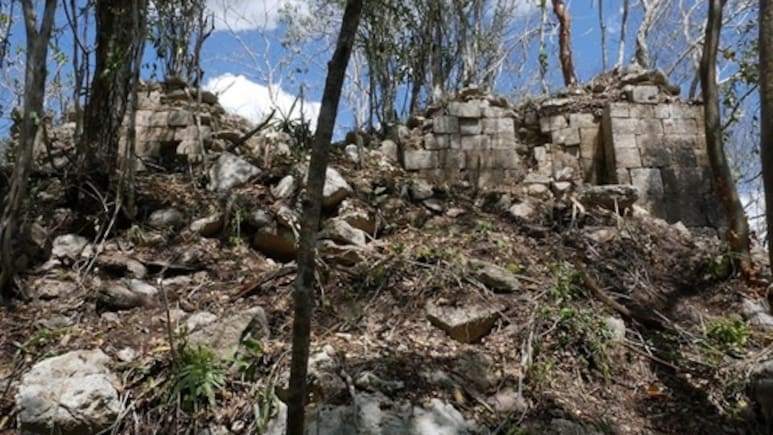
Archaeologists in Mexico have discovered a previously unknown Maya city hidden deep within the Calakmul Biosphere Reserve in Campeche, an untouched site that flourished during the Late to Terminal Classic period, between 600 and 900 AD, Mexico's National Institute of Anthropology and History (INAH) announced.
The discovery, led by Slovenian archaeologist Ivan Šprajc of the Research Centre of the Slovenian Academy of Sciences and Arts, caps three decades of his research into the Central Maya Lowlands, a region that historians estimate was home to between nine and 11 million people during the Late Classic period.
ALSO READ | Venezuela Earthquakes Death Toll: 32 Killed, 700 Injured — What We Know So Far
Also Read | Layoffs Are Rising In Tech, But These Skills Are Helping People Unlock Better Pay
The team, working with members of the Constitución community, hacked through five kilometres of dense jungle with machetes, travelling part of the way on quad bikes before continuing on foot, to reach the site west of Chactún, a major centre identified by the same research project 13 years ago.
Researchers had earlier identified the location through airborne LiDAR laser-scanning data, which revealed a 15-hectare monumental settlement beneath the forest canopy.
Unlike many other sites the team has surveyed, this city showed no signs of looting pits, a discovery Šprajc described as both difficult to reach and a pleasant surprise.
#ÚLTIMAHORA ???? Bautizan como Minanbé, “no hay camino”, a ciudad maya virgen al norte de la Biosfera de Calakmul
— INAH (@INAHmx) June 22, 2026
Liderado por el arqueólogo Ivan Šprajc, un equipo descubrió un sitio monumental que tuvo su apogeo en el periodo Clásico Tardío-Terminal
Lee: https://t.co/O2ygEHdfsC pic.twitter.com/xM1IXwaZLT
The lack of existing logging trails leading to the site, he said, made its untouched condition more likely.
The name Minanbé, derived from the Yucatec Maya words for "there is not" and "road," reflects both the difficulty of reaching it and a long-standing tradition in Maya archaeology of naming sites after notable features or the circumstances of their discovery.
On the ground, the team confirmed plazas surrounded by palace and religious buildings, terraces, and wetlands with hydraulic canals. One of the tallest structures, a pyramidal temple exceeding 13 metres in height, displays features of the Río Bec architectural style, including fine masonry and smooth façade panels.
ALSO READ | Hormuz Doesn't Belong To Anyone; Tolls Set 'Unacceptable Precedent': Marco Rubio
Researchers also documented 14 stelae and altars, several bearing hieroglyphic inscriptions, arranged at the end of a causeway connecting the site's central and northeastern sectors. One stela depicts a figure wielding a blade to behead another individual, alongside a calendar date corresponding to 849 AD.
Another monument, deliberately broken, carries a partial date that may place it as early as the late seventh century, potentially making it the oldest such monument in the area.
Essential Business Intelligence, Sharp Market Insights, Practical Personal Finance Advice, Daily Fuel, Gold and Silver Prices and Latest Stories — On NDTV Profit.