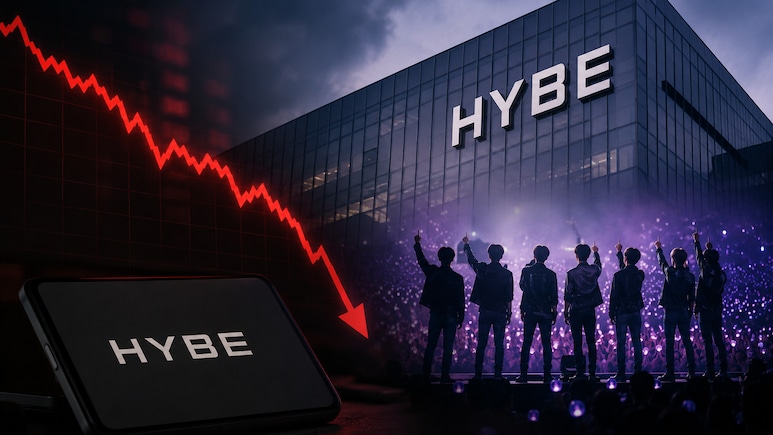
Hybe, the South Korean entertainment company behind global K-pop sensation BTS, reported its strongest quarterly performance on record, but investors focused on weakening profitability instead of record revenue. The stock has fallen over 54% over the past six months and extended its decline this week after the earnings announcement, as concerns over margins overshadowed robust growth driven by BTS' world tour.
Record Quarter Powered By BTS Tour
Hybe's shares fell 16.09% on Tuesday, their biggest single-day decline since June 2022, before dropping as much as 16.31% on Wednesday to their lowest level since September 2024. Earlier, the stock had already closed nearly 10% lower following the earnings release.
The selloff erased as much as 2.845 trillion won (about $1.96 billion) in market value in less than 24 hours.
CNBC reported that for the second quarter, Hybe posted record consolidated revenue of 1.45 trillion won, up 105.5% from a year ago, while operating profit surged 159.4% to 170.9 billion won, beating market expectations.
According to The Chosun Daily, the company's performance was fueled by BTS' "Arirang" world tour, which began in South Korea in April. Concert revenue climbed 243.3% year-on-year to 647.7 billion won, helped by higher ticket prices and dynamic pricing. Album sales stood at 326.8 billion won, with total sales of 11.32 million units, including around 3 million albums sold by rookie group CORTIS. Merchandise sales also more than doubled to 310.6 billion won.
Also Read: SK Hynix's $600 Billion Selloff Shows Cracks in Memory-Chip Boom
Why Investors Sold The Stock
Despite the record numbers, analysts said the earnings mix disappointed investors.
The company generated a larger share of revenue from concerts, which typically carry lower profit margins because a greater portion of ticket revenue is paid to artists through royalty and settlement costs.
As a result, Hybe's operating margin came in at 11.8%, below analysts' expectations, while its gross profit margin declined to 32% from 43% in the previous quarter.
Brokerages said the market had been expecting stronger growth from merchandise sales, a higher-margin business where profitability can be significantly higher than concerts. Instead, the earnings were driven primarily by live performances, increasing cost pressure, and weighing on margins.
Analysts described the stock reaction as a classic "sell-on-news" event, where strong headline results failed to meet investors' expectations on profitability.
Also Read: Oil Prices On July 30: Brent At $90 On Fresh Iran Strikes, US Crude Stockpiles Hit Multi-Year Low
Essential Business Intelligence, Sharp Market Insights, Practical Personal Finance Advice, Daily Fuel, Gold and Silver Prices and Latest Stories — On NDTV Profit.