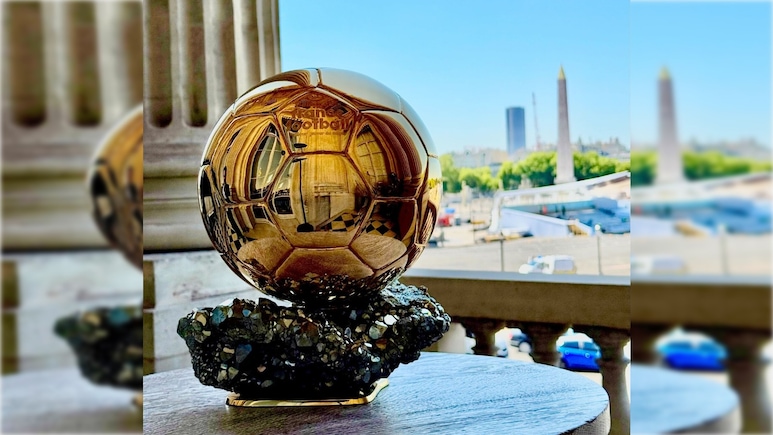
Winning the FIFA World Cup has long been viewed as the ultimate stepping stone to the Ballon d'Or. While lifting football's biggest trophy undoubtedly strengthens a player's case, history shows it is far from a guarantee.
Since the Ballon d'Or expanded its eligibility beyond European players in 1995, only four of the seven World Cup editions (57%) have seen a member of the champion team go on to win football's most prestigious individual award. The remaining three editions were won by players whose club performances proved more influential.
When The World Cup Made The Difference
Also Read | Layoffs Are Rising In Tech, But These Skills Are Helping People Unlock Better Pay
A standout World Cup campaign has often been enough to secure the Ballon d'Or.
Zinedine Zidane won the 1998 award after scoring twice in France's 3-0 victory over Brazil in the final. Ronaldo Nazário followed in 2002 after finishing as the tournament's top scorer with eight goals, including both strikes in Brazil's final win over Germany.
In 2006, Fabio Cannavaro became one of the few defenders to lift the Ballon d'Or after captaining Italy to World Cup glory. The most recent example came after Qatar 2022, when Lionel Messi inspired Argentina to the title, won the Golden Ball and later claimed a record-extending eighth Ballon d'Or.
ALSO READ | Argentina vs England Highlights: Messi Inspires Late Comeback As Holders Reach World Cup 2026 Final
When Club Form Took Priority
The World Cup has not always determined the winner.
In 2010, Spain lifted the trophy, but Lionel Messi won the Ballon d'Or after another remarkable season with Barcelona, while Spain's votes were split between Andrés Iniesta and Xavi.
In 2014, Germany's collective triumph was overshadowed by Cristiano Ronaldo's record-breaking Champions League campaign with Real Madrid. Four years later, Luka Modrić claimed the award after leading Croatia to the World Cup final and winning the Champions League, with France's votes divided between stars including Antoine Griezmann and Kylian Mbappé.
What The Numbers Say
The biggest reason is often vote splitting. Teams that win the World Cup through collective performances rarely have one clear standout, allowing an exceptional club performer to edge the voting.
Modern football has also changed the equation. With domestic leagues and the UEFA Champions League broadcast worldwide every week, voters assess players over a full season rather than just a month-long tournament.
The statistics make one thing clear, winning the World Cup remains a major advantage in the Ballon d'Or race, but it is not essential. Since 1995, nearly half of the winners have earned football's top individual honour without lifting the World Cup.
ALSO READ | FIFA World Cup 2026 Golden Boot: Messi Goes Clear Of Mbappe After Two-Assist Masterclass Against England
Essential Business Intelligence, Sharp Market Insights, Practical Personal Finance Advice, Daily Fuel, Gold and Silver Prices and Latest Stories — On NDTV Profit.