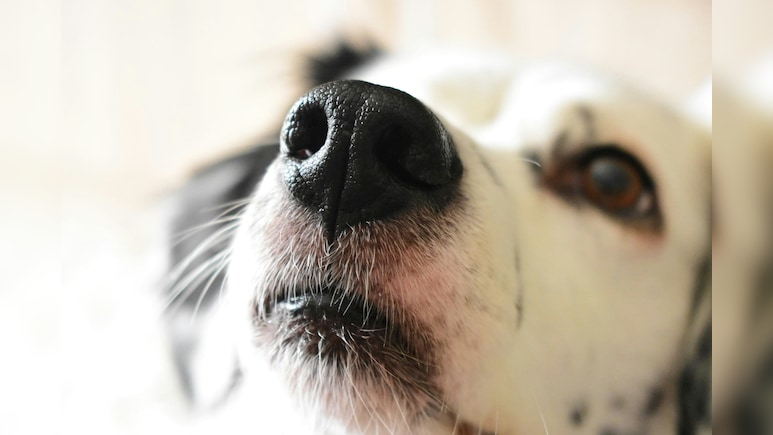
At a former pomegranate farm on the outskirts of Bengaluru, a team of specially trained dogs is doing something that some of the world's most sophisticated medical machines cannot — detecting multiple types of cancer from a single breath, at early stages, for two dollars a test.
Dognosis, the Indian startup behind this system, published the results last week of its Phase 2 clinical trial in the Journal of Clinical Oncology — the world's most influential cancer journal — making it the largest study of its kind ever conducted and placing canine-based diagnostics firmly into the mainstream of medical science.
What Dognosis Does
The company was co-founded by Akash Kulgod, who built on his Honours thesis at Berkeley, and Itamar Bitan, who brings a decade of Special Ops K9 training experience from Israel. What the two founders realised was that the solution to early cancer detection had been living in our homes the whole time — the dog's nose, a product of fifteen millennia of co-evolution with humans, can detect the faint chemical trace of cancer in breath at a resolution that machines, algorithms, and laboratory tests have never come close to matching.
Also Read | Layoffs Are Rising In Tech, But These Skills Are Helping People Unlock Better Pay
Therefore, Dognosis is building an ultra-affordable, non-invasive breath-based multi-cancer early detection test that combines trained dogs' exceptional olfactory abilities with brain-computer interfaces and machine learning to create quantitative signatures of disease.
ALSO READ: Chronic Burden: Hypertension, Diabetes, Cholesterol Drugs Dominate 40% Of Indian Pharma Landscape
How the Test Works
The test is straightforward: a person breathes normally into a cotton face mask for 10 minutes. The mask is sealed, stored, and later evaluated by trained detection dogs at a central laboratory. Each sample is assessed independently by at least three dogs and their assessments are combined using an advanced Bayesian statistical model that weighs each dog's track record and the participant's background information. No blood is drawn, no scan is needed, and no fasting is required.
The Science: What the Dogs Are Smelling
The dogs are detecting changes in volatile organic compounds — substances produced by the body when diseases like cancer are present. These VOCs create a unique odour signature or volatilome that trained dogs can identify, just as they are trained to detect explosives and drugs.
According to Dognosis, over 40 double-blind trials published in peer-reviewed journals have demonstrated that dogs can detect various diseases, including different types of cancer, with high accuracy, and this ability is now well-established in scientific literature spanning journals including Nature and The Lancet.
The Phase 2 Trial: What It Found
According to the paper published in the Journal of Clinical Oncology, the study was conducted across six hospitals in Karnataka — three each in Hubballi and Bengaluru — in an assessor-masked, multi-centre case-control format. A total of 3,275 participants were enrolled, with 1,773 used for training and 1,502 for testing. The test cohort included 283 treatment-naïve, biopsy-confirmed cancer cases spanning seven major cancer groups and 1,219 controls including healthy volunteers.
The Phase 2 data showed 91% accuracy in detecting cancer-associated VOC breath signals across seven cancer groups, with accuracy stable across cancer types as well as in early stages — when detecting cancer early matters the most. The study was conducted in collaboration with Medical Detection Dogs, a UK-based charity and world leader in canine bio-detection research.
"We've known for over two decades that dogs are capable of detecting multiple types of cancers with high accuracy," said Akash Kulgod, chief executive officer of Dognosis. "The challenge has always been building a system around canine olfaction that is reproducible, scalable, and aimed at a clinical problem worth solving."
"Multi-cancer risk stratification from a single breath sample in countries like India is that problem, and this study shows that it can be done," Kulgod said.
Why It Matters
The rise of multi-cancer early detection tests and AI-powered imaging has created an acute need for effective first-tier screening, which breath-based testing is uniquely positioned to fulfil — particularly in low- and middle-income countries where expensive imaging infrastructure remains out of reach for the majority of patients.
At $2 per test, Dognosis's system costs a fraction of existing screening tools, many of which also fail to detect cancer at its earliest and most treatable stages.
Dognosis is currently working with regulators in India, the United States, and elsewhere as it moves toward clinical deployment.
ALSO READ: US Marijuana Rule Change Explained: What It Means For Markets, Research, Patients
Essential Business Intelligence, Sharp Market Insights, Practical Personal Finance Advice, Daily Fuel, Gold and Silver Prices and Latest Stories — On NDTV Profit.