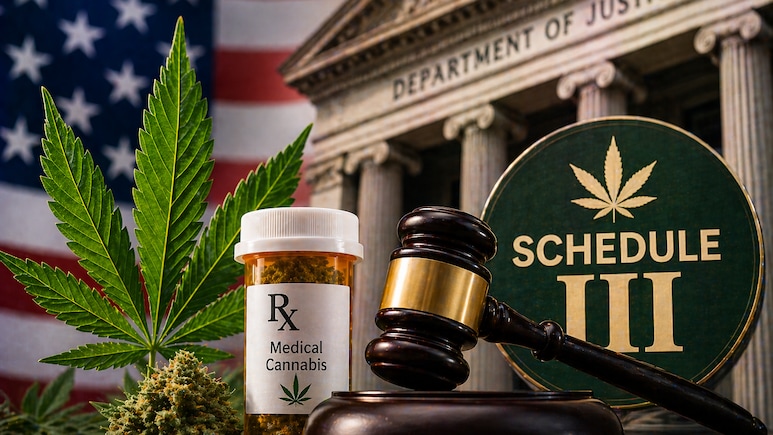
The US Justice Department has moved certain marijuana products into Schedule III of federal drug law, marking a policy shift that could reshape medical research, patient access and the cannabis industry.
The move covers FDA-approved products containing marijuana and marijuana products sold under qualifying state medical marijuana licences. It also starts a fresh fast-track hearing process on whether marijuana more broadly should move from Schedule I to Schedule III.
The decision matters because drug scheduling affects how substances are researched, prescribed, taxed and regulated. For investors and businesses, it may signal lower barriers ahead. For patients, it could improve access to approved therapies and expand scientific evidence.
What Changed
The Justice Department said the order takes effect immediately for two categories: FDA-approved marijuana products and state-regulated medical marijuana products under qualifying licences.
Separately, the Drug Enforcement Administration will begin a new administrative hearing on June 29, 2026, to consider wider rescheduling of marijuana under federal law.
That means the immediate relief is limited, while the larger national shift still needs to go through the rulemaking process.
ALSO READ: Air India Pilot Sent Back From US For Allegedly Possessing Marijuana
Why Schedule III Matters
Schedule I is the strictest category under US federal law and is used for substances considered to have high abuse potential and no accepted medical use under federal standards.
Schedule III is less restrictive. Drugs in this category can be used medically under controlled conditions and are subject to lower regulatory barriers than Schedule I substances.
In practical terms, moving products into Schedule III can make research easier, improve clarity for doctors and businesses, and support regulated medical use while keeping federal oversight in place.
Impact On Markets
The announcement could draw attention from investors tracking global cannabis companies, healthcare firms and pharmaceutical businesses linked to cannabinoid therapies.
Any broader rescheduling may also help US cannabis operators that have long argued federal rules created tax and banking hurdles. However, the latest order does not amount to full legalisation of recreational marijuana.
For Indian readers, the move is relevant because global regulatory changes often influence healthcare innovation, pharmaceutical opportunities and investor sentiment across sectors tied to wellness and biotech.
What Officials Said
"The Department of Justice is delivering on President Trump's promise to expand Americans' access to medical treatment options," said Acting Attorney General Todd Blanche.
"This rescheduling action allows for research on the safety and efficacy of this substance, ultimately providing patients with better care and doctors with more reliable information," he said.
DEA Administrator Terry Cole said the agency was moving quickly on the hearing process while continuing enforcement against cartels and fentanyl trafficking.
What Happens Next
The key date now is June 29, 2026, when the new hearing begins on broader marijuana rescheduling.
If regulators eventually shift marijuana more widely into Schedule III, it could mark one of the biggest US cannabis policy changes in years. Until then, the immediate gains apply mainly to approved and state-licensed medical products.
ALSO READ: GLP-1 Drugs Tied To Fewer Addictions, Overdoses In Large Study
Essential Business Intelligence, Sharp Market Insights, Practical Personal Finance Advice, Daily Fuel, Gold and Silver Prices and Latest Stories — On NDTV Profit.