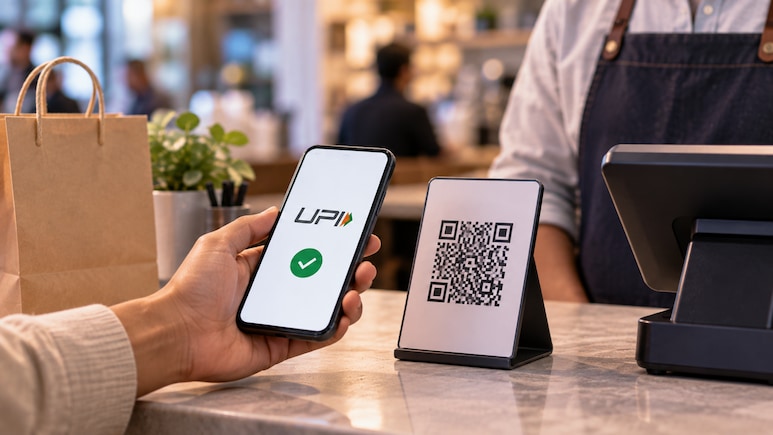
The festival of lights, Diwali, is finally here! People are gearing up to shop decorative items, delicious snacks and sweets, and fashionable clothes to look their best on the occasion. With UPI becoming a popular payment method for everyday purchases, many consumers are likely to rely on digital payments during the festive rush.
Shoppers should, however, know that UPI transactions remain free for consumers, and merchants cannot pass applicable merchant discount rate (MDR) charges on to them. This means you should not have to pay an additional fee simply for choosing UPI at the billing counter.
Also Read | Layoffs Are Rising In Tech, But These Skills Are Helping People Unlock Better Pay
The proposed rollout of MDR charges on select UPI payments has reportedly been postponed following appeals from traders. The charges were originally scheduled to take effect on October 15, 2026, but the rollout is now expected in the second week of November.
Also Read | Forgotten Money: How To Trace Dormant Bank Accounts, Old Investments And Unclaimed Deposits
The National Payments Corporation of India (NPCI) is yet to announce the exact implementation date.
The proposed framework is expected to introduce charges on certain high-value UPI payments made to merchants. These charges are intended for merchants and do not mean that consumers will have to pay a fee for using UPI.
As you head out for Diwali shopping, here is what you need to know about UPI merchant charges and your rights as a consumer.
1. UPI Payments Remain Free For Consumers
Whether you are transferring money to a family member or scanning a QR code to pay for clothes, electronics or groceries, you do not have to pay an additional transaction fee for using UPI.
Person-to-Person (P2P): Transfers between individuals, including sending money to friends and family or moving money between your own accounts, remain free for users.
Person-to-Merchant (P2M): Payments made by scanning a merchant's QR code at a retail store, supermarket or other business also remain free for consumers.
The proposed MDR framework does not change this principle. Even where a merchant is required to pay a fee on an eligible transaction, the charge is not meant to be collected from the customer.
2. How Will The Proposed 0.4% MDR Charge Work?
Under the proposed framework, an MDR of 0.4% will apply to specified person-to-merchant UPI transactions above Rs 2,000.
The Merchant Discount Rate is a fee associated with accepting digital payments. It is charged to the merchant rather than the customer.
For example, if a merchant receives an eligible UPI payment of Rs 3,000, an MDR of 0.4% would amount to Rs 12. For a transaction of Rs 10,000, the charge would be Rs 40, while a payment of Rs 50,000 would attract a fee of Rs 200. The proposed framework also provides for a cap of Rs 300 on transactions of Rs 75,000 or more.
Certain sectors will have a different fee structure. Railways, telecom, insurance, fuel and some other categories are expected to attract a flat charge of Rs 5 on eligible payments above Rs 2,000. Capital market transactions will attract an MDR of 0.02%, subject to a cap of Rs 300.
Also Read | EPFO Pension Hike: Will Minimum Monthly Pension Rise From Rs 1,000 As Unions Seek Revision?
3. Can A Shopkeeper Charge You Extra For Using UPI?
During the festive shopping season, some merchants may attempt to recover their digital payment costs by adding a surcharge to the customer's bill.
For instance, a shopkeeper might ask you to pay an additional 1% or 2% if you choose UPI instead of cash. Merchants cannot pass the applicable MDR costs on to consumers simply because they choose to make a digital payment.
Customers should check their bills carefully and question any additional fee described as a UPI charge or digital payment surcharge
If a shopkeeper insists that you pay extra for using UPI, you can question the charge and ask for an itemised bill. Keep a copy of the bill, the transaction details and any other evidence of the additional charge to support your complaint.
Essential Business Intelligence, Sharp Market Insights, Practical Personal Finance Advice, Daily Fuel, Gold and Silver Prices and Latest Stories — On NDTV Profit.