Sharp stock market corrections can unsettle even seasoned investors, particularly when falling valuations threaten years of accumulated savings. A look at India's equity markets over the last two decades offers a more reassuring picture.
Despite repeated economic disruptions and steep market declines, investors who maintained a long-term approach were often rewarded with significant wealth creation.
A recent analysis published by UTI Mutual Fund reveals that an initial investment of Rs 1 lakh made in the Nifty 100 Total Return Index (TRI) in 2003 would have expanded to Rs 34.46 lakh by June 2026. This trajectory reflects a compound annual growth rate (CAGR) of 16.2% over a period spanning more than two decades.
Also Read | Layoffs Are Rising In Tech, But These Skills Are Helping People Unlock Better Pay
ALSO READ | Filing ITR As Freelancer? Know Which Form To Choose Before August 31
Unlike a conventional price index, the Nifty 100 TRI reflects the returns generated by 100 major large-cap companies while also including the impact of reinvested dividends.
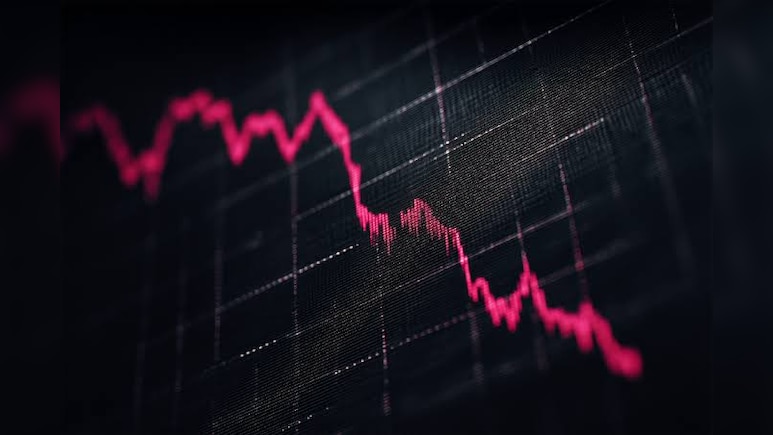
What makes this financial journey particularly noteworthy is that it was achieved not during an era of uninterrupted growth, but through some of the most tumultuous economic crises in modern history. The first major trial occurred during the 2008 Global Financial Crisis, when the index plummeted by 61%, temporarily reducing an investor's portfolio from approximately Rs 8.1 lakh down to Rs 3.2 lakh.
A few years later, the Euro Debt Crisis of 2011 triggered a further 29% decline. The market weathered additional disruptions during the 2016 demonetisation correction, which saw a 21% dip.
The most dramatic recent upheaval arrived in early 2020 with the onset of the global COVID pandemic, causing the index to collapse by 38% within a brief window and slashing portfolio values from Rs 20 lakh to Rs 12.4 lakh.
Investors encountered another sharp setback in 2022, when the global market correction wiped around 17% from the index. A decline of roughly the same magnitude followed in 2025, amid US tariff tensions and escalating conflict in West Asia.
History shows that market setbacks have repeatedly been followed by periods of recovery, with the benefits of compounding becoming increasingly visible over time. The bigger risk for many investors may lie in their own response to volatility.
Investor behaviour often changes with the market cycle. Rising share prices can create a sense of confidence that develops into enthusiasm, prompting investors to become increasingly willing to accept higher levels of risk, according to a UTI Mutual Fund presentation. At the top of a rally, the prospect of missing out on further gains can become a powerful influence on decision-making.
Selling in fear during a slump can lock in losses and mean missing the recovery that follows, while chasing markets during euphoric rallies can also hurt returns. Over the long run, poor investment behaviour can erode wealth more than temporary market corrections.
By maintaining disciplined capital allocation and resisting emotional impulses through market cycles, investors can allow compounding to transform modest initial sums into substantial fortunes over extended time horizons.
ALSO READ | ITR Filing: Why Salaried Taxpayers Need To Declare Income From Side Hustle
Essential Business Intelligence, Sharp Market Insights, Practical Personal Finance Advice, Daily Fuel, Gold and Silver Prices and Latest Stories — On NDTV Profit.