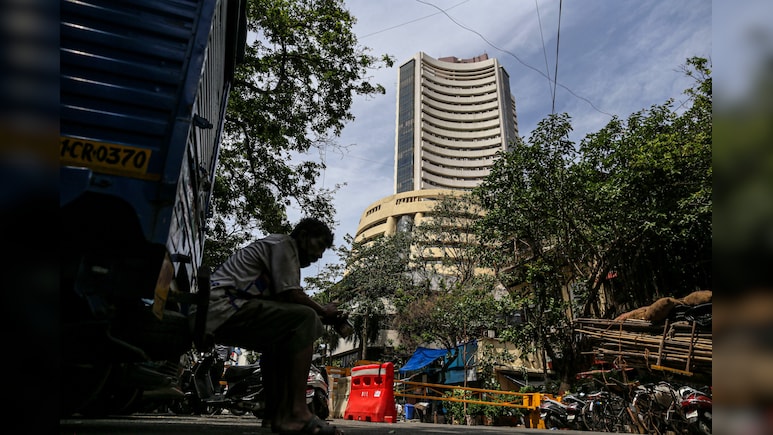
- India’s new closing auction system has caused unexpected price swings since its August launch
- BSE Sensex fell nearly 3% during the 20-minute closing auction on Thursday
- SEBI banned two firms including JPMorgan unit for alleged auction price manipulation
India's newly introduced auction-based system to determine end-of-day prices for over 200 stocks continues to produce unexpected swings nearly a month after its launch.
BSE Sensex index briefly plunged about 3% during the 20-minute closing auction Thursday, renewing concerns over thin liquidity and the potential for manipulation during the window.
Two weeks ago, an incident on the BSE Ltd. exchange had prompted the securities regulator to ban two firms, including a unit of JPMorgan Chase & Co., from the market for allegedly manipulating the auction system.
Also Read | Layoffs Are Rising In Tech, But These Skills Are Helping People Unlock Better Pay
The overhaul was intended to bring India in line with major global markets and reduce the potential for manipulation. Instead, its early rollout has highlighted some of the challenges involved in shifting price discovery to an auction-based method.
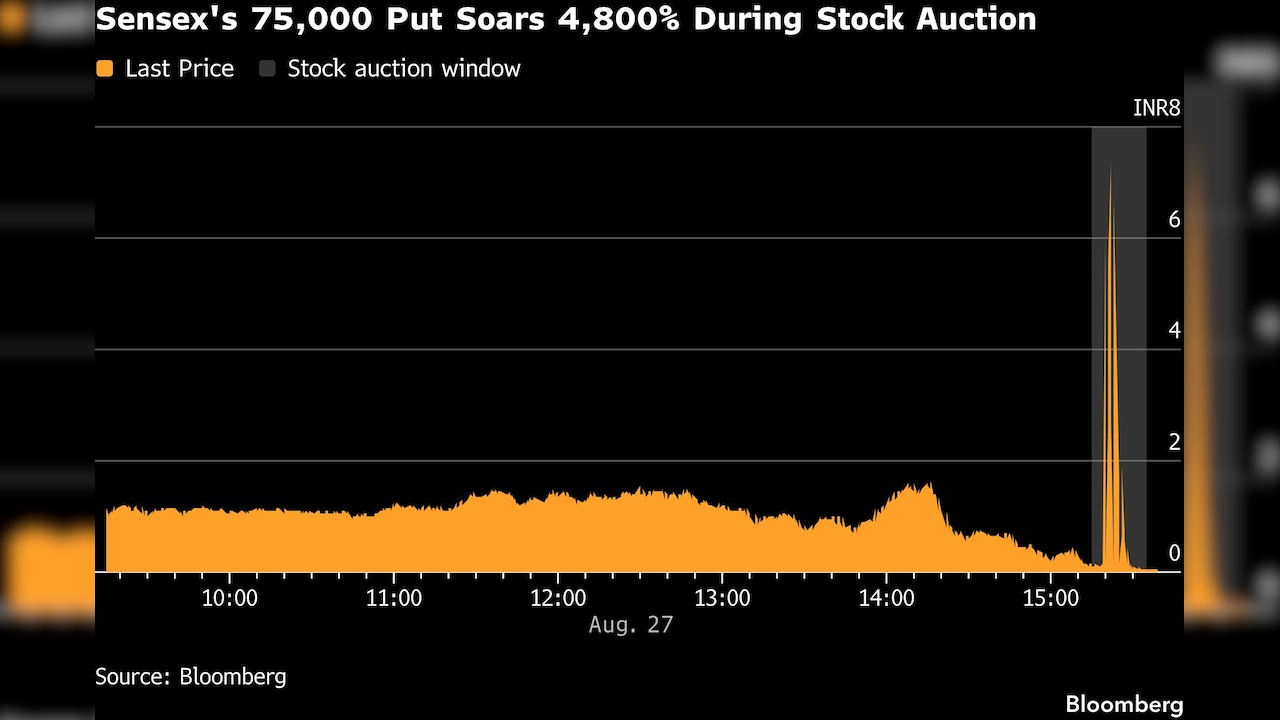
Photo Credit: Bloomberg
Closing prices are critical benchmarks across financial markets, underpinning everything from index and exchange-traded funds to mutual funds, derivatives settlements and portfolio valuations.
What is the new system?
Before Aug. 3, equities traded continuously from 9:15 a.m. to 3:30 p.m. Mumbai time, with the official close calculated as the volume-weighted average price of all trades executed during the final 30 minutes of the session.
Under the new system, eligible stocks enter a dedicated 20-minute closing auction session after continuous trading ends: From 3:15 p.m. to 3:35 p.m., buy and sell orders are collected without being immediately matched. The exchange then determines an equilibrium price that maximizes executable volume. The official closing price is published after the auction concludes, while derivatives trading ends at 3:40 p.m — 10 minutes later than under the previous system.
ALSO READ: Jio IPO, Expected To Be India's Biggest Public Issue, Gets SEBI Nod
For stocks that do not have derivatives contracts, the old methodology remains in force.
Why is the new system struggling?
India's closing auction is caught in a chicken-and-egg situation. Institutional investors are wary of routing large orders through the window because trading remains shallow and prices can move sharply. But their reluctance to participate also prevents the auction from developing the depth needed for more stable price discovery.
Turnover in the closing auction on the National Stock Exchange has averaged about 12 billion rupees ($126 million) since its introduction, a fraction of the volume that typically changed hands during the final 20 minutes of continuous trading under the previous system.
Market participants say India has adopted a mechanism common in the developed world, without yet having some of the supporting infrastructure that helps those auctions function efficiently. One constraint is the relatively shallow securities-lending market. That makes it harder for high-frequency and arbitrage firms to short stocks and provide two-way liquidity when prices diverge during the auction.
Liquidity is further fragmented because the NSE and BSE conduct separate closing auctions.
Why does the gap between cash and derivatives trading matter?
The new timetable has created another concern for traders. While cash stocks are effectively locked into the closing-auction process after continuous trading ends at 3:15 p.m., derivatives continue to trade until 3:40 p.m. That creates a period in which investors can respond to moves in futures and options but have limited ability to immediately hedge or arbitrage those positions using the underlying shares.
That mismatch can impede arbitrage — one of the mechanisms that would ordinarily help keep prices in the cash and derivatives markets aligned.
Do we see similar patterns in auctions from other markets?
Closing auctions are standard across many developed markets and typically attract significant institutional participation. Price swings were witnessed in the US and in Australia too, before petering out as systems matured.
In Australia, for example, there have been instances of large discrepancies between the benchmark gauge's price at the end of continuous trading and the official close. In one session during the Covid-19 era, the S&P/ASX 200 Index closed up 4.4%, with almost 3 percentage points of the move taking place during the auction. It ended up being the gauge's biggest one-day jump since 2008.
Still, closing auctions have become a defining feature of global markets, and academics are generally positive that they make the final price discovery more efficient, according to a Norges Bank Investment Management note in 2020. As the auction process matures, orders from institutions will gradually move into the closing window, market players say.
What's triggered Securities and Exchange Board of India's investigation?
The sessions have produced unexpected price swings during the auction window. While the regulator initially played down concerns about manipulation, it released a 46-page order on Aug. 19 alleging manipulative trading by JPMorgan unit, Copthall Mauritius Investment Ltd. and local firm Mansi Share and Stock Broking Ltd.
According to SEBI, the firms placed outsized orders in Sensex stocks during the closing auction, accounting for more than 90% of orders in some of the securities it identified. They later canceled large portions of those orders, influencing indicative closing prices without fully executing the trades, the regulator said.
A spokesperson for JPMorgan declined to comment, while Mansi Share didn't respond to an email request for comment.
What's causing the price swings?
For starters, liquidity during the auctions was thin as most institutional investors opted to stay out. With relatively few orders during the closing auction, even modest buy or sell interest can shift the equilibrium price disproportionately. And since the closing price is derived from the point where maximum sell and buy orders can be executed, those with outsized price quotes gain more influence.
Why has the new system caused confusion?
Traders have spent decades using the last 30 minutes of continuous trading as the reference point for the market close. The introduction of an auction means the market can appear to finish one way at 3:15 p.m. before the official closing price is determined 20 minutes later. The significant difference in closing levels surprised many, particularly because derivatives prices weren't necessarily reflecting the move in the cash market.
Why was it introduced?
The move is intended to improve price discovery by concentrating liquidity at a single point rather than allowing the closing price to evolve through hundreds of trades over the final 30 minutes.
The auction also makes it more difficult to influence benchmark prices near the close, aligning India's market structure with major exchanges, including the New York Stock Exchange, Nasdaq, London Stock Exchange and Australian Securities Exchange — all of which use closing auctions.
ALSO READ: RBL Bank Gets GST Demand Order Worth Rs 104 Crore For FY21
SEBI first proposed the idea in 2024 after major index-tracking passive funds asked for such a mechanism to minimize tracking errors.
What's the impact so far?
The immediate impact is greater uncertainty around the official closing price. Benchmark indexes, arbitrage funds, derivatives settlements and portfolios that are marked using the official close have all been affected by larger-than-expected deviations from pre-auction prices.
The gap between the end of continuous trading and the published close has made it more difficult to hedge positions in real time. It has also prompted a rethink of how auction dynamics should be interpreted and incorporated into trading strategies.
(This story has not been edited by NDTV staff and is auto-generated from a syndicated feed.)
Essential Business Intelligence, Sharp Market Insights, Practical Personal Finance Advice, Daily Fuel, Gold and Silver Prices and Latest Stories — On NDTV Profit.