- Ramesh Damani urges investors to focus on long-term wealth, ignoring short-term volatility
- He warns US midterm elections could cause market stress in the coming weeks
- Early signs show foreign money rotating back to India, despite near-term caution
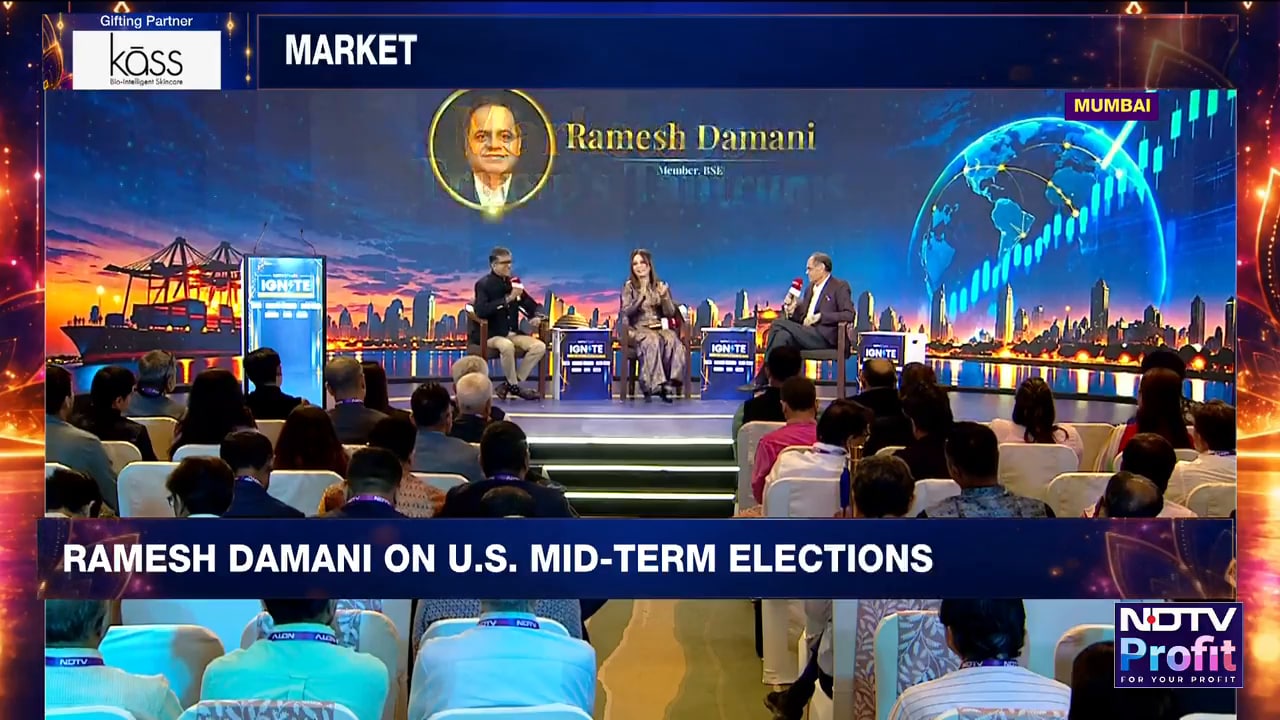
Ace investor Ramesh Damani has urged investors to look past near-term volatility and build wealth over decades, even as he warned that the US midterm elections on Nov. 3 could make the coming weeks "extremely stressful for global markets".
Speaking at NDTV Profit Ignite in Mumbai on Wednesday, Damani said investors who understand compounding have little reason to obsess over short-term moves. "Once you understand compounding it just becomes so simple," he said.

-
 Indian Markets Turning Corner After Two Tough Years, Says Sandeep Tandon
-
 NDTV Profit Ignite 2026: Experts See Opportunity In Equities, Stay Bullish For Long-Term
-
 Buy Right, Sit Tight Does Not Work for Individual Stocks, Says Dinshaw Irani
-
 'Worst Is Behind': Quant MF Sees Market Bottom, Flags 'Extreme Euphoria' In Midcaps
-
 India's Mutual Fund Industry Could Become A $1 Trillion Opportunity, Say Fund Managers
-
 'Foreign Investors Are Baraatis': Raamdeo Agrawal's Take On LTCG Tax
-
 Stay Invested Through Market Cycles: Raamdeo Agrawal at NDTV Profit Ignite
-
 Ramesh Damani Remains Bullish On India For Next 20-30 Years, Sees Bargains Amid Market Weakness
-
 CAS Came After A Long Consultation Process: SEBI Chairman Tuhin Kanta Pandey AT NDTV PROFIT IGNITE
-
 Aim To Cut FPI Onboarding Time From Mth To Five Days: SEBI Chairman Tuhin Kanta Pandey AT NDTV PROFI
To illustrate compounding, Damani said Rs 10 lakh compounded at 23-24% over 30 years could become about Rs 100 crore. Frequent trading is "great for brokers", he said, "but it's not good for your personal wealth".
Also Read | Layoffs Are Rising In Tech, But These Skills Are Helping People Unlock Better Pay
Damani said young investors should want markets to fall, since they get bargains. Citing Warren Buffett, he said an investor who liked a stock at Rs 80 but is scared to buy it at Rs 60 is the patsy in the game, and urged people to avoid being one.
Rotation Starting, But Caution Near-Term
Damani said falls in the Nasdaq and Korea, and a positive foreign institutional investor flow figure the previous day, were early signs of money rotating back to India. "That is the leading edge of the rotation," he said.
He repeated his caution, though, saying anything could happen around Nov. 3 and the week after. "The next two weeks promise to be, in my opinion, extremely stressful for global markets," Damani said.
ALSO READ: Ramesh Damani Sees Rupee Appreciation, Early Signs Of FII Rotation Into India
Damani pushed back against the expectation of steady annual gains, saying those who want fixed returns should put their money in a fixed deposit. "Market returns are bunched up," he said, adding that three years of no returns can be followed by three years of superior returns.
He pointed out that between 1993 and 2000, the Sensex stayed broadly range-bound even as companies like Infosys went public and tech businesses roared. Similarly, he said, looking back from 2030, today's market will have thrown up 10-baggers and 15-baggers.
Damani said he is looking at bargains and selling where he has made mistakes, but on a net basis remains as bullish as ever, if not more. He believes the next 20 to 30 years will likely be better for financial markets, and for Indians in particular, than the last 20 to 30.
He cited three advantages: demographics of scale, which only the US, China and India have; a successful digitisation push; and democracy. Investors have not made money in Chinese equities, he said, because China does not prioritise return on capital.
Asked whether his famous line, that the best time to invest was 1991 and the next best time is now, still holds, Damani said, "Absolutely true."
He said his generation has seen the index go from 800 to almost 80,000, a 100-times move, so a few thousand points does not rattle long-time investors. He also said the rupee is now cheap on a purchasing power parity basis and could start appreciating over the next three years.
Damani borrowed a line from former US President Franklin D. Roosevelt: "The only thing we have to fear is fear itself."
On a possible cut in long-term capital gains tax to woo foreign investors, Damani said it would make a difference, at least as a knee-jerk reaction, but that he preferred policy stability. "Let's not tinker with every budget," he said.
ALSO READ: 'Worst Is Behind Us': Sandeep Tandon Sees Market Bottom, Flags 'Extreme Euphoria' In Midcaps
Essential Business Intelligence, Sharp Market Insights, Practical Personal Finance Advice, Daily Fuel, Gold and Silver Prices and Latest Stories — On NDTV Profit.