Strong Growth Potential Trumps India’s High Valuations: Aberdeen
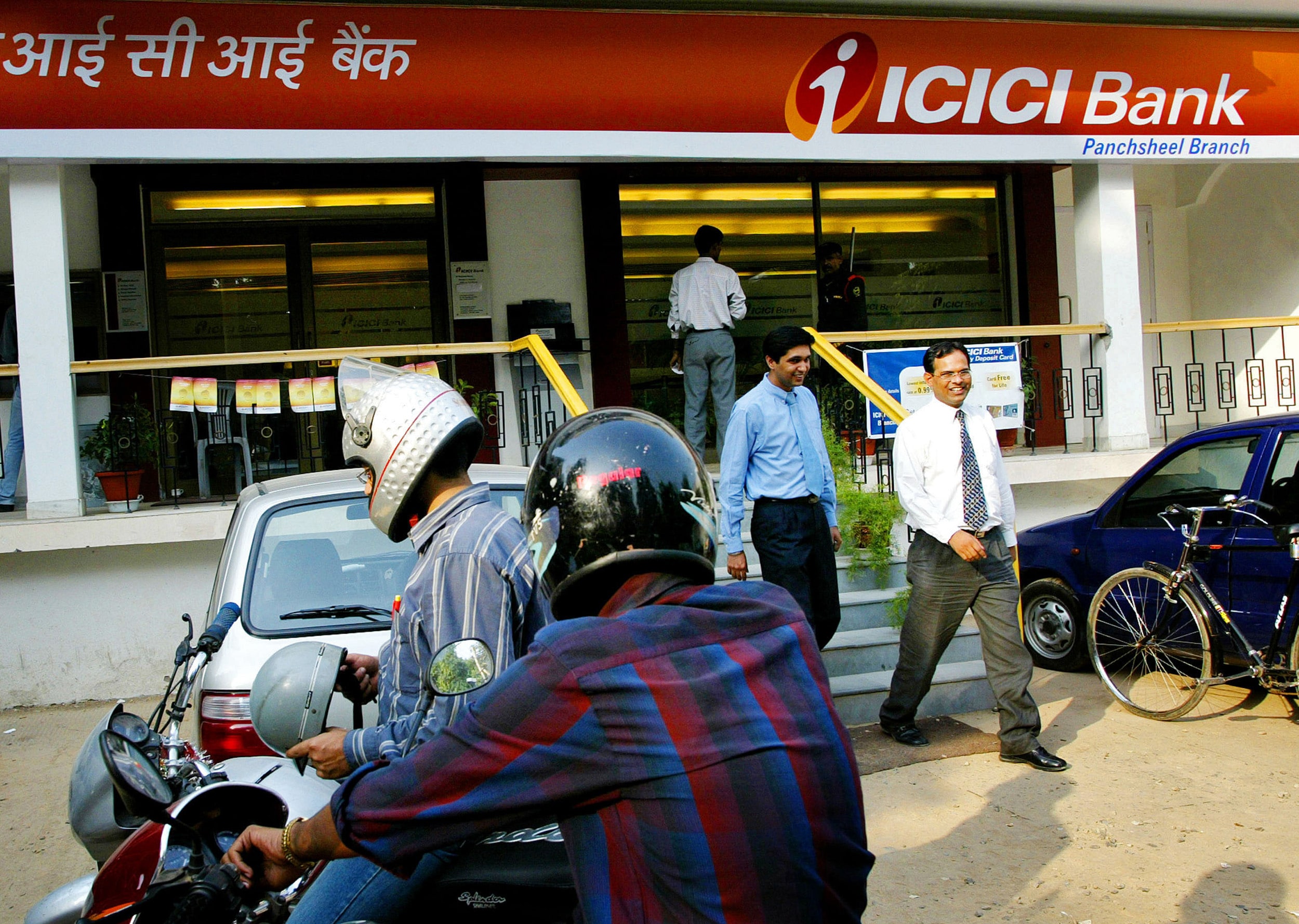
Expensive valuations in India is a cause for concern only in the short term, and that too for shorter-term investors, Hugh Young, managing director of Aberdeen Asset Management Asia said on Thank God It's Friday.
While India may be the most richly-valued market in Asia, its strong growth potential will make these valuations appear irrelevant over time, he added.
Here are edited excerpts from the conversation.
Indian benchmark indices in the last week surpassed Japan's as the most expensive in Asian markets. How do you read valuations in India?
Yes. You are right. It has been largely a revaluation in India rather than strong earnings growth coming through. Way back into last year and before, we found India to be one of the most expensive markets within the region. From our time horizons – we look at 5-10 years – we think today's expensive stocks will appear irrelevant because the growth potential is so large still. But short term, it is a cause for concern, for shorter-term investors, not so much for us. We being fundamental investors prefer to buy good companies, which India has, as cheaply as possible. As far as valuations are concerned, you can't argue that they are cheap just looking ahead at one year's earnings or two years' earnings.
Your funds have held the likes of HDFC Bank, Kotak Mahindra Bank, as well as ICICI Bank for quite some time now. There has been a little bit of reduction in ICICI Bank specifically. Do you have any concerns on private banks in India?
Of the banks you mentioned, HDFC Bank, Kotak Mahindra and ICICI Bank, ICICI is the weaker of the three. Where we have outflows, we have probably taken money from ICICI and held on to HDFC Bank and Kotak both of which are stronger fundamentally than ICICI. Of course, we like all three, and in part, their related strengths are reflected in valuations with HDFC Bank and Kotak being more expensive in terms of price-to-book.
There are several concerns with regards to the U.S. Congress, especially on Bills related to immigration which may make things difficult for the information technology sector in India. There has been little change in your holdings in stocks such as TCS, Infosys and Cognizant. You are not perturbed?
I don't think we are too perturbed. Yes, we do hold Infosys and TCS. I would say we are concerned because the industry is changing. The dramatic growth that we saw 10-20 years ago is certainly over. The companies are maturing, the business is having to shift focus as well. It's a less exciting future but there are clearly companies where India excels and there is still some growth. But it's just not going to be the rates of growth that we have seen in the past. And that's also reflected in the ratings.
How would you read Reliance Jio's impact on incumbent players? Will those who have invested in these telecommunication companies have to wait a lot longer before they see substantial returns? If your view is favourable towards the sector, would you consider buying into some other companies as well?
It's a sector where we are relatively tighter. We have held Bharti for quite a while. It's been a bumpy ride with the price competition we are seeing from Reliance Jio. That's made it very tough. It has had a damaging effect on short-term profitability. It's a powerful sector be in. We expanded our holdings in Infratel a year or two ago. But it's not a sector we have got massive weight into.
Consumer companies like HUL and ITC have traditionally traded at a premium to other sectors. When would you be really concerned about valuations because growth in these companies hasn't been great. But a lot of that has to do with the economy.
The broader point, even beyond the consumer stocks, is that we haven't yet seen a sharp rate of growth broadly across the markets in terms of earnings per share and certainly in consumer stocks, in particular, where ratings can be up in the mid 30s price earnings ratios. You need those earnings to come through to justify them. So, although the portfolio that Unilever has, or an ITC has is very strong, so far the growth has not been coming through strongly as we would like to see. So, a lot is in the price for future growth. We still think that's possible. But again you need to be patient investors and we are certainly patient with our holding horizons.
What we have noticed is an absence of stocks in the industrial metals and oil sector. There is a resurgence in commodity-based companies and by that, I mean materials and oil and gas marketing and distribution companies. Would you consider allocating funds to these stocks and sectors or would you stay away?
Technically, those are sectors we tend to avoid. They are highly cyclical and commoditised. Where we have had far more cyclical exposure has been in the cement sector. It's where we are fairly heavy. For us that is a longer-term India's broad infrastructure spend. The stocks you earlier mentioned are something we'd avoid.
With the implementation of Goods and Services Tax regime almost out of the way, what are the reforms that you would like to see in India?
Not so much as reform as much as business operating smoothly and efficiently. India has gotten better and GST is a big step in the right direction. It is a matter of less regulation and less red tape, making things simple, accessible whether it be bank accounts, various permits etc. Not necessarily dramatic big scale reforms but just the efficiency of the systems like courts and legislation that would include all sectors in the government.

-
Unhedged Position: Can India See An Indonesia-Style Time Correction?

The Nifty is trading below levels it first clocked in 2024. Is there, then, as I have suggested in the headline, potential that the current time correction drags on painfully for the next three-five, even ten years?
-
Navigating Friction And Energy Realities: An Analysis Of Marco Rubio's October Visit To India
Occurring at a critical juncture marked by stalled trade negotiations and escalating geopolitical pressures over global energy supplies, the visit offers a profound window into modern US-India relations.
-
India Exports Capital. Why Not Export Trusteeship?
The big question, then, is whether India can build an institution that global borrowers, investors, banks, and lawyers can trust, even without an Indian connection.
-
France's Economy & Politics Are In Crisis | The Reason Why
Let's look at how the French economy and politics evolved under Nicolas Sarkozy, Franois Hollande and Emmanuel Macron.
-
You May Inherit The Business. You Must Earn Its Credibility.
Succession tests the founder's ability to share authority as much as it tests the next generation's readiness to assume it.
-
Signing Deals Is One Thing; Making Them Work Is Another | The Week In Whys
Sometimes, things don't turn out as planned. Indian companies have lost some bids to rivals, some projects won't produce until 2030.
-
FOMC Wall, PERM Suspension, Hospital Stocks | Talking Points This Week
A PERM suspension would directly affect green-card sponsorship rather than H-1B visas, so the near-term earnings impact could remain relatively limited. The key question is whether this marks a new phase in US scrutiny of Indian IT.
-
Everything, Everywhere, All At Once: Dalal Street's Week To Forget | Joining The Dots
Visa curbs, a Starlink spat and cancer drug caps: what connects this week's shocks for Indian markets
-
India Is Going Abroad For Critical Minerals. But It May Take Years To Pay Off | The Reason Why
Although India's steps are in the right direction, they remain modest compared with India's growing dependence.
-
When Everyone Has AI, What Gives You An Edge?
India's young workforce is entering an uncertain world of work where powerful AI tools are becoming widely accessible. The advantage will belong to those who combine deep expertise with digital fluency, and the distinctly human capabilities that technology cannot manufacture.