India's blue-chip equity index shed over Rs 3 lakh crore in market capitalisation on Wednesday, as investors remained on edge with no signs of an end to the Iran war and the disruption to energy supplies threatening economic activity.
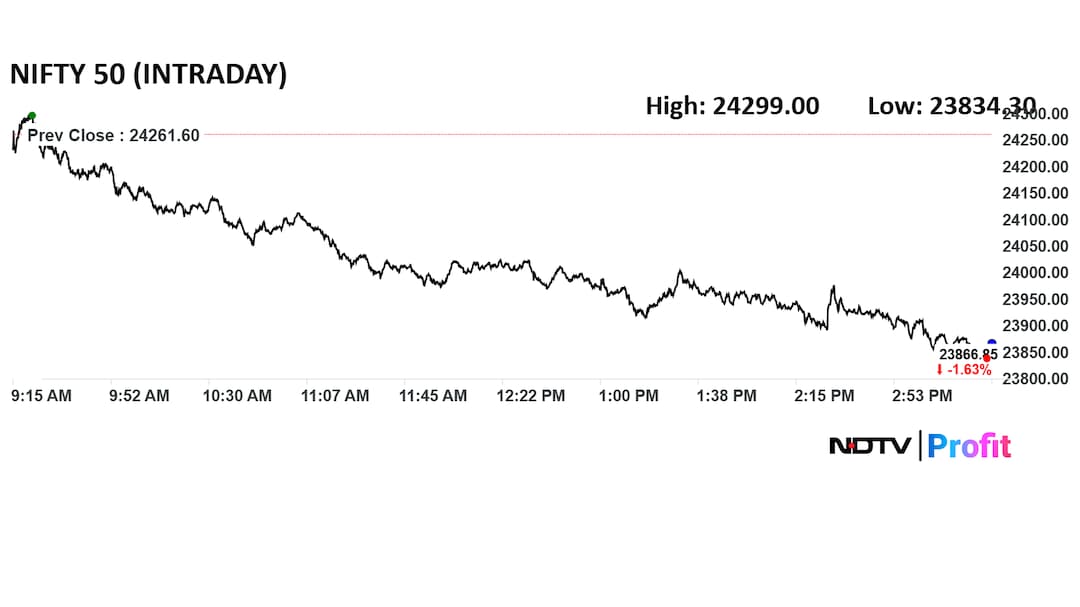
The Nifty index, comprising the 50 largest and most liquid stocks, ended nearly 400 points or 1.6% lower at 23,866.85. Among them, 42 stocks declined and eight rose. The index slipped below its immediate support of 24,000 points to a level last seen in April when the US unleashed its 'Liberation Day' tariff policies.
Bajaj Finance Ltd. and Axis Bank Ltd. dropped over 4%, the most on the Nifty, followed by Bajaj Finserv Ltd. and Eicher Motors Ltd. On the other hand, Jio Financial Services Ltd. and Coal India Ltd. were the top gainers.
Relentless foreign capital outflows, lack of positive domestic triggers and heightened tensions in the Middle East kept sentiments dampened.
ALSO READ: US Recognises India's Russian Oil Purchases As Vital For Global Market Stability
Foreign portfolio investors were net sellers of Indian equities for the eighth consecutive session on Tuesday, offloading stocks worth Rs 4,673 crore, as per NSE data, as the Middle East conflict kept investors unnerved about risk assets.
The war between the United States and Israel and Iran entered its 12th day with no concrete resolution in sight. Tehran experienced one of its most intense nights of bombardment by the US and Israel since the start of the war as numerous areas of the sprawling city were hit to devastating effect, as per reports. The US said it took out more than a dozen minelaying Iranian vessels to help prevent any attempt to close the crucial Strait of Hormuz waterway.
International oil prices fell sharply from multi-year highs, while concerns shifted to securing energy supply. Global benchmark Brent traded below $88 per barrel and West Texas Intermediate dropped near $83 following reports that the International Energy Agency is proposing the largest ever oil release in its history, in an attempt to tackle the ongoing supply shortage.
However, in India, the concerns have more to do with supply of natural gas to consumers and businesses. The government has instructed oil marketing companies to prioritise households and priority sectors like hospitals and educational facilities for supply of liquefied natural gas.
The risks to commercial operations due to disruption in energy supply and oil and gas-derived materials will have an impact across the economy, analysts warned.
ALSO READ: Stock Market Crash: Nifty, Sensex In Deep Red As These Factors Weigh
Essential Business Intelligence, Sharp Market Insights, Practical Personal Finance Advice, Daily Fuel, Gold and Silver Prices and Latest Stories — On NDTV Profit.