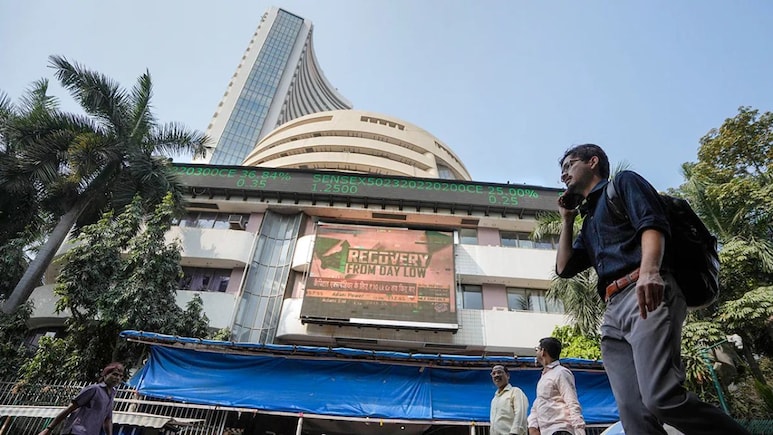
- Investors lost Rs 3.93 lakh crore in a single session on Sept 24
- Sensex and Nifty 50 hit three-month lows amid weak global cues
- Nifty fell 1.57% to 23,077.80, Sensex dropped 1.54% to 73,671.56
Stock Market Crash: Investors lost over Rs 3.93 lakh crore in a single session on Thursday, Sept. 24 as domestic equity benchmarks Sensex and Nifty 50 hit three-month lows on weak global cues. High crude oil prices, surging bond yields and Middle-East geopolitical conflict drove outflows from Indian equities amid a muted market sentiment. A global bond selloff pushed US Treasury yields to multi-year highs, while a stronger US dollar uncertainty weighed on investor sentiment.
The total market cap of BSE-listed companies sttod at Rs 48,107,444 crore as of 2:20 pm. This compares to yesterday's total market cap of Rs 48,501,353.85 crore. Hence, so far, investors have lost Rs 3,93,909.85 crore (Rs 3.93 lakh crore). Banks and insurers led losses after the country's insurance regulator (IRDAI) proposed overhauling commission rules to cap payouts, link them to product complexity and spread life insurers' commissions beyond a policy's first year.
ALSO READ: Three Reasons Why Stock Market Crashed: Sensex Slumps Over 1,150 Points, Nifty Falls Below 23,100
Also Read | Layoffs Are Rising In Tech, But These Skills Are Helping People Unlock Better Pay
Stock Market Crash: Why are Sensex, Nifty trading at three-month lows?
The Nifty 50 benchmark fell 316.40 points, or 1.35%, to 23,130.40. The 30-share Sensex declined 974.30 points, or 1.30%, to 73,853.95. Both the benchmark indices are trading at over three-month low levels. The signal came as investors assessed a sharp rise in US Treasury yields, higher crude prices and expectations of more US Federal Reserve rate hikes in the year.
The NSE benchmark fell to its lowest level in 117 sessions and traded at levels last seen on April 7, 2026. Sensex hit its lowest level in 73 sessions, falling to levels last seen on June 11, 2026. Nifty has lost over 1,700 points over 37 sessions, while the Sensex has fallen over 5,550 points in 36 sessions. The sharp decline came after Wall Street ended lower and Asian markets came under pressure as rising US Treasury yields raised concerns that interest rates could remain higher for longer.
Crude oil prices jumped nearly 3% on Thursday to hit the benchmakr $106 per barrel-mark once again since the last week, after traders grew restless regarding progress in the ongoing US-Iran truce talks. Also, the US 10-year Treasury yield rose more than 13 basis points to 5.104% and reached its highest level since July 2007. The five-year Treasury yield also moved above 5% for the first time since 2007 after weak demand at an auction of $70 billion of five-year notes.
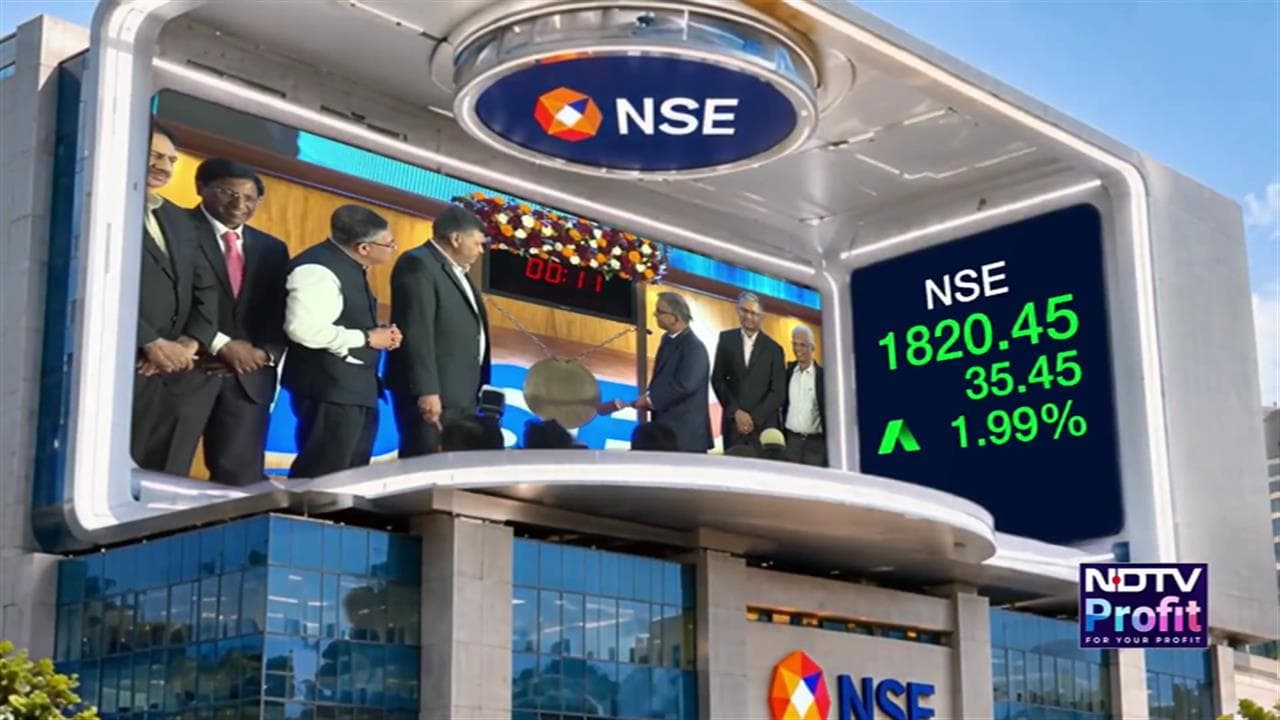
ALSO READ: NSE Becomes 10th Most Valued Listed Company In India As Market Cap Crosses Rs 4.5 Lakh Crore
''The weakness in Indian equities reflects a combination of global and domestic pressures, particularly elevated crude oil prices, rising global bond yields and expectations that interest rates could remain higher for longer. For an oil-importing economy like India, crude above $100 a barrel raises concerns around inflation, the import bill and corporate input costs, while higher global yields can influence foreign institutional flows and keep the rupee under pressure,'' said Pranay Aggarwal, Director & CEO, Stoxkart on Crude, Yields and Geopolitical Risks Drive Near-Term Volatility in Equities.
In the current environment, rate-sensitive and energy-intensive sectors may continue to witness volatility, while relatively defensive sectors could show greater resilience. Going forward, investors should closely track crude oil prices, global bond yields, geopolitical developments, FII flows, the rupee and signals from major central banks. Near-term volatility may remain elevated, making disciplined risk management and a focus on underlying fundamentals particularly important,'' he said.
Essential Business Intelligence, Sharp Market Insights, Practical Personal Finance Advice, Daily Fuel, Gold and Silver Prices and Latest Stories — On NDTV Profit.