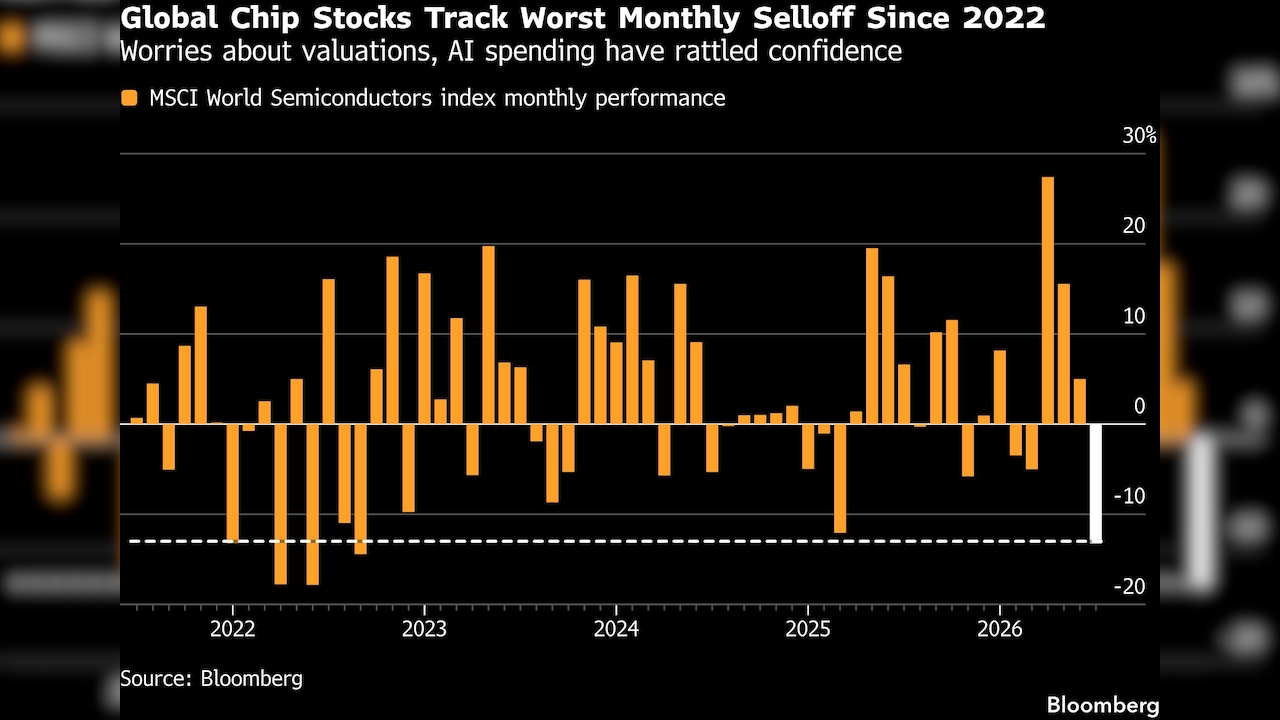
| SK Hynix Inc.'s quarterly profit rose 557%, but missed expectations, fueling fears that an AI boom that has propelled the semiconductor industry may be decelerating. The key supplier of Nvidia Corp. also said on Wednesday it expects its capital investments to hit the high 40 trillion won ($27.5 billion) range this year, upping the race against rival Samsung Electronics Co. for the spoils from the AI investment rush. Its shares dropped 4.5% during pre-market trade. SK Hynix, which leapt past Samsung to take the lead in the red-hot AI memory arena, has shed more than $500 billion of value since June as doubts grew about whether spending will justify lofty valuations. Tech companies' rising debt levels are also weighing on investors' minds. The growing amounts of leverage tied to players like SK Hynix turbo-charged volatility across Korea's bourse, wiping out roughly 45% of the company's value in about a month. 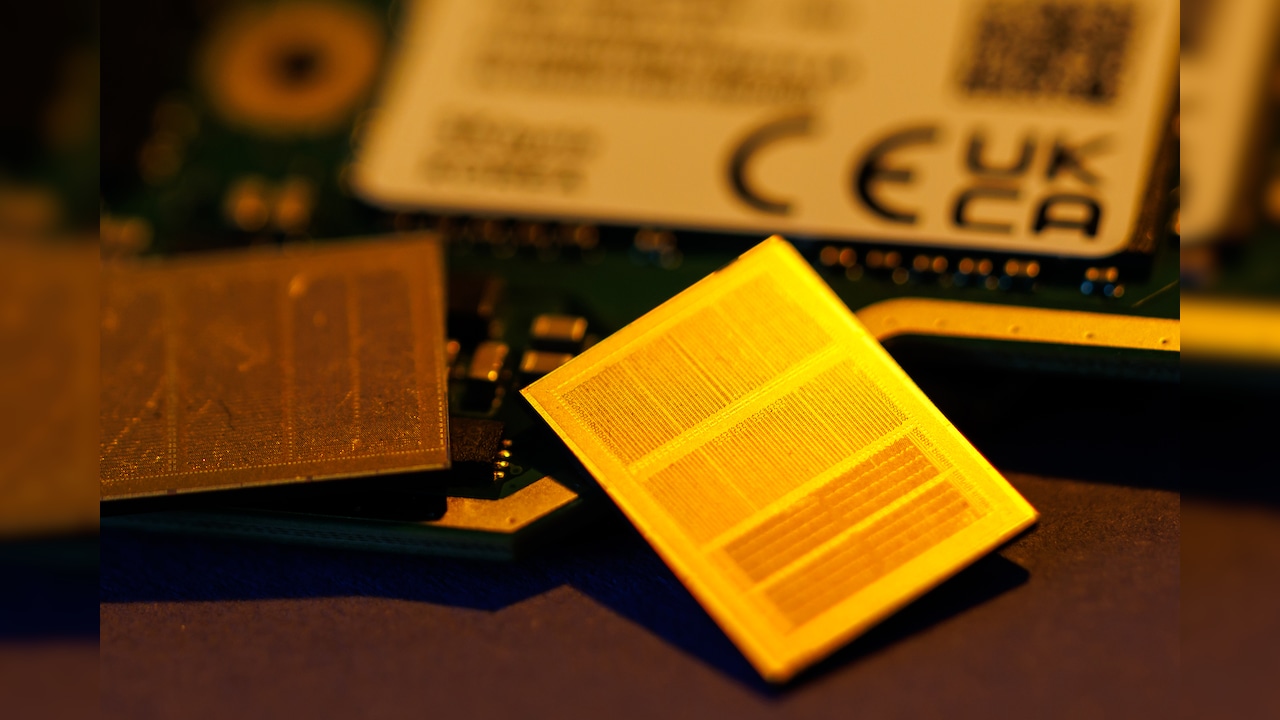 SK Hynix's net income surged a bigger-than-expected 1,242% on one-time investment gains in the June quarter, shoring up the company's financial strength. But operating profit came to 60.5 trillion won versus analysts' average projection for 64.2 trillion won. Revenue also came below the average analyst estimate. "When you're the dominant supplier of the high-bandwidth memory that powers Nvidia's chips, the AI boom lands directly on your bottom line," said Josh Gilbert, Etoro's lead analyst for APAC and the Middle East. "That means the market is unlikely to focus on the headline numbers alone. The bigger question is whether margins and guidance can justify its recent performance." Investors worry that soaring chip costs may trigger a broader economic slowdown, pushing prices of electronics higher and spurring manufacturers to cut production of devices like PCs and smartphones. Brokerages including Mirae Asset Securities Co. have trimmed their second-quarter profit estimates for SK Hynix in recent weeks, citing moderated growth in average selling prices of chips. Chipmakers have pushed back, saying that demand is expected to outstrip supply for the long term. They point to customers such as cloud service providers ratcheting up orders for memory, lifting both volumes and margins. SK Hynix Chief Executive Officer Kwak Noh-Jung told Bloomberg earlier this month that the severe memory chip shortages that are roiling the computer, car and device makers would likely persist beyond 2030. SK Hynix, along with Samsung and Micron Technology Inc., dominates global memory supply. The trio has increasingly shifted production in recent years toward high-bandwidth memory used in Nvidia's AI accelerators, tightening supplies of conventional memory.
 SK Hynix won multiyear contracts with around 10 customers, it said. Last week, SK Group signed a pact with Nvidia on a partnership spanning deals that the two companies said could be worth more than $500 billion. The figure includes money that Nvidia will spend buying memory chips, as well as purchases of supercomputers, Nvidia CEO Jensen Huang told Bloomberg Television. "So between us, we're going to do half a trillion dollars' worth of business," he said. ALSO READ: Apple Crosses $5 Trillion Market Value For First Time After Surpassing Nvidia SK Hynix is one of the key suppliers of HBM4, the most advanced high-bandwidth memory and an essential component in Nvidia's new Vera Rubin AI chips. The company said last month that it has shipped samples of next-generation HBM4E to major customers. The move comes a month after Samsung's announcement to take an early lead in the competitive market. |
(This story has not been edited by NDTV staff and is auto-generated from a syndicated feed.)
Essential Business Intelligence, Sharp Market Insights, Practical Personal Finance Advice, Daily Fuel, Gold and Silver Prices and Latest Stories — On NDTV Profit.