
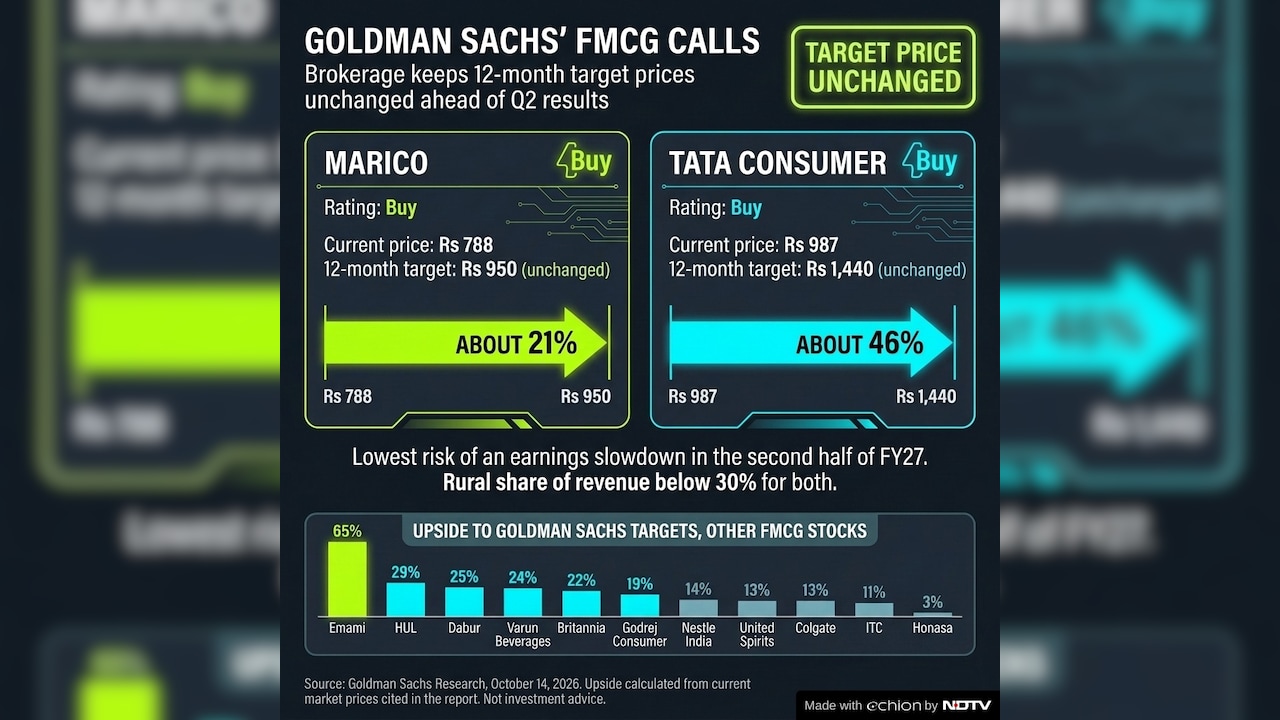
Goldman Sachs has identified Marico and Tata Consumer Products as the safest bets in India's fast-moving consumer goods sector ahead of September quarter results, citing their relatively lower risk of an earnings growth slowdown in the second half of the fiscal year.
The brokerage flagged three key concerns weighing on investor sentiment: rural demand following a weak monsoon, rising input costs, and a high base from last year's goods and services tax rate cuts. Although volume, revenue, and profit before tax growth across its FMCG coverage has accelerated over the past three quarters, investors remain uncertain about the sustainability of this momentum.
Three Risks
Weak rural demand: The monsoon was 13% below the long-period average this year, raising concerns about rural consumption. Dabur, Colgate, Emami, Britannia, and Hindustan Unilever have relatively higher rural revenue exposure. In contrast, rural revenue accounts for less than 30% of consolidated revenue for Marico, Tata Consumer Products, Nestle, and Honasa Consumer.
Also Read | Layoffs Are Rising In Tech, But These Skills Are Helping People Unlock Better Pay
Rising input costs: Inflation in crude derivatives and agricultural commodities, including palm oil and sugar, could pressure gross margins. Britannia and Godrej Consumer Products' India business face potential challenges in passing on higher costs quickly. Varun Beverages could also face margin pressure if competition limits price increases.
GST-related base effect: Nestle faces a particularly high base after revenue growth accelerated by 800 basis points from the third quarter of fiscal 2026 following GST rate cuts. Marico, Dabur, Emami, Hindustan Unilever, Colgate, and Godrej Consumer Products face a more modest impact from one-time restocking. Britannia and Tata Consumer Products have no GST-cut-driven high base.
Why Marico, Tata Consumer Stand Out
Goldman Sachs sees Marico benefiting from lower copra prices and improving profitability in its digital personal care business. Tata Consumer Products, meanwhile, has taken sufficient price increases to offset input cost pressures.
The brokerage expects management commentary on rural demand, commodity prices, pricing actions, and growth sustainability to be crucial in assessing whether FMCG earnings momentum can hold up in the second half of fiscal 2027.
Also Read: FMCG Stocks Face Earnings Test As Valuations Fall 25% Below Five-Year Average
Essential Business Intelligence, Sharp Market Insights, Practical Personal Finance Advice, Daily Fuel, Gold and Silver Prices and Latest Stories — On NDTV Profit.