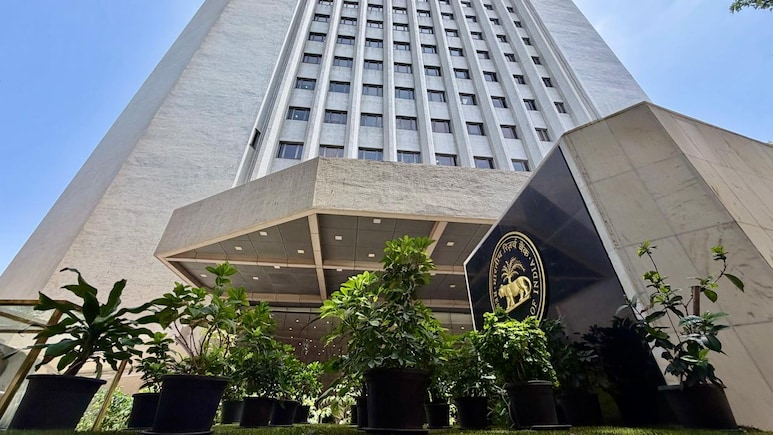
Individual exposures of up to Rs 10 crore will be able to take benefit of lower risk weights as the RBI upped the threshold from the earlier Rs 7.5 crore on Monday in the final guidelines on capital charges.
In the 'Final Directions on Basel III - Capital Charge for Credit Risk under Standardised Approach' norms issued after public consultation on Monday, the RBI said it received requests to increase the maximum aggregated exposure cap to individual counterparty to be eligible to be classified as regulatory retail after coming out with the draft in October.
Accepting the feedback, the RBI said, "The threshold of eligible exposure amount for classification as regulatory retail has been increased to Rs 10 crore, subject to meeting other qualifying criteria." The revised framework, which will come into force from April 1, 2027, also increases the threshold for large unrated corporate and NBFC exposures, attracting a higher risk weight of 150 per cent, to Rs 500 crore from the earlier proposed Rs 200 crore, providing relief to mid-sized borrowers and lenders.
Also Read | Layoffs Are Rising In Tech, But These Skills Are Helping People Unlock Better Pay
The central bank said the changes were made after examining stakeholder feedback on the draft norms issued in October 2025 and are aimed at enhancing the robustness, granularity and risk sensitivity of the capital framework while ensuring alignment with global Basel standards.
In a significant relief to banks, the RBI removed the proposed requirement to automatically increase risk weight by one notch if a bank's internal due diligence indicated higher risk than external ratings, though it retained the requirement for lenders to conduct periodic due diligence of borrowers.
The regulator also simplified the treatment of unrated bank exposures by scrapping the proposed grading mechanism and prescribing uniform risk weights of 100 per cent for long-term exposures and 50 per cent for short-term exposures.
Further, the RBI allowed foreign bank branches operating in India to use the external credit ratings of their parent banks by international rating agencies for determining risk weights, addressing a long-standing industry demand.
ALSO READ | One Mobikwik Shares Rally 11% As Fintech App Gets RBI Approval For NBFC License
On the retail and MSME front, the central bank broadened the definition of regulatory retail to cover all small businesses, including those not formally registered as MSMEs, provided their turnover does not exceed Rs 500 crore.
In the real estate segment, the RBI permitted upward revision in property valuation for extending additional loans against the same property after a minimum period of five years, subject to safeguards, a move expected to facilitate top-up lending to borrowers with improved repayment track records.
However, the regulator maintained stricter risk weights for commercial real estate under construction projects, stating that such exposures are inherently riskier and warrant higher capital requirements under the Basel framework. PTI MSU AA MR
Essential Business Intelligence, Sharp Market Insights, Practical Personal Finance Advice, Daily Fuel, Gold and Silver Prices and Latest Stories — On NDTV Profit.