- Nifty and Sensex fell over 1.25% due to Middle East tensions and US-Iran talks faltering
- Indian rupee hit a record low of 95.126 against the dollar, down 5.8% this year
- All sectors traded in red, with Auto, Realty, PSU Bank, and Bank down over 1.5%
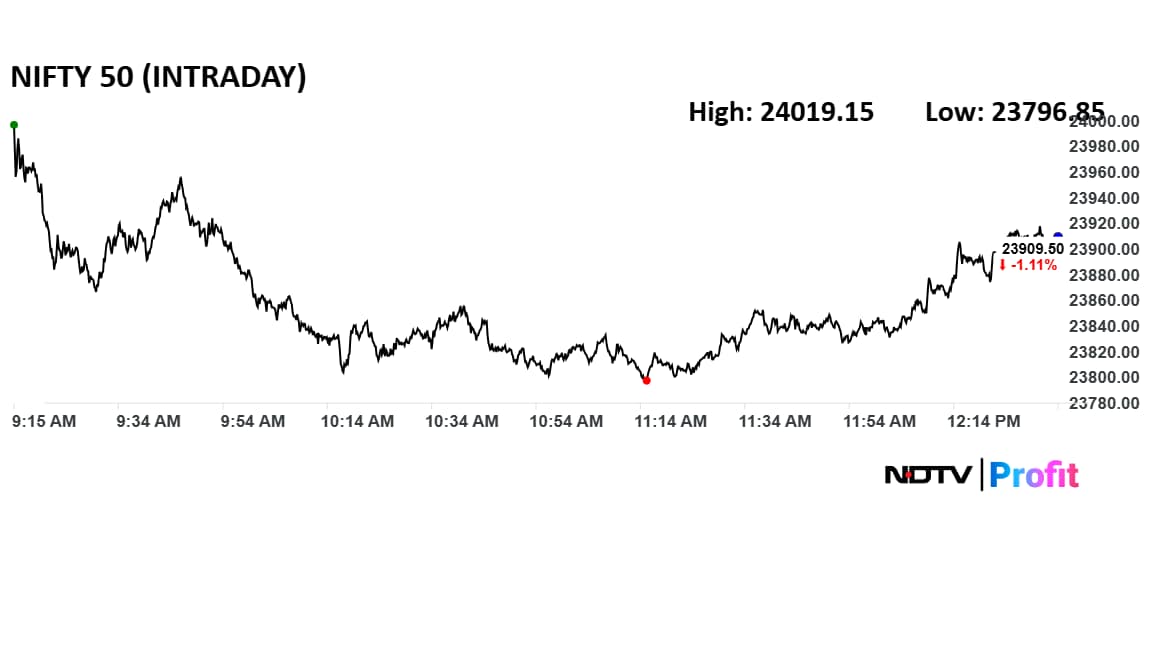
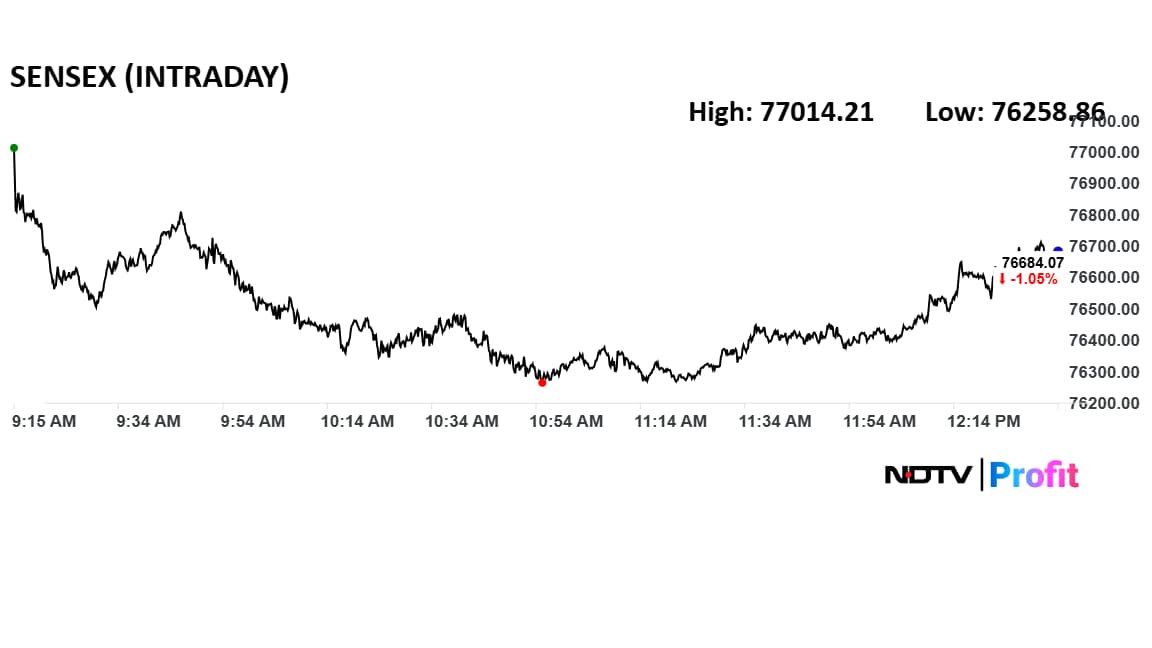
Nifty, Sensex are under pressure in Thursday's trade on the back of unsettled geopolitical tensions in the Middle East, and faltering talks between the US and Iran heightened fears of prolonged crude supply disruptions in the Persian Gulf. Nifty is trading with cuts of over 1.10% (around 260 points lower) at 23,909. Sensex, meanwhile, is also 1.08% lower (780 points lower) at 76,684, as of 12:30 pm.
The Indian rupee depreciated nearly 20 paise to hit a record low of 95.126 against the dollar. The local currency has weakened the 5.8% so far this year, the worst unit in emerging Asia.
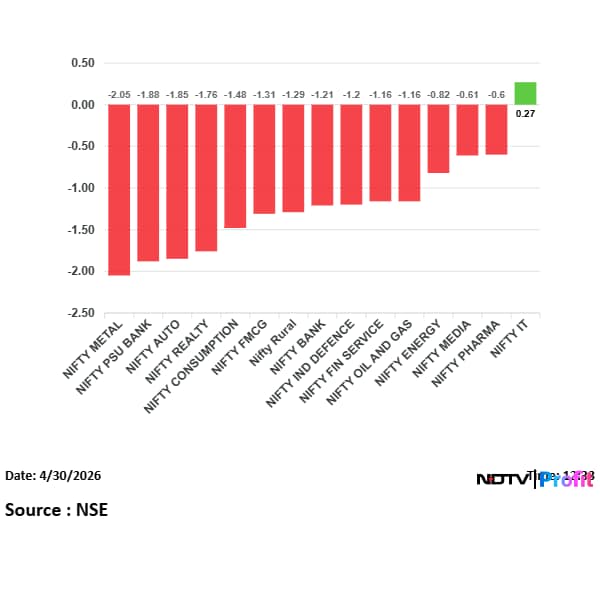
All sectors, barring IT, are trading in red, with Nifty Metal, Auto, Realty, PSU Bank treading over 1.5% lower, followed by Consumption, and FMCG.
The broader market is underperforming the benchmarks, and is facing pressure with the Nifty Smallcap 250 falling almost 0.86%, and the Nifty Midcap 150 dropping about 1.37%.
Here are three key reasons dragging the markets on Thursday.
Middle East Tensions
As the US-Iran conflict completes two months, Washington is looking to forfeit two Tehran-linked oil tankers seized by naval forces enforcing a blockade against the Islamic Republic. The US Department of Justice has started the forfeiture process, Bloomberg reported citing an official. Both countries have been enforcing dual blockades in and around the Strait of Hormuz as President Donald Trump seeks to ramp up economic pressure on Iran.
Meanwhile, Trump told Axios that he does not plan to lift naval blockade of Iran's ports until he secures a deal with Tehran to address the country's nuclear program, extending a standoff over the Strait of Hormuz, a key connectivity route, which has disrupted global energy supplies.
The President had rejected a recent proposal from Iran to reopen the strait but that would have delayed talks on the nuclear issue until later.
Get the latest updates on the US-Iran conflict here.
Crude Prices At Four-Year High
Oil prices climbed further on Thursday, with global benchmark Brent crude hovering around the $123-a-barrel mark, as geopolitical tensions between the U.S. and Iran showed little sign of easing. The rally reflects growing concerns that supply disruptions could persist longer than initially expected.
June futures for Brent crude rose nearly 2% to trade at $120 per barrel, while U.S. benchmark West Texas Intermediate (WTI) edged up to around $107. The move follows a sharp surge in the previous session, when Brent jumped about 6% and WTI rallied 7%.
ALSO READ: Brent Crude Surges To $120 As US-Iran Standoff Tightens Oil Supply Fears
Weak Global Cues
US equity futures were mixed in early Asia trading, with S&P 500 contracts up 0.1% as of 12:48 p.m. in Tokyo. Japanese markets led regional declines, as Nikkei 225 futures fell 1.2% and the broader Topix index dropped 1.5%.
Elsewhere, Australia's S&P/ASX 200 slipped 0.2%, while Hong Kong's Hang Seng Index lost 1.3%. Mainland Chinese shares were steadier, with the Shanghai Composite little changed. In Europe, Euro Stoxx 50 futures pointed lower, down 0.5%.
Bond markets came under pressure as surging oil prices and the Federal Reserve's firm policy stance reduced appetite for fixed income. US 10-year Treasury futures fell for a fourth consecutive session, while benchmark yields hovered near their highest levels since July. In Japan, 10-year government bond yields climbed to levels not seen since 1997.
Get the latest updates on the stock market here.
Essential Business Intelligence, Continuous LIVE TV, Sharp Market Insights, Practical Personal Finance Advice and Latest Stories — On NDTV Profit.