The supply side of primary metals is tightening, gradually shifting the focus toward recycling. It now takes nearly 27 years for a new copper mine to become operational. In addition, declining ore quality and rising extraction costs are making fresh supplies harder to come. This has made recycling a necessity for meeting the world's growing industrial demand.
The Policy Push
As recycling becomes more central to supply, policy support is also strengthening through mandates and incentives. The Indian government has mandated that all new products made from non-ferrous metals must contain at least 5% recycled content. This mandated recycled content is expected to increase up to 20% for copper and 10% for aluminium.
Also Read | Layoffs Are Rising In Tech, But These Skills Are Helping People Unlock Better Pay
Future Growth in Solar Recycling
Beyond policy support, new demand drivers are also emerging. Emerging technology and the expiration of product lifecycles are unlocking new growth domains for the sector. The rise of renewable energy and an aging base of solar installations make recycling end-of-life solar panels crucial. This helps recover valuable components, including aluminium, silver, glass, plastics, and rare-earth metals.
ALSO READ: Aeroflex Industries' Rs 1.9 Lakh Crore Bet: Why The Market Is Watching This AI Cooling Pivot
The Jain Resource Recycling model
Against this backdrop, Jain Resource Recycling stands as a key beneficiary poised for substantial long-term growth. The company is among India's largest non-ferrous metal recyclers. It is a multi-commodity recycling platform built around sustainability. Its "zero waste, zero landfill, and zero burning" philosophy shapes how the business operates.
Copper and Lead Dominate the Revenue-Mix
At its core, the company converts scrap into usable metals and plastics. Its product portfolio spans copper & copper alloys, lead & lead alloys, aluminium & aluminium alloys, along with tin, antimony, and plastics. Despite this diversification, the revenue mix remains concentrated.
Copper and lead together drive the business, anchoring both scale and profitability. In 9MFY26, copper & copper alloys contributed 52% of revenue, making it the largest segment. It produces refined copper billets, alloy billets, and ingots, and also processes finished scrap.
Lead and lead alloys contributed another 43%, where the company recycles lead-acid batteries into refined lead and alloy ingots. While the product mix is concentrated, its market acceptance is broad. The company's refined lead ingot, branded JAIN 9997, is registered on the London Metal Exchange, giving it global recognition and improved export credibility.
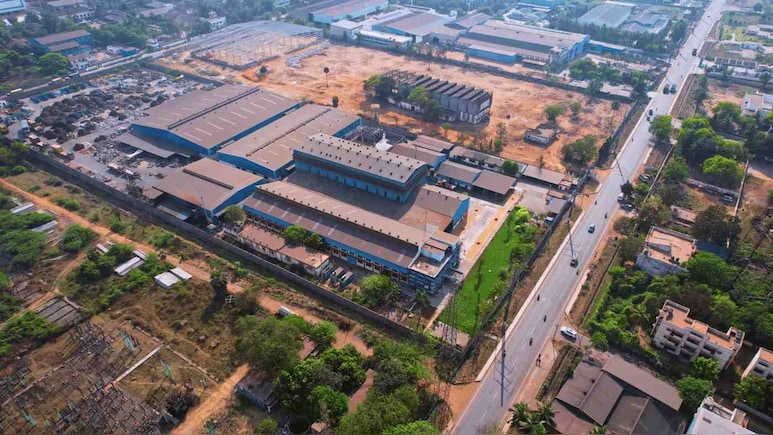
This global linkage extends beyond products into operations. Jain Resource runs four recycling facilities across Tamil Nadu, with a combined actual production capacity of over 1.7 lakh MTPA. But it is legally permitted to process around 3.2 lakh MTPA, spanning lead (184,000 MTPA), copper (83,042 MTPA), and aluminium (35,994 MTPA).
Global Sourcing and Supply Networks
Beyond capacity, the model depends equally on sourcing. The company procures scrap from more than 400 suppliers across over 120 countries. Around 56% of raw materials are imported, while 44% are sourced domestically. This wide network ensures availability but also introduces exposure to supply chain disruptions and geopolitical risks.
On the demand side, the business is equally global. The company serves over 300 customers and exports to more than 20 countries. Exports account for 70% of revenue, with Singapore contributing 32%, China 28%, and others (10%). A higher share of exports aligns with industry peers.
Export Demand and Client Concentration
At the same time, revenue visibility comes with some concentration risk. About 88% of revenue comes from repeat customers. However, the top five customer accounts for 47% of total revenue, and the top 10 accounts for 58.5%. Its client base includes Vedanta, Hindalco, RR Kabel, Amara Raja, Luminous, Nissan Motor, and Mitsubishi.
Managing Price Volatility
Given this structure (global sourcing, export-led demand, and commodity exposure), earnings remain sensitive to base metal price movements. To manage this, the company follows a disciplined hedging strategy on the London Metal Exchange, using both short and long futures positions to lock in spreads and protect margins.
ALSO READ: Not Just HAL Or BEL: These IT-Linked Firms Are Quietly Powering Indias Defence Push
Value Addition and Forward Integration
With the base business stabilised, the next phase of growth is being shaped by a strategic shift. The company is no longer just scaling volumes, but it is also moving up the value chain. Its roadmap is built on two parallel growth triggers, including expanding capacity to drive revenue growth and adding value-added products to improve margins.
The margin expansion strategy sits on forward integration into higher-value copper products through its subsidiary, Jain Green Technologies. This allows the company to use its own recycled copper as feedstock, creating a more integrated and margin-accretive value chain.
Capacity Expansion and New Ventures
And this transition is underway. The copper anodes facility is expected to start in Q4FY26 with a capacity of 800 MT/month. It is expected to scale to 1,600 MT/month by Q1FY27.
A copper cathode's capacity is projected to reach 750 MT/month in Q1FY27, and is expected to double to 1,500 MT/month by Q3FY27. Additional lines for wire rods (600 MT/month), busbars and profiles (500 MT/month), and coating facilities (1,500 MT/month) are planned for Q1/Q2 FY27. The company is investing around Rs 95 crore for the first phase of capacity expansion.
Additionally, it is establishing an antimony extraction facility, which is expected to go live by Q3FY27. It is designed to process 1,000 MT of lead-antimony bullion, yielding around 100 MT of pure antimony per month. Both pure antimony and tin are highly valuable metallic by-products present as alloying elements in lead scrap recovered from recycling lead-acid batteries.
In addition, Jain has also scaled its tin production capacity by a massive 400%, increasing it from 125 MTPA to 500 MTPA. Both antimony and tin capacities support profitability, with premium realisations from these metals contributing to bottom-line growth.
While margin expansion is one side of the story, raw material security and scale remain equally important. To address this, Jain has entered into a joint venture, Jain CY Circular Solutions, with US-based C&Y Group Investments Inc. This facility will process 72,000 MTPA of scrap to produce around 25,000 MTPA of copper products.
C&Y operates 11 to 12 scrap yards and has a massive raw-material sourcing network. It is expected to be operational by June 2026 and could add Rs 650 crore to revenue.
In parallel, the company has acquired a 25% stake in Abraj Al Khaleej in Kuwait, securing access to 2,000 tons of battery scrap per month along with a right of first refusal on output. This strengthens backward integration and is expected to contribute from Q3FY27.
The company is also evaluating new recycling verticals, such as end-of-life tires, e-waste, and solar panels, in response to EPR regulations. It is also considering ownership of scrap yards to reduce dependence on sourcing and improve supply reliability.
ALSO READ: Not HUL, Not Dabur: This Under-The-Radar FMCG Stock Just Clocked 83% Profit Surge
Scaling Revenue, Margins, and Profitability
This combination of scale expansion and margin improvement is already reflected in financial performance. In 9MFY26, revenue grew 38% year-on-year to Rs 6,438 crore, supported by a 29% increase in volumes. EBITDA increased 65% to Rs 449 crore, with margins improving by 116 basis points to 7.1%. Net profit rose 65% to Rs 281 crore.
That said, near-term profitability remains linked to commodity movements. EBITDA per ton for copper declined from Rs 51,000 to around Rs 42,000 in Q3 due to rising LME prices, which affected hedging outcomes. Even so, the nine-month average remains at Rs 46,000-47,000 per ton. The company expects this to stabilise at Rs 48,000-50,000 in the near term.
The larger shift lies ahead. Management expects revenue to grow at 40-50% year-on-year in the coming years. As value-added copper products scale up, EBITDA per ton is expected to increase to Rs 50,000-55,000. Management estimates that these initiatives could also improve overall EBITDA margins by up to 1%. The balance sheet also remains strong.
Valuation at Premium
Cash generation remains healthy, with 50% of EBITDA or PAT expected to convert into free cash flow by March. As of December 2025, ROE stood at 30% and ROCE (25%), with management targeting a 25-30% range for both going ahead. At Rs 421 per share, the stock trades at 26x EV/EBITDA, compared to 20x for Pondy Oxides and Gravita (24x), reflecting expectations around execution of both scale and margin expansion.
Disclaimer: The views expressed in this article are solely those of the author and do not necessarily reflect the opinion of NDTV Profit or its affiliates. Readers are advised to conduct their own research or consult a qualified professional before making any investment or business decisions. NDTV Profit does not guarantee the accuracy, completeness, or reliability of the information presented in this article.
Essential Business Intelligence, Sharp Market Insights, Practical Personal Finance Advice, Daily Fuel, Gold and Silver Prices and Latest Stories — On NDTV Profit.