Indian Shares Fall Most Since Brexit Vote
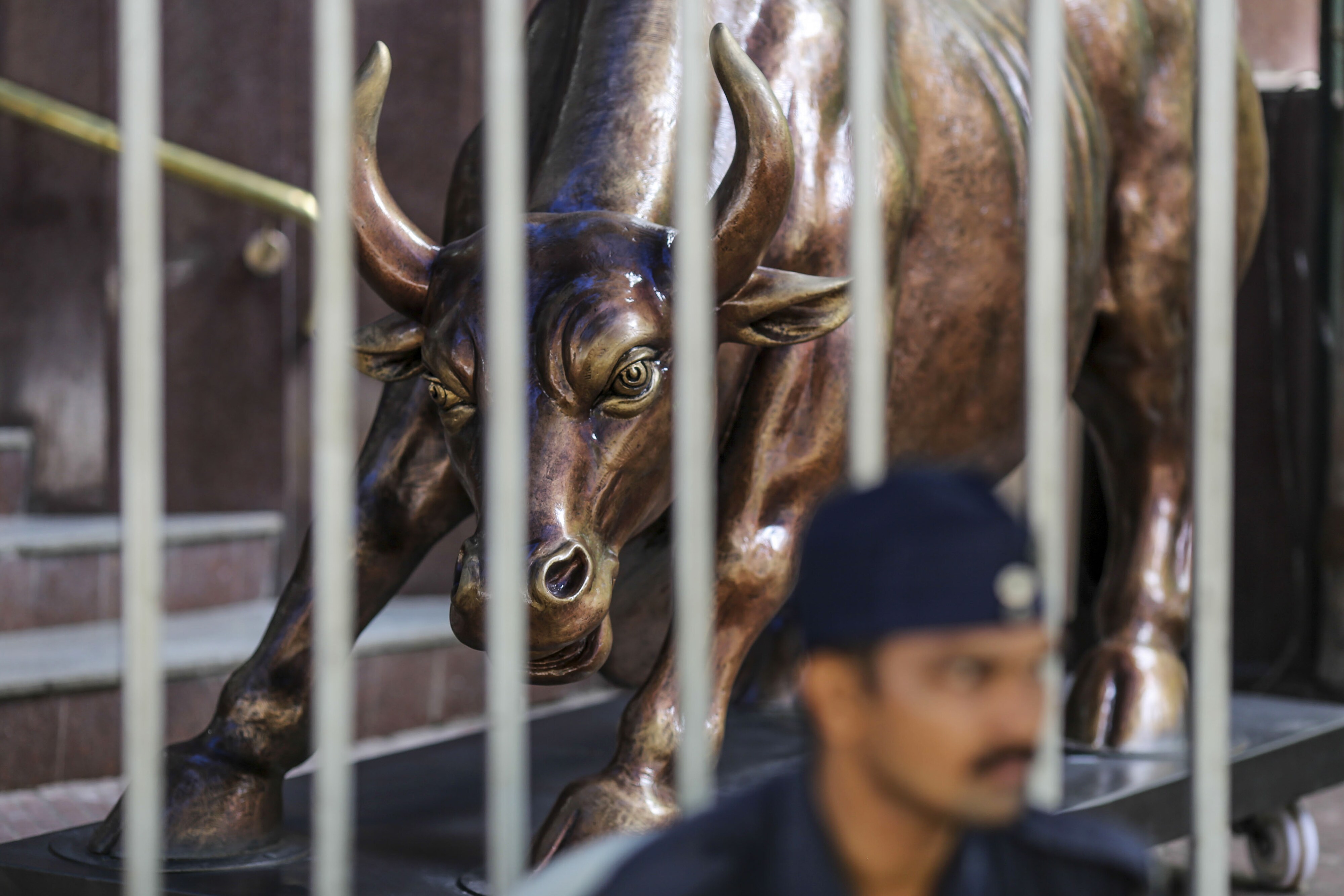
Indian shares extended their losses on Wednesday, falling most since the global selloff that was triggered by U.K.'s decision to leave the European Union on June 24. The day's losses came amid concerns that the rally fueled by capital inflows has outpaced the outlook for earnings growth.
The S&P BSE Sensex declined 1.1 percent to 27,774; while the NSE Nifty dropped 1.1 percent to 8,575. All 19 sectoral gauges on the Bombay Stock Exchange ended lower. Energy, auto, healthcare and consumer discretionary benchmarks falling the most.
The market breadth was skewed in favour of the bears as 1,893 stocks declined versus 835 advancing stocks while 137 stocks remained unchanged on the Mumbai-based exchange.
Foreigners have bought a net $5.1 billion of local shares this year, the most after Taiwan and South Korea, as flows to emerging markets accelerated amid a wave of global policy easing triggered by the Brexit vote.
The 22 percent climb from a February low has pushed up the Nifty's price-to-earnings ratio to near the highest in 15 months.
“Historically, markets tend to change its course once the one-year forward PE moves past 21,” Hadrien Mendonca, technical analysts at IIFL told BloombergQuint in a phone interview.
He said the Nifty has broken down from a “rising wedge pattern” indicating that there could be further downside; immediate support is seen at 8,510 and 8,480.
Next Trigger?
With the passage of the GST Bill in Parliament and Reserve Bank of India's policy meeting out of the way, investors will shift focus to the macro economic data due later this week.
Market participants will watch out for the consumer price inflation for July and factory output for June on Friday. The remainder of the earnings season will continue to provide an overall direction to the markets.
For the Nifty to move higher from here, the Bank Nifty needs to stage a strong comeback, Mendonca said.
“In an inter-index analysis of the two indices reveal that while the Nifty managed to hit higher highs, the Bank Nifty was unable to do so, indicating a divergence in the indices. So, for markets to go any higher, Bank Nifty has to stage a strong comeback,” he added.

-
Where You Live Shapes How You Get To Work | The Reason Why

Two-wheelers are the most popular way to get to work in India, accounting for nearly 43% of workplace commutes.
-
High US Salaries, No Green Card Certainty: The Financial Calculation Facing Indian H-1B Families
The suspension of PERM processing at eight technology employers does not cancel existing H-1B visas. What it does is force a question many Indian families have been avoiding: is the US salary worth tying your career and family plans to one employer?
-
Unhedged Position: Can India See An Indonesia-Style Time Correction?
The Nifty is trading below levels it first clocked in 2024. Is there, then, as I have suggested in the headline, potential that the current time correction drags on painfully for the next three-five, even ten years?
-
Navigating Friction And Energy Realities: An Analysis Of Marco Rubio's October Visit To India
Occurring at a critical juncture marked by stalled trade negotiations and escalating geopolitical pressures over global energy supplies, the visit offers a profound window into modern US-India relations.
-
India Exports Capital. Why Not Export Trusteeship?
The big question, then, is whether India can build an institution that global borrowers, investors, banks, and lawyers can trust, even without an Indian connection.
-
France's Economy & Politics Are In Crisis | The Reason Why
Let's look at how the French economy and politics evolved under Nicolas Sarkozy, Franois Hollande and Emmanuel Macron.
-
You May Inherit The Business. You Must Earn Its Credibility.
Succession tests the founder's ability to share authority as much as it tests the next generation's readiness to assume it.
-
Signing Deals Is One Thing; Making Them Work Is Another | The Week In Whys
Sometimes, things don't turn out as planned. Indian companies have lost some bids to rivals, some projects won't produce until 2030.
-
FOMC Wall, PERM Suspension, Hospital Stocks | Talking Points This Week
A PERM suspension would directly affect green-card sponsorship rather than H-1B visas, so the near-term earnings impact could remain relatively limited. The key question is whether this marks a new phase in US scrutiny of Indian IT.
-
Everything, Everywhere, All At Once: Dalal Street's Week To Forget | Joining The Dots
Visa curbs, a Starlink spat and cancer drug caps: what connects this week's shocks for Indian markets









