- Indian markets overreacted to Iran–Israel–US conflict, says Kotak Institutional Equities
- Recent stock falls do not reflect lasting damage to corporate earnings
- Investors should restructure portfolios, favor stronger firms, reduce high-valuation stocks
Indian markets may have reacted too sharply to the Iran–Israel–US conflict, according to a report by Kotak Institutional Equities, which said the recent fall in stock prices does not reflect a lasting hit to corporate earnings.
The brokerage said the correction across large-, mid- and small-cap stocks appears to assume a permanent decline in earnings or a sustained rise in the cost of capital. It said such assumptions are not supported by the likely duration of the conflict.
Investors should instead use the volatility to review portfolios, add stronger companies and reduce exposure to stocks trading at high valuations, the report said.
Also Read | Layoffs Are Rising In Tech, But These Skills Are Helping People Unlock Better Pay
Portfolio Churn
Kotak said the current market phase presents an opportunity to restructure portfolios rather than react to short-term price movements. “We see the sharp correction in stock prices and dislocation in parts of the market as an opportunity for investors to review their portfolios and make appropriate changes,” the brokerage said in the report.
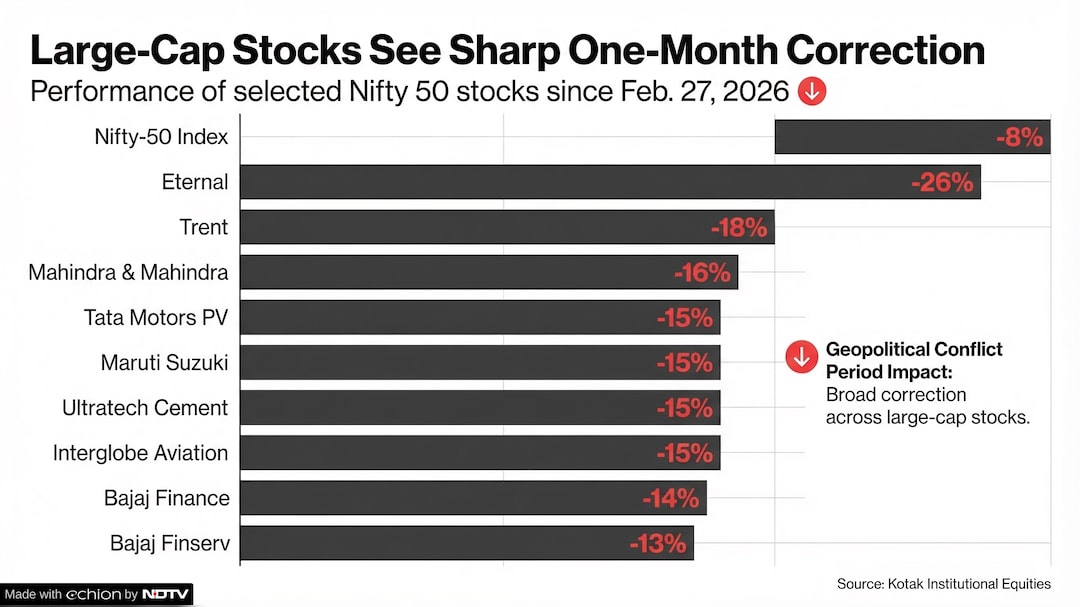
It advised investors to add what it described as “better” companies, exit stocks driven mainly by narratives and cut exposure to sectors where valuations remain high. The report said investors should reduce positions in cement companies, consumer staples and some narrative-led stocks, while increasing exposure to financial companies and other sectors where prices have fallen on concerns that may not reflect underlying fundamentals.
Conflict Impact
Kotak said the ongoing Iran–Israel–US conflict has created uncertainty, but its base case assumes a short period of intense fighting followed by several months of heightened tensions.
“For now, we assume a few weeks of high-intensity conflict, several months of heightened tensions and normalisation of trade in oil and gas through the Strait of Hormuz over the next few weeks,” the report said.
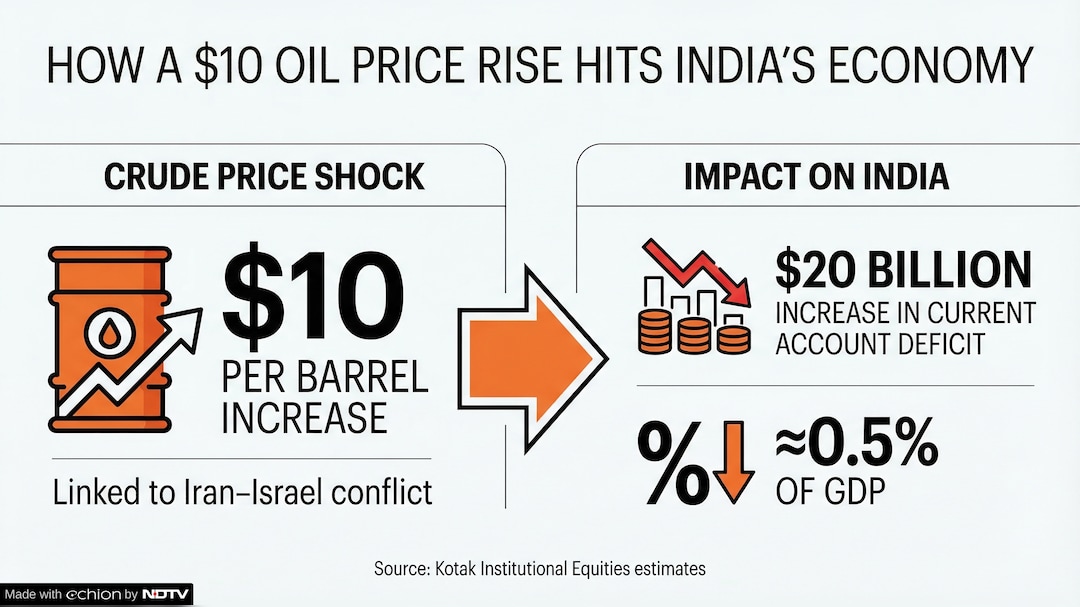
The brokerage said a temporary disruption in energy supplies would have limited long-term impact on corporate earnings if the conflict remains short.
ALSO READ: What Do Different Crude Oil Prices Mean For India's Inflation And Households?
Market Concerns
According to Kotak, investors appear to be factoring in a deeper economic impact from disruptions in LPG and natural gas supplies, including weaker profitability for companies and higher credit costs for lenders. “We see the market's concerns with respect to both as overblown,” the report said.
It said a disruption lasting a few weeks would not cause lasting damage to most companies because many firms hold inventory that can support operations while supply chains adjust.
The brokerage added that earnings generated in one or two quarters represent a small share of a company's long-term value.
Earnings Outlook
Kotak said it does not see a material risk to its earnings estimates for the Nifty 50 Index, except for companies directly exposed to higher oil prices.
The report said upstream oil and gas producers and pure refiners may benefit in the short term from higher oil prices and refining margins. Downstream oil and gas companies could face earnings pressure if they cannot pass on higher crude costs to customers. Kotak expects Nifty 50 companies to report earnings growth of about 16% in FY27 and nearly 15% in FY28, although risks have increased due to global developments.
The brokerage added that markets may still need to adjust to higher geopolitical risks and shifts in the global economic environment, which could affect valuations over time.
ALSO READ: Nifty Falls 3,000 Points From Peak As Rs 24 Lakh Crore Wiped Out In M-Cap
Essential Business Intelligence, Sharp Market Insights, Practical Personal Finance Advice, Daily Fuel, Gold and Silver Prices and Latest Stories — On NDTV Profit.