CAFE-III Norms: The long-awaited CAFE-III rules have finally removed one of the biggest regulatory uncertainties hanging over India's passenger vehicle industry — and brokerages are already drawing sharply different conclusions on which automakers are best positioned for the transition.
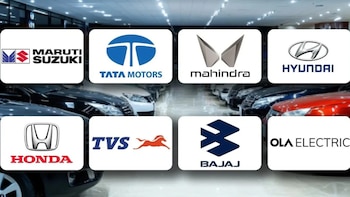
Citi sees the new framework as more stringent than the earlier CAFE-I and CAFE-II regimes, but believes the clarity around the final rules is a positive for the sector. In passenger vehicles, Citi's preferred order is Maruti Suzuki, Mahindra & Mahindra and Hyundai, while it has a Sell rating on Tata Motors' passenger vehicle business.
Bank of America (BofA) Securities, meanwhile, believes the final CAFE-III norms favour electric vehicles, although the concessions and compliance flexibility soften the transition requirements. On current emissions, BofA sees Tata Motors and Maruti as the best placed to meet the norms, while M&M and Hyundai get some respite because of their relatively lower compliance requirements.
Also Read | Layoffs Are Rising In Tech, But These Skills Are Helping People Unlock Better Pay
The Ministry of Power has now officially notified the Corporate Average Fuel Economy Phase III (CAFE-III) regulations for M1 category passenger vehicles. The rules will apply for five years from April 1, 2027, to March 31, 2032, with fleet-wide fuel-efficiency targets becoming progressively stricter every year.
CAFE 3 Norms: What Citi Says About Auto Stocks
Citi believes CAFE 3 represents a major step-up from the earlier CAFE-I and CAFE-II standards, with annual targets becoming progressively more stringent.
ALSO READ: CAFE-III Norms Notified For M1 Category Passenger Vehicles: What It Means For Market Players
However, the brokerage sees the final notification as providing absolute clarity for OEMs after a prolonged period of uncertainty.
A key feature, according to Citi, is the introduction of tradable credits, which can provide a compliance buffer for automakers that face difficulty meeting the prescribed standards.
Citi also points out that OEMs generating surplus credits could potentially sell those credits and add to their revenue.
At the same time, the brokerage flags a risk for some manufacturers, noting that their current model portfolios could fall short of the new standards.
In passenger vehicles, Citi's preference is Maruti, M&M and Hyundai, in that order, while it has a Sell view on Tata Motors PV.
BofA On CAFE-III: EVs Get A Boost, But Transition Is Softer
BofA believes the final CAFE-III framework is structurally favourable for EVs, although the concessions built into the rules make the transition less demanding for automakers.
The brokerage said the final norms also remove an overhang that had weighed on the auto industry for the past couple of years.
Based on current emissions, BofA sees Tata Motors and Maruti as the best placed to meet the new standards.
The brokerage sees some respite for M&M and Hyundai because of their lower compliance requirements under the final framework.
BofA also highlighted M&M's progress on electrification, noting that E-SUVs already account for 12% of the company's SUV volumes.
CAFE-III Norms: Targets Get Stricter Every Year
Under the notified framework, the fleet-average fuel consumption target will decline from 3.996 litres per 100 km in FY28 to 3.3273 litres per 100 km by FY32.
The targets have been specified separately for each financial year, ensuring a gradual tightening of fleet-wide fuel efficiency and tailpipe carbon dioxide emission requirements.
The government has also introduced a formal mechanism for carbon-credit trading. Automakers will be allowed to trade credits bilaterally or purchase shortfall offsets directly from the Bureau of Energy Efficiency (BEE).
CAFE-III Buyout Cost To Rise Over Five Years
The compliance buyout mechanism will also become progressively more expensive.
For FY28, the fleet fuel-efficiency target is set at 3.9960 L/100 km, with a BEE buyout cost of Rs 2,500 per g CO2/km.
By FY32, the target tightens to 3.3273 L/100 km, while the buyout cost rises to Rs 4,500 per g CO2/km.
The increasing cost of compliance is designed to encourage automakers to invest in lower-emission technologies rather than rely primarily on buying compliance offsets.
CAFE-III Super Credits: EVs Get 3X Benefit
The final CAFE-III framework retains super credits for cleaner powertrains, although some of the multipliers have been changed from the draft proposal.
The key super-credit multipliers under the final notification are:
- BEVs and REEVs: 3.0x
- PHEVs and Strong Hybrid Flex-Fuel Vehicles: 2.5x
- Strong Hybrids: 1.6x
- Flex-Fuel Ethanol Vehicles: 1.1x
Notably, the draft had proposed a 4x super credit for BEVs, which has been reduced to 3x in the final notification.
CAFE-III Norms: No Exemption For Small Cars
One of the key changes from the draft is that small cars will not receive a separate exemption under the final framework.
The draft had proposed an exemption for cars weighing below 990 kg. The final notification instead considers the average weight of an automaker's fleet, with the reference weight set at 1,170 kg, compared with 1,229 kg proposed in the draft.
The final framework has also retained the exclusion of legacy weight-based concessions for entry-level small cars.
CAFE-III: What It Means For Maruti, M&M, Hyundai And Tata Motors
The final rules have different implications across automakers depending on their existing product mix, emissions profile and clean-powertrain strategy.
For Maruti Suzuki, the retention of strong-hybrid incentives provides compliance value for its hybrid portfolio. Models such as the Grand Vitara and Invicto, along with upcoming mid-range hybrid models, can benefit from the 1.6x super-credit multiplier.
However, the reduction in the hybrid super-credit from 2.0x to 1.6x is a negative for automakers such as Maruti, Toyota and Honda relative to the earlier proposal.
For M&M, the final framework provides some respite because of lower compliance requirements, while its EV strategy is already gaining traction. BofA noted that E-SUVs account for 12% of M&M's SUV volumes.
Hyundai also gets some relief under the final norms because of lower compliance requirements, according to BofA.
For Tata Motors PV, the picture is more nuanced. BofA sees Tata and Maruti as the best placed based on current emissions, while Citi has a Sell view on Tata Motors' passenger vehicle business.
CAFE-III Norms: Why Brokerages Are Watching Auto Stocks
The final CAFE-III notification brings regulatory clarity after a prolonged period of uncertainty for automakers. It also creates a framework in which compliance will increasingly depend on the ability to lower fleet-wide emissions through EVs, hybrids and other cleaner powertrains.
For OEMs with surplus credits, the tradability mechanism could create an additional revenue opportunity. For those falling short, however, the rising cost of compliance could increase the financial incentive to accelerate investments in cleaner vehicle platforms.
With the rules now finalised, the focus for the auto sector shifts from regulatory uncertainty to how individual OEMs' existing portfolios and technology strategies stack up against the annual CAFE-III targets.
Essential Business Intelligence, Sharp Market Insights, Practical Personal Finance Advice, Daily Fuel, Gold and Silver Prices and Latest Stories — On NDTV Profit.