- Jefferies downgraded BSE Ltd to underperform citing revenue pressures from STT hike and CAS
- The brokerage cut BSE's price target by 16% to Rs 2,940, implying a 16% downside from current levels
- BSE's options average daily turnover fell 12% in August, impacted by CAS and regulatory changes
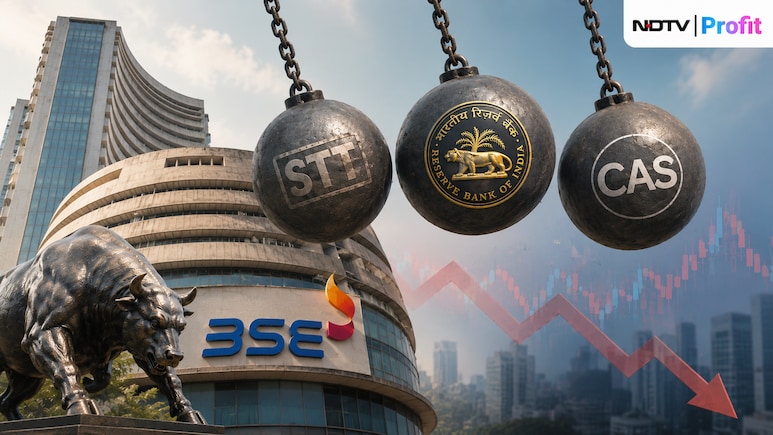
Jefferies has downgraded BSE Ltd to 'underperform' from 'hold', warning that revenues from domestic proprietary traders face mounting pressure from a combination of the securities transaction tax (STT) hike, the Reserve Bank of India's tightening of bank guarantee norms, and the introduction of the Closing Auction Session (CAS).
The brokerage cut its price target on the stock by 16% to Rs 2,940 from Rs 3,520 earlier, implying a downside of 16% from current levels. The stock closed at Rs 3,502.80 in the previous session, valuing the company at a market capitalisation of about Rs 1.4 lakh crore ($15 billion).
Domestic proprietary traders account for 50-60% of equity options notional turnover, with domestic players likely making up half of that, according to Jefferies. The brokerage's recent conversation with a futures and options trader indicated that CAS is resulting in higher losses for domestic prop traders.
Also Read | Layoffs Are Rising In Tech, But These Skills Are Helping People Unlock Better Pay
ALSO READ: BSE Share Price Falls As Jefferies Downgrades Stock, Cuts Target Price — Check Potential Upside
BSE's options average daily turnover (ADTO) fell 12% month-on-month in August, while NSE's fell 14% over the same period, the report said. Options ADTO for both exchanges was down 20-23% in the second week of CAS compared with the first week.
While the RBI's tightening of bank guarantee norms will not have an immediate impact, it could dent premium turnover by up to 10% over the next year, Jefferies said.
Market Share Gains Slowing
Jefferies said consensus estimates, which factor in Rs 27,000 crore in options ADTO for BSE in FY27 and around 20% growth in subsequent years, may be pricing in further market share gains for the Sensex that are unlikely to materialise at the same pace.
The brokerage pointed to two trends: BSE's expiry day market share is now similar to NSE's, and market share gains outside T-0 and T-1 days have slowed. BSE's ADTO has stayed below Rs 27,000 crore for the last three months, it said.
EPS Cuts, Management Transition Flagged
Jefferies cut its FY27-29 earnings per share estimates for BSE by 5-12%, citing slower ADTO growth expectations and higher clearing costs. The brokerage expects ADTO to recover in the second half of FY27 as CAS-related issues are resolved, but flagged that a flat market share scenario for FY28-29 relative to FY27 could result in a further 2-5% downside to earnings.
The report also flagged a pending management transition. BSE's managing director and chief executive officer approaches the upper age threshold for the role in June 2027, and Sebi's proposal to raise the age limit for MDs and CEOs of market infrastructure institutions has met with resistance, according to news reports cited by Jefferies. BSE has appointed two executive directors, Saurabh Shukla for critical operations and Gopalan S Raghavan for regulatory, compliance, risk management and investor grievances.
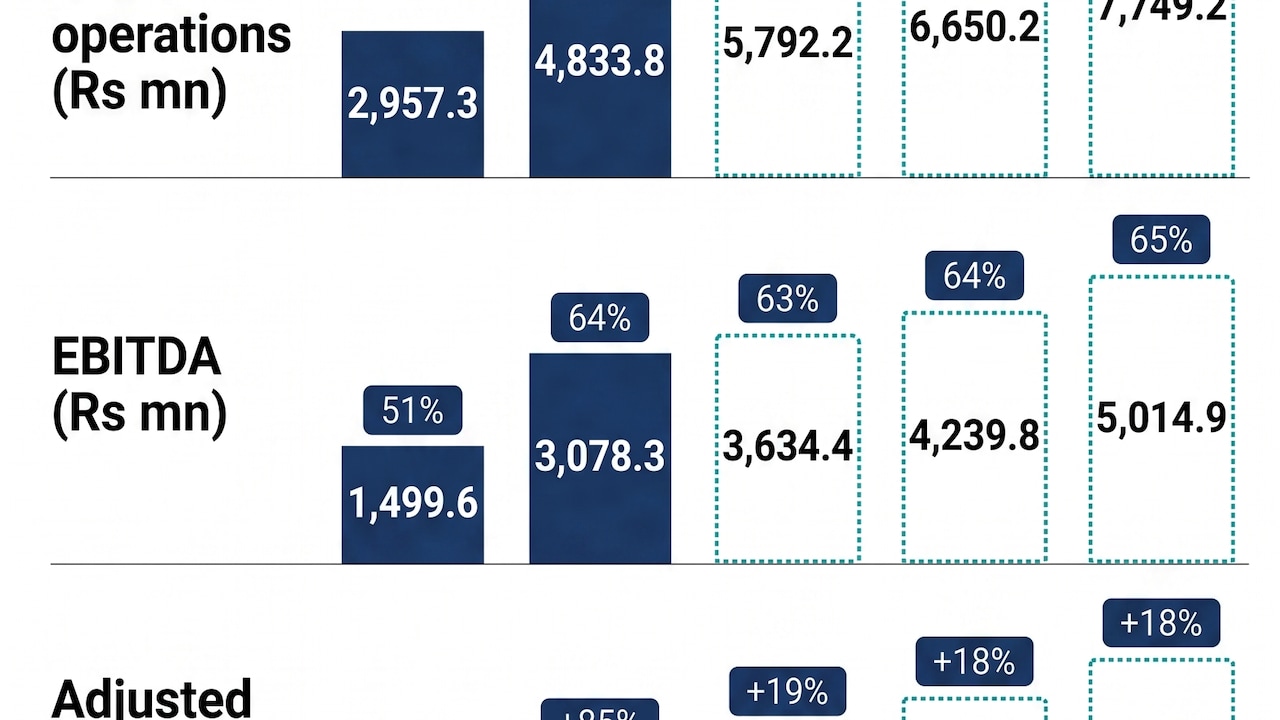
BSE earnings in a snapshot.
Photo Credit: NDTV Profit
Levers Available To BSE
Jefferies said BSE has some options to offset the pressure on revenue growth, including raising option fees, which are currently at Rs 325 per Rs 10 lakh of premium turnover against NSE's Rs 350, a move that could add 6-7% to EPS. Increasing messaging fees for its colocation facility could add another 8% to profit after tax, the brokerage said. However, it cautioned that investors may be assigning a higher valuation to volume-led growth than these fee-based levers can sustain.
Bull And Bear Case
Jefferies laid out a 12-month risk-reward framework for the stock alongside its base case. In its upside scenario, the brokerage sees the stock at Rs 3,420, implying a 2% downside from current levels, built on a revenue compound annual growth rate of 19% between FY26 and FY29, an EBITDA CAGR of 20% with margins improving by 100 basis points to 65%, and a profit after tax CAGR of 20%. This scenario values the stock at 38 times September 2028 core earnings.
In its downside scenario, Jefferies sees the stock falling to Rs 2,600, a 26% downside, on a revenue CAGR of 15%, an EBITDA CAGR of 15% with steady margins, and a profit after tax CAGR of 16%, valuing the stock at 31 times September 2028 core earnings. The brokerage pegged the upside-to-downside ratio at 1:10.9.
The base-case target price of Rs 2,940 is based on 34 times September 2028 core earnings per share, a 6% cut to Jefferies' earlier fair multiple of 36 times, reflecting increased concerns around ADTO growth.
ALSO READ: CAS Is Here To Stay, Concerns Being Analysed: SEBI Chairman Tuhin Kanta Pandey
Essential Business Intelligence, Sharp Market Insights, Practical Personal Finance Advice, Daily Fuel, Gold and Silver Prices and Latest Stories — On NDTV Profit.